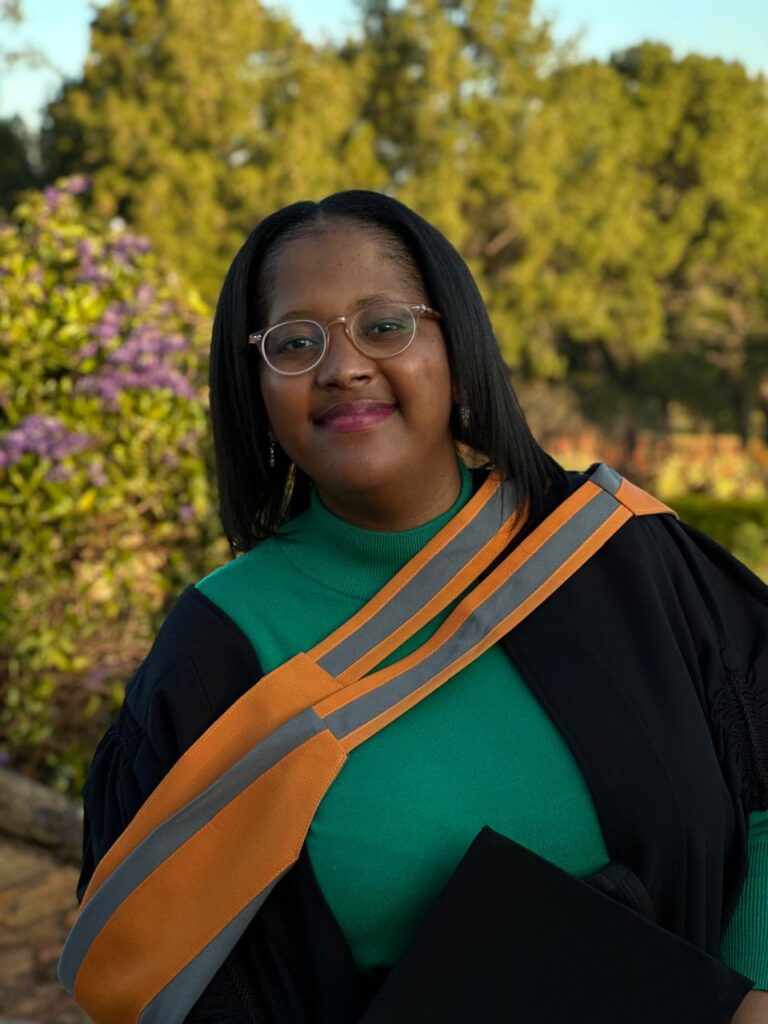
For Nosipho Dube, the journey to becoming a Chevening Scholar was shaped by persistence, mentorship, diplomacy and a willingness to keep knocking on doors that did not always open the first time.
Born and raised in Pretoria, South Africa’s diplomatic capital, Dube will later this year move to the United Kingdom to begin an MSc in Global Affairs at King’s College London as a Chevening Scholar.
Her journey has taken her from Pretoria to São Paulo, from Model United Nations and international schools to the University of Pretoria and the South African Institute of International Affairs (SAIIA), and into international youth networks focused on global affairs.
Ahead of her move to London, Dube reflects on her Chevening journey, the people who supported her, her ambitions for international affairs and what she hopes to bring back to South Africa.
From Pretoria to São Paulo: A passion for diplomacy
Dube describes herself simply as Nosipho, or Nosi, and says growing up between Pretoria and São Paulo played an important role in shaping her worldview.
“I’m an enthusiast of music, food, think tanks and diplomacy,” she says.
Her interest in diplomacy was also deeply influenced by her family, particularly her mother, a South African civil servant and diplomat.
Watching her mother represent South Africa in Brazil and later contribute to the country’s relations with Asia gave Dube an early understanding of diplomacy and international engagement.
Living in São Paulo also exposed her to a British international school, where she encountered UK universities, international organisations and influential think tanks such as Chatham House.
After completing matric in Brazil, she returned to South Africa to pursue a Bachelor of Political Science in International Studies at the University of Pretoria, followed by an Honours degree in Development Studies.
Her interest in international affairs had already begun at school, where she participated in activities such as Model United Nations. Her teachers also encouraged her to follow international affairs institutions, including Chatham House and South Africa’s own SAIIA.
That early exposure eventually became more tangible.
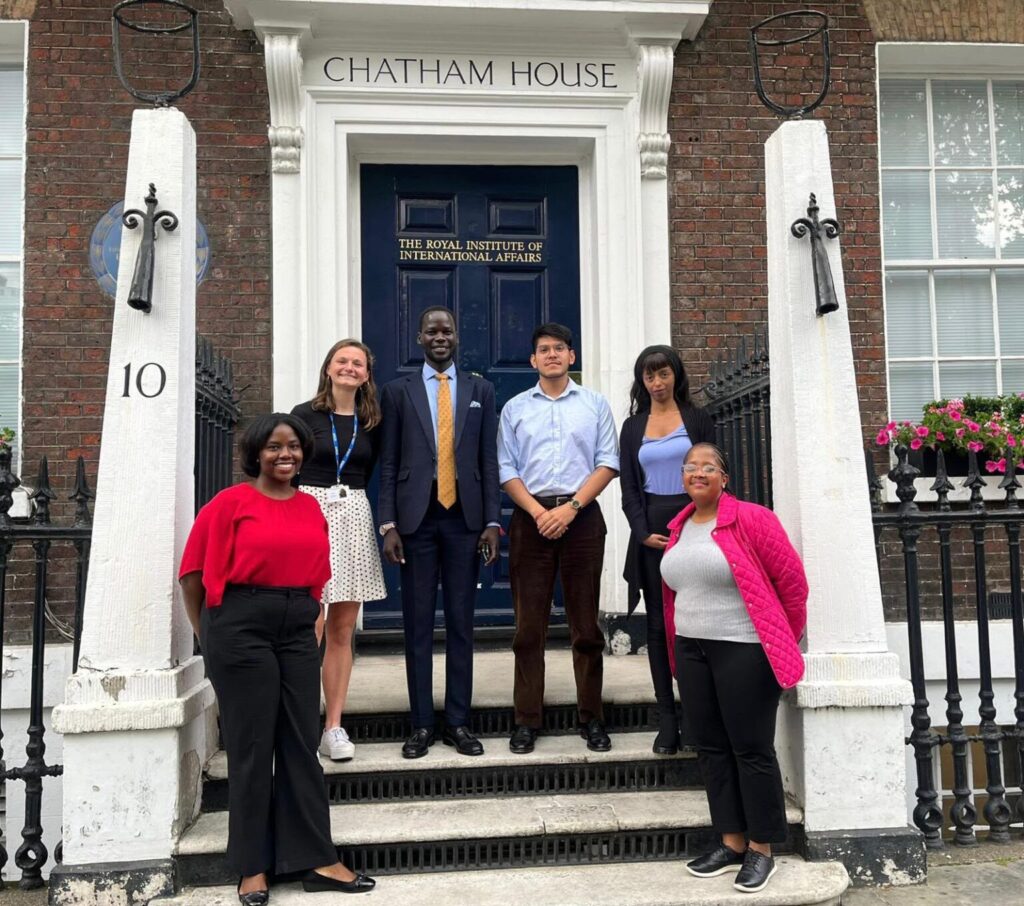
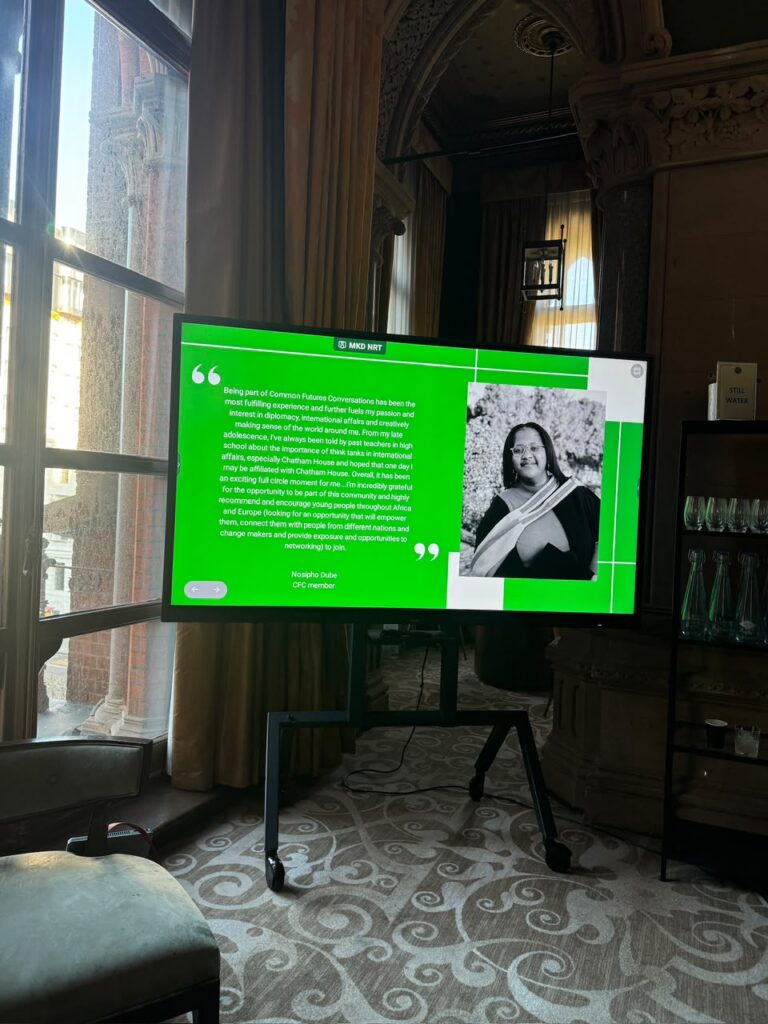
In 2022, Dube was accepted into Chatham House’s Common Futures Conversations, a youth programme connecting young people across the Commonwealth. Two years later, she travelled to London for the organisation’s flagship conference.
Meeting analysts and experts whom she had previously encountered through television and research convinced her that London was where she wanted to continue her academic journey.
Discovering the Chevening opportunity
Although Dube had heard of Chevening before, it was two encounters in 2025 that made her seriously consider applying.
The first came when she reconnected with her former boss and other Chevening alumni during a G20 conference. Hearing their experiences gave her a clearer understanding of the scholarship and its emphasis on leadership, networking and impact.
The second came through conversations with diplomats from the British High Commission in South Africa.
When Dube spoke about her professional background and involvement in youth programmes, they asked her a question that changed the direction of her application journey:
“Do you have a master’s? You’d be a great fit for Chevening.”
That encouragement prompted her to research the experiences of South African Chevening Scholars, including finding them on social media and building relationships with members of the alumni community.
Overcoming imposter syndrome
Despite her growing experience, Dube admits that applying was not easy.
She had already experienced a series of unsuccessful applications and worried that Chevening could become another rejection.
“Imposter syndrome and overthinking” became part of the process, she says.
But the experience ultimately changed the way she viewed rejection.
“I’m learning now that all the closed doors and rejections that I thought were the end of the world were only building blocks of resilience to make room for the biggest door to open.”
That perspective became an important part of her Chevening journey.
Preparing for the Chevening interview
Dube approached the application process with considerable preparation.
She completed several mock interviews, including one with a professional mentor and four with former Chevening Scholars. She also used YouTube resources, Chevening’s online blogs and a webinar hosted by SADC Cheveners.
And then there were the more unconventional preparations.
She spent nights reading her essays back to herself in the mirror, using the exercise to become more comfortable with her own story and experiences.
The preparation paid off.
A meaningful interview day
On the morning of her Chevening interview, Dube woke early, had a substantial breakfast, said a prayer and listened to lo-fi music before putting on her formal outfit.
But what gave the day its greatest meaning was something far more personal.
Her interview took place on what would have been her late grandfather’s birthday.
Dube says her grandfather, or Ntatemogolo, was the person who first planted the importance of education in her.
The coincidence gave her a sense of calm before the interview and remains one of the most meaningful aspects of her Chevening story.
After completing the interview, she told herself that she had done everything she could.
The outcome, she decided, was no longer in her hands.
The people behind the journey
Like many successful scholarship journeys, Dube’s story is also a story of mentorship.
Among the people she credits is Gustavo de Carvalho, a Brazilian international relations analyst based in South Africa.
Dube had tried to reach out to him for years before eventually meeting him at an event. When she introduced herself in Portuguese, the interaction developed into a lasting mentorship.
De Carvalho later encouraged her to apply to SAIIA, where she secured her first full-time position.
She also highlights Lwazi Somya, a fellow Chevening alumnus under whom she interned, as well as several lecturers at the University of Pretoria who contributed to her development.
For Dube, mentorship has not simply been about advice. It has been about opening pathways and making opportunities visible.
Looking ahead to King’s College London
At King’s College London, Dube will pursue an MSc in Global Affairs at a particularly interesting moment for international relations.
One of her key interests is researching the G20, particularly as the United Kingdom takes on the G20 presidency.
She is also interested in examining South Africa’s relationship with the UK and the country’s wider engagement with the Global South, particularly Brazil.
Her academic interests therefore sit at the intersection of South African foreign policy, multilateralism, the G20, the Global South and international relations.
Outside the classroom, however, Dube is also looking forward to experiencing life in the UK.
She hopes to attend a Springboks match and, if possible, experience Wimbledon.
There is also the more practical challenge of preparing for her first European winter and building a wardrobe suitable for London’s formal academic and professional environments.
A new chapter — and new challenges
Moving to London will represent a major personal transition.
Dube will be living abroad on her own for the first time and will be further away from her family.
Academically, she recognises that a master’s degree will present a different level of challenge.
Yet she approaches both with determination.
Her central academic question is how research around a South African G20 dissertation can contribute to understanding South Africa’s relationship with the Global South, particularly Brazil.
It is a question that brings together many of the experiences that have shaped her journey — from her childhood in São Paulo to her studies in Pretoria and her engagement with international affairs networks.
Bringing knowledge home
For Dube, studying abroad is not simply about personal advancement.
She wants to return to South Africa with knowledge that can be translated into opportunities for other young people.
One of her priorities is creating pathways for young South Africans interested in think tanks, international relations and diplomacy.
Her involvement with Common Futures Conversations has already allowed her to advocate for greater South African participation in the programme.
She wants to continue that work.
“Making sure more people from home see themselves in these rooms” is central to what she hopes to achieve.
That philosophy also informs her broader view of mentorship in South Africa’s diplomatic and international affairs ecosystem.
The need for meaningful mentorship
Asked which issue in international relations and diplomacy deserves greater attention in South Africa, Dube points to the lack of long-term mentorship for young people and emerging professionals.
She argues that opportunities for young people too often stop at conference invitations, essay competitions or short-term engagements.
The missing element, she believes, is sustained mentorship that helps young professionals navigate the sector and build meaningful careers.
For Dube, creating that enabling environment would be one of the most important changes South Africa could make.
“Real, long-term mentorship for young people aspiring to enter diplomatic rooms” is what she believes the sector needs.
A door opening for others
Nosipho Dube’s Chevening journey is ultimately about more than winning a prestigious scholarship.
It is a story about persistence in the face of rejection, the influence of family, the importance of mentors and the power of seeing people like yourself already occupying spaces you aspire to enter.
From Pretoria and São Paulo to London, her journey reflects the increasingly interconnected nature of South Africa’s engagement with the world.
As she prepares to begin her MSc in Global Affairs at King’s College London, Dube is carrying with her more than academic ambitions.
She is carrying a commitment to return, share what she learns and help open doors for the next generation of young South Africans interested in diplomacy and international affairs.
And perhaps that is the most fitting lesson from her Chevening experience: sometimes rejection is not the end of the journey. Sometimes it is simply preparing you for the door that eventually opens.