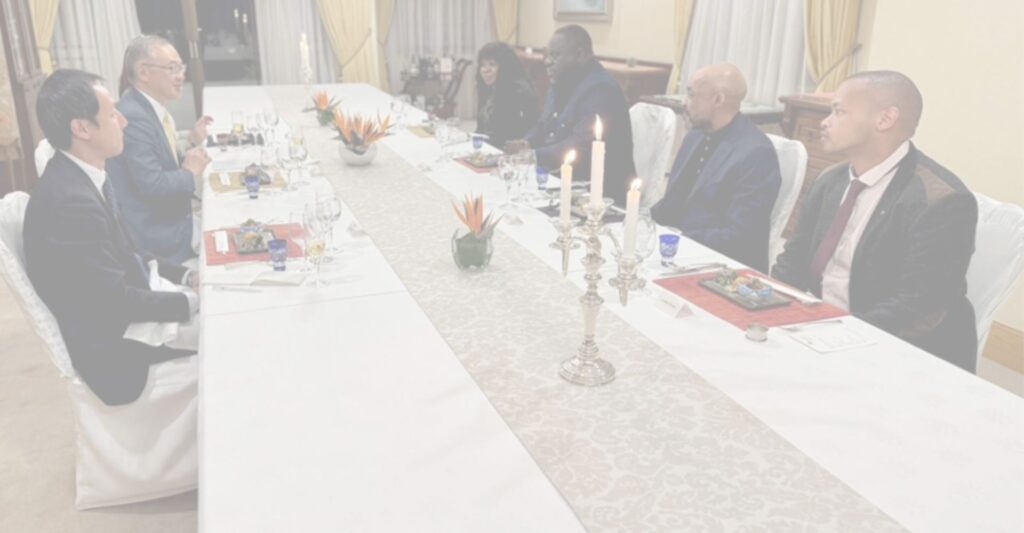
Marciano Domingo reflects on a two-week job shadowing experience at the Dominican Republic Embassy and visits to the Embassies of Ireland, Palestine and Oman, offering a rare glimpse into the daily realities of diplomatic life.


Two Weeks, Three Embassies, One Big Lesson: My Job Shadowing in Diplomacy
By Marciano Domingo, Grade 10
Introduction: Why I Chose Diplomacy
For Life Orientation, we were required to complete two weeks of job shadowing. I chose the Embassy of the Dominican Republic because I have been interested in diplomacy and international relations for quite some time. I often read news about state visits and United Nations meetings, but I never really knew what happens inside an embassy on a day-to-day basis.
My friend Rosemary joined me. Unlike me, she had no prior knowledge of diplomacy, so we arrived with very different expectations. Over the course of twelve days, we went from asking, “What is a Note Verbale?” to actually helping draft one.
Week One: Orientation, Protocol and a Public Holiday
Days 1–3: The Tour and “What Does an Embassy Actually Do?”
Mr. Vicioso, the Minister Counsellor, gave us a comprehensive tour of the embassy. We visited the consular section, where citizens apply for passports and receive assistance, the political affairs office, and the administrative section that keeps the mission functioning smoothly.
The Ambassador explained that every embassy has two core responsibilities: protecting its citizens abroad and strengthening relations between the host country and the sending country.
Because I already followed international affairs, I was familiar with concepts such as bilateral relations and the Vienna Convention. Rosemary, however, asked questions I would never have considered, such as, “Why is the flag placed like that?” and “Do embassies pay tax?” These questions encouraged staff members to explain things in greater detail, allowing me to learn from their responses as well.
Thursday: A Public Holiday
On Thursday of the first week, the embassy was closed due to a public holiday in the Dominican Republic. This was a lesson in itself. Embassies operate according to both the host country’s calendar and their own national holidays.
Although staff members enjoyed a day off, it demonstrated that diplomatic missions must carefully plan their activities around two different sets of holidays and schedules. The day also gave us an opportunity to reflect on everything we had learned during our first three days.
Days 4–5: Preparing for a Presentation of Credentials
The most significant task of the first week involved assisting staff in preparing for a Presentation of Credentials ceremony to the President of Namibia.
Initially, I imagined the ceremony would simply involve handing over a letter during a brief meeting. Instead, we spent two days preparing for it.
We reviewed the Ambassador’s speech to ensure that the order of protocol was correct and confirmed the precise wording of the Letter of Credence.
This experience stayed with me because it showed that protocol is not merely a collection of rules; it is a demonstration of respect. Something as simple as presenting a document with the wrong hand or at the wrong moment could easily be misunderstood.
For me, this exercise connected theoretical knowledge with practical experience. For Rosemary, it was the first time she realised how much preparation and attention to detail go into a state occasion.
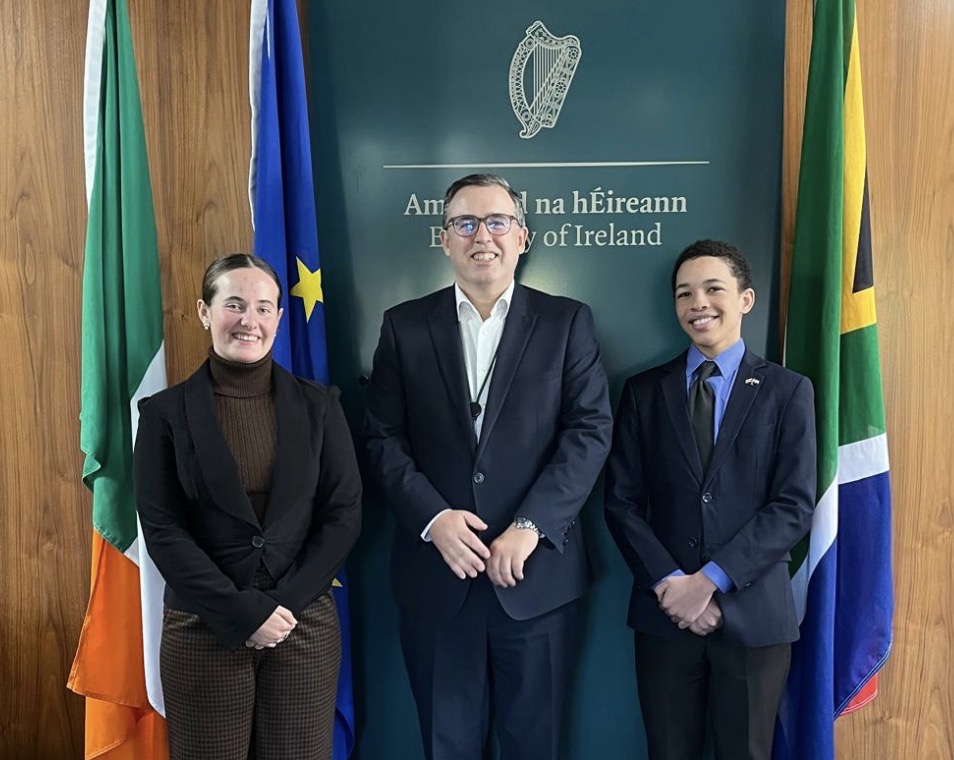
Friday: Visit to the Embassy of Ireland
Rosemary and I also visited the Embassy of Ireland together. We compared the embassy layouts, public services and staff responsibilities.
Ireland’s consular waiting area was noticeably larger, reflecting the fact that it serves a greater number of Irish citizens residing in South Africa. The Dominican Republic’s mission had a smaller team, meaning that staff members often performed multiple functions.
Although both embassies operate within the framework of the Vienna Convention, their priorities and operational structures differ considerably.
I learned that there is no single template for an embassy. Every mission reflects its country’s size, resources, priorities and foreign policy objectives.
Rosemary remarked that it was the first time she understood that embassies are not simply government buildings; they are professional workplaces with deadlines, emails, meetings and administrative responsibilities, much like any other office.
Week Two: Communications, Diplomatic Writing and Solo Embassy Visits
Days 6–9: Diplomatic Correspondence
The second week focused heavily on communication and diplomatic writing.
We were introduced to four common forms of diplomatic correspondence:
- Note Verbale – A formal communication written in the third person and unsigned.
- Aide-Mémoire – A summary of discussions that records information without creating commitments.
- Demarche – A formal request, representation or protest from one government to another.
- Official Letter – A signed and direct communication.
Under supervision, I drafted three letters. My first attempt was too informal and unnecessarily lengthy. An officer demonstrated how five sentences could be condensed into a single, clear statement.
I quickly discovered that diplomatic writing requires precision. Expressions such as “I think” or “maybe” are generally avoided. Instead, diplomats present facts, request action and maintain a respectful tone.
Rosemary initially found this aspect more challenging because diplomatic English was unfamiliar to her. However, staff members patiently guided her, and she later reflected that learning formal writing techniques would benefit her regardless of the career she eventually chooses.
Monday: Solo Visits to Palestine and Oman
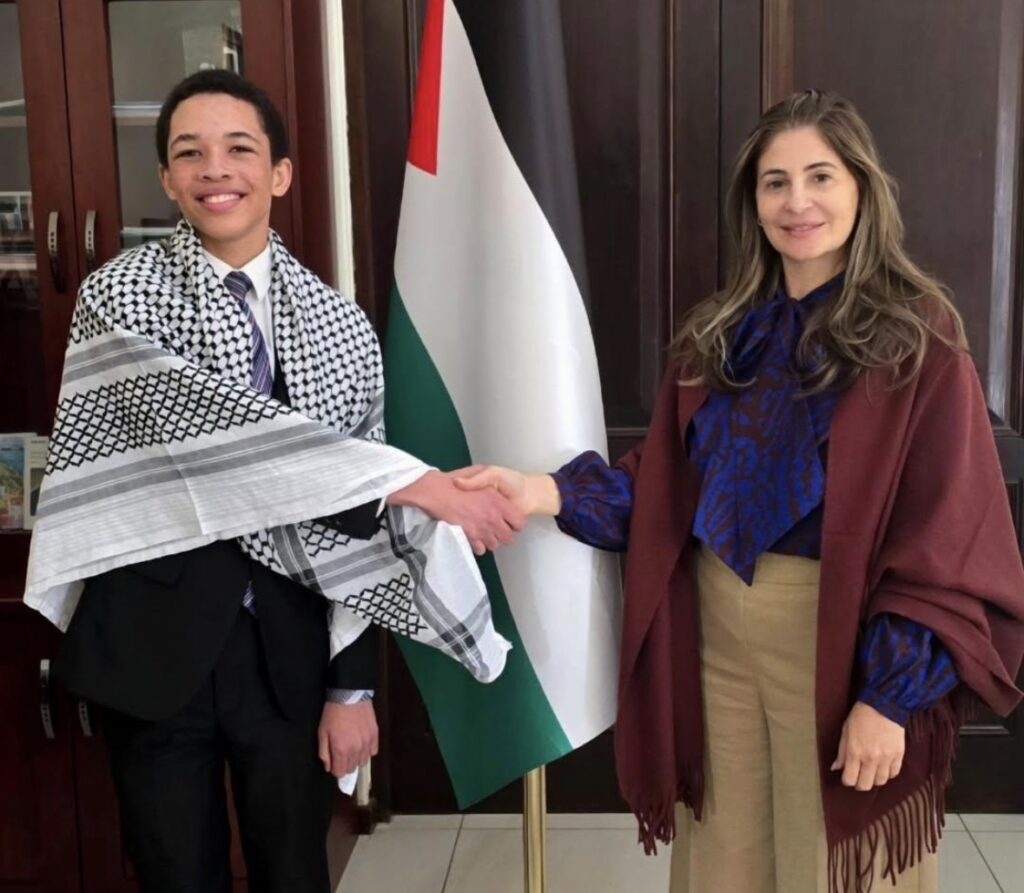
On Monday, I visited the Embassies of Palestine and Oman on my own, while Rosemary remained behind to complete her Life Orientation journal.
At the Embassy of Palestine, I learned how diplomatic missions advocate for their people while simultaneously developing humanitarian partnerships. One official explained:
“Our work is political, but it is also personal. Every letter can affect real lives.”
At the Embassy of Oman, I was struck by the architecture and hospitality. The reception area incorporated traditional Omani design elements, and staff members explained how culture itself serves as an instrument of diplomacy.
One officer remarked:
“We bring Oman to South Africa.”
This illustrated the concept of soft power — influencing others through culture, values, mutual respect and relationships rather than through force.
Both visits demonstrated that even smaller embassies perform significant functions. With limited staff numbers, officers often undertake several responsibilities simultaneously while coordinating closely with other diplomatic missions in Pretoria on issues such as trade, regional cooperation and security.
Skills I Observed
Throughout the two weeks, I observed several important professional skills:
- Attention to Detail – A single typo in a credential letter could have serious consequences.
- Formal Writing – Diplomatic English is a specialised skill that requires practice.
- Cultural Awareness – Diplomats must understand the customs and traditions of both the host country and their own nation.
- Teamwork and Discretion – Staff members collaborate extensively while maintaining confidentiality regarding sensitive matters.
- Patience – Diplomatic processes, meetings and approvals often take considerable time.
Challenges and Reflections
One of my biggest challenges was moving from simply reading about diplomacy to actually practising diplomatic writing. It was much more difficult than I expected.
Rosemary’s main challenge was learning an entirely new vocabulary within a short period of time.
For both of us, perhaps the most important lesson was understanding that diplomacy moves slowly. Trust between countries cannot be rushed.
Before 1 June, I believed diplomacy was mostly speeches, formal suits and ceremonial events. I now understand that diplomacy is approximately 80 per cent careful preparation and administrative work, and 20 per cent ceremonies.
It is a profession well suited to people who enjoy research, writing, analysis and solving problems calmly and professionally.
Rosemary’s reflection was different. She began the experience with no particular interest in diplomacy, but she left with a genuine appreciation for the amount of skill and dedication it requires.
She wrote in her Life Orientation journal:
“I wouldn’t choose it as a career, but I understand why people do.”
That, in itself, is one of the purposes of job shadowing — discovering what suits you and gaining respect for professions you may never have considered before.
My prior interest in diplomacy made me enthusiastic about the placement, while Rosemary’s fresh perspective helped me notice details I might otherwise have overlooked. The public holiday during the first week also reminded us that real workplaces function according to real schedules and practical considerations.
I am grateful to the staff of the Embassy of the Dominican Republic for allowing us to observe their work and participate in some of their activities.
To other Grade 10 learners, I would offer this advice: do not choose a job shadowing placement simply because it sounds impressive. Choose something that challenges your assumptions and broadens your understanding.
I thought I already understood diplomacy. Two weeks proved that I had only ever known the headlines.
If you are curious about international relations, ask questions and reach out to embassies. Some of the most meaningful lessons are not found in textbooks, but in watching people represent their country through thoughtful decisions, professional conduct and careful communication—one decision at a time.
Thank you very much for reading.
Marciano Domingo
Future Diplomat