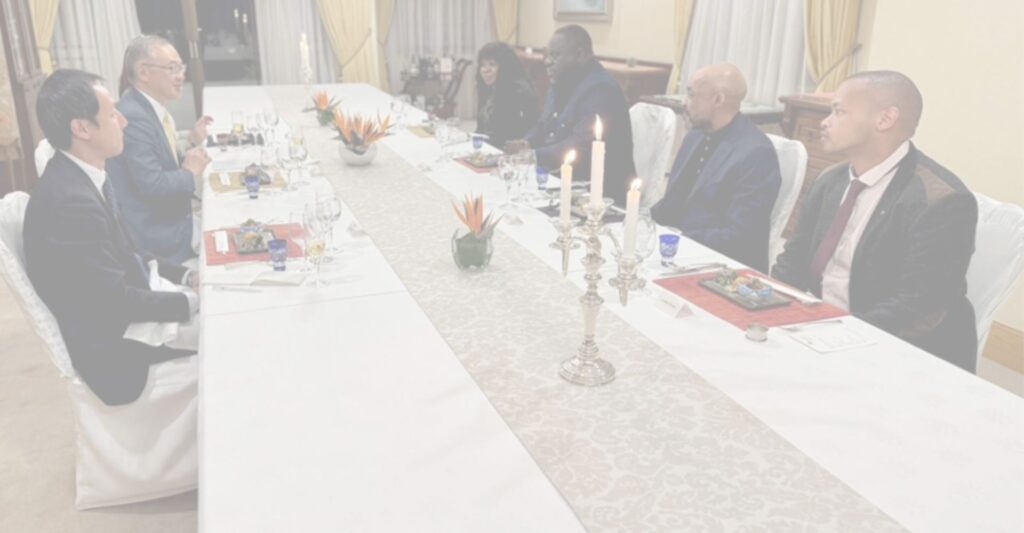
The visit to South Africa by Poland’s Deputy Prime Minister and Minister of Foreign Affairs, Radosław Sikorski, has given renewed momentum to relations between South Africa and Poland, with high-level political consultations, economic diplomacy and business engagement forming key pillars of the visit.
Deputy Prime Minister Sikorski visited South Africa on 1 and 2 July 2026, with his programme including bilateral discussions with South Africa’s Minister of International Relations and Cooperation, Ronald Lamola, engagement with representatives of Polish businesses, and a commemorative visit to a monument in Johannesburg honouring victims of the Katyń massacre and Allied airmen who supported the Warsaw Uprising.
The visit underscored the growing importance that both countries are placing on strengthening political dialogue and expanding economic cooperation.
Lamola and Sikorski Hold Bilateral Talks in Pretoria
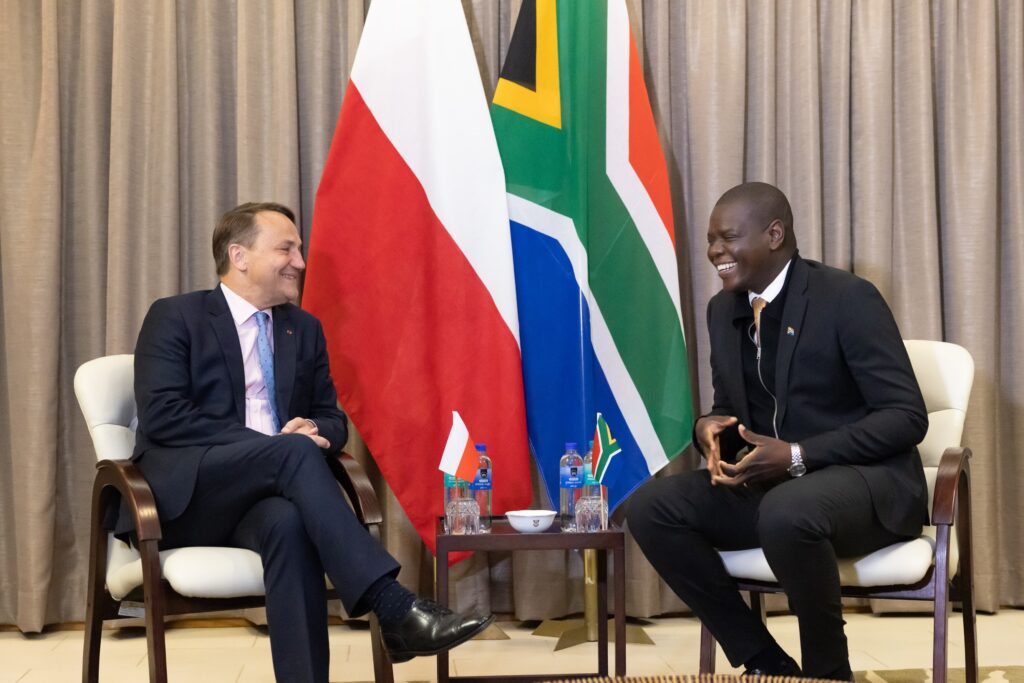
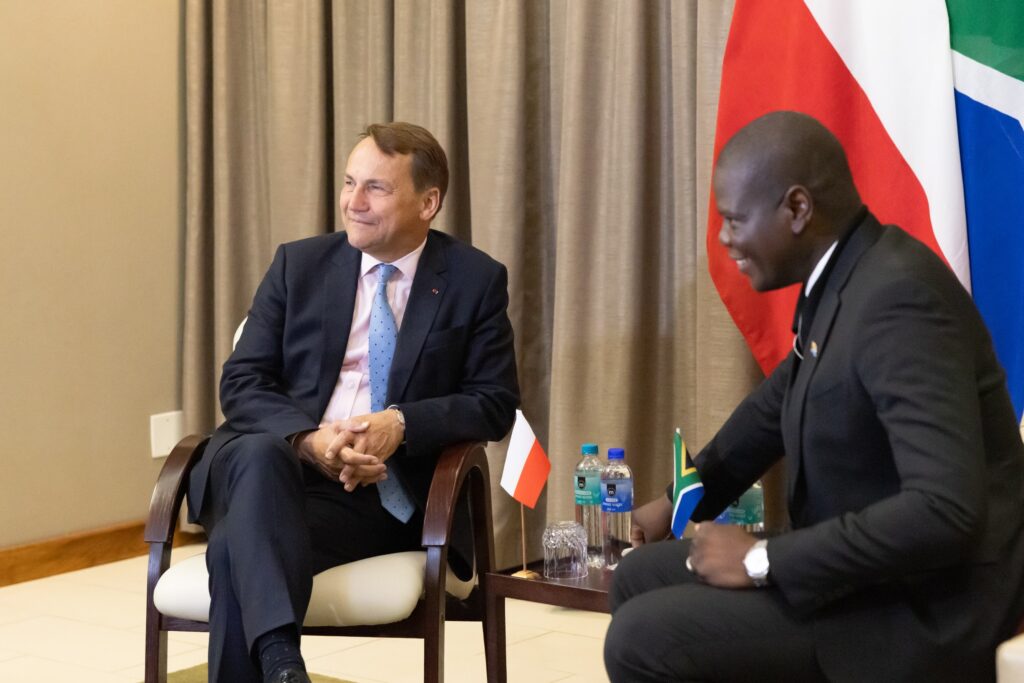
At the centre of the visit was a bilateral meeting between Minister Ronald Lamola and Deputy Prime Minister Radosław Sikorski at the OR Tambo Building in Pretoria on Thursday, 2 July 2026.
The engagement marked the first ministerial-level meeting between South Africa and Poland in several years and followed discussions between the two ministers on the margins of the 2026 World Economic Forum in Davos, Switzerland.
The Pretoria meeting provided an opportunity for the two countries to assess the state of bilateral relations and identify practical areas through which cooperation could be strengthened.
A key priority was the need to reactivate outstanding bilateral mechanisms, including the long-awaited inaugural session of the Joint Commission on Economic Cooperation (JCEC). The mechanism has the potential to provide a structured platform through which South Africa and Poland can advance cooperation in trade, investment and other areas of mutual economic interest.
The ministers also exchanged views on regional and international developments. According to the Polish Ministry of Foreign Affairs, discussions included South Africa’s growing role in conflict mediation, its relations with the European Union and the future evolution of the G20.


A Relationship with Significant Economic Potential
The visit placed considerable emphasis on economic diplomacy and the role of businesses in deepening relations between the two countries.
Poland regards South Africa as an important partner in Sub-Saharan Africa. According to the Polish Ministry of Foreign Affairs, South Africa is Poland’s most important partner in the sub-Saharan region and its second-largest economic partner on the African continent after Morocco.
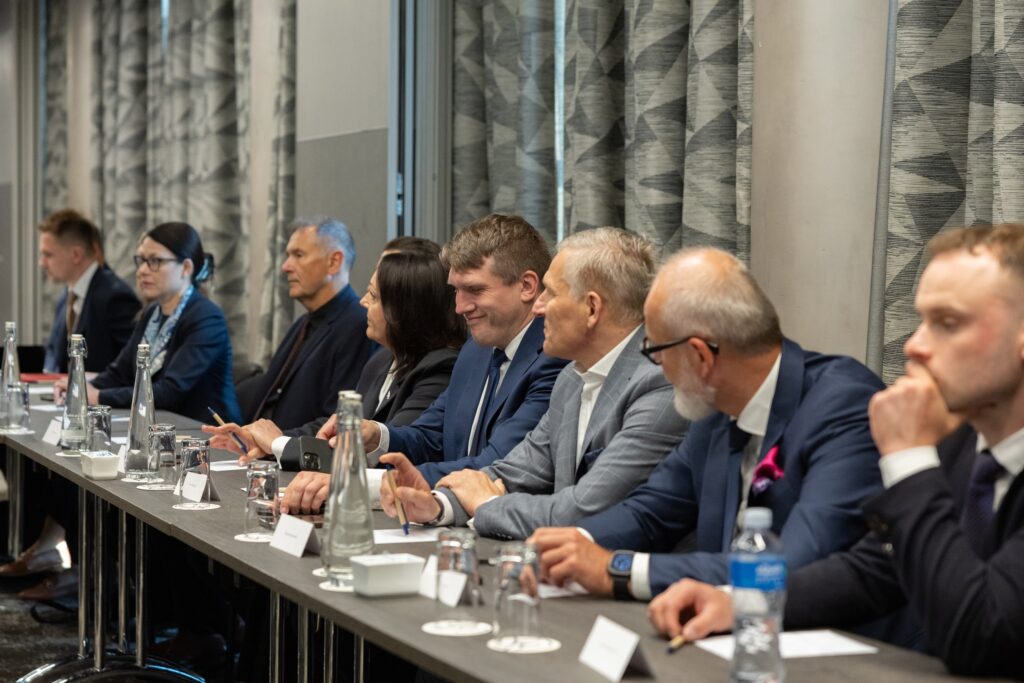
During the South African visit, Deputy Prime Minister Sikorski, together with Poland’s Deputy Minister of Development and Technology, Michał Baranowski, engaged representatives of Polish companies on opportunities to improve market access and address barriers faced by businesses seeking to expand their operations.
The engagement reflected a broader effort to connect political diplomacy with practical economic outcomes.
For South Africa, a stronger relationship with Poland offers opportunities to deepen commercial engagement with one of Central Europe’s largest economies and explore cooperation in sectors where Polish companies possess technical expertise and international experience.
For Poland, South Africa provides a strategic gateway into wider African markets and an increasingly important platform for engagement with the continent.
The proposed activation of the JCEC could therefore become an important instrument for translating diplomatic relations into measurable economic cooperation, business partnerships and increased two-way investment.



Sikorski Reflects on Resilience and the Importance of Decency
During the visit, Deputy Prime Minister Sikorski also reflected on Poland’s historical experience and the importance of resilience in confronting adversity.
Speaking during the visit, Sikorski emphasised that success is not always determined by strength alone, but also by persistence in defending principles and values.
The message formed part of a wider reflection on the importance of principled conduct in international affairs at a time of heightened geopolitical tensions and growing uncertainty within the international system.
The visit demonstrated that historical experience continues to inform Poland’s contemporary foreign policy outlook, particularly on questions of sovereignty, international law and national resilience.

He invoked the words of former Polish Foreign Minister Władysław Bartoszewski:
“If you don’t know how to behave, behave decently.”
Remembering the Victims of the Katyń Massacre and Allied Airmen
The South African programme also carried an important commemorative dimension.
During his time in Johannesburg, Deputy Prime Minister Sikorski paid tribute at a monument commemorating victims of the Katyń massacre. The memorial also honours Allied airmen who lost their lives while undertaking missions to provide assistance to the Warsaw Uprising.
Together with representatives of the Polish community and Polish institutions in South Africa, Sikorski honoured the memory of those who lost their lives.
The commemoration highlighted the historical connections that exist between Poland and South Africa beyond formal diplomatic relations and contemporary economic cooperation.


Renewed Momentum for South Africa–Poland Relations
The visit of Deputy Prime Minister Radosław Sikorski comes at an important moment for South Africa–Poland relations.
The return of high-level ministerial dialogue creates an opportunity for both governments to establish a more structured and results-oriented relationship. The challenge following the visit will be to translate political goodwill into regular institutional engagement and concrete economic outcomes.
The activation of the Joint Commission on Economic Cooperation would be an important next step. Regular business engagements, investment missions, sector-specific cooperation and stronger connections between companies in both countries could further support the relationship.
South Africa and Poland also have opportunities to deepen cooperation through multilateral institutions and broader Africa–Europe engagement.
Deputy Prime Minister Sikorski’s visit demonstrated the potential for a relationship that combines political dialogue, economic diplomacy, historical understanding and practical business cooperation.
As South Africa seeks to diversify its international economic partnerships and Poland expands its engagement with Africa, the renewed dialogue between Pretoria and Warsaw could provide the foundation for a more ambitious phase in bilateral relations.