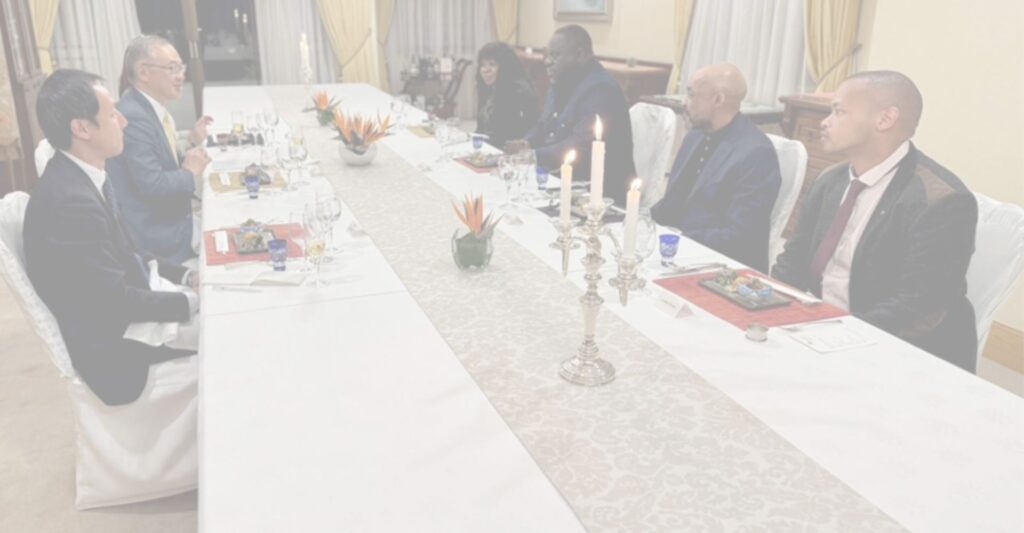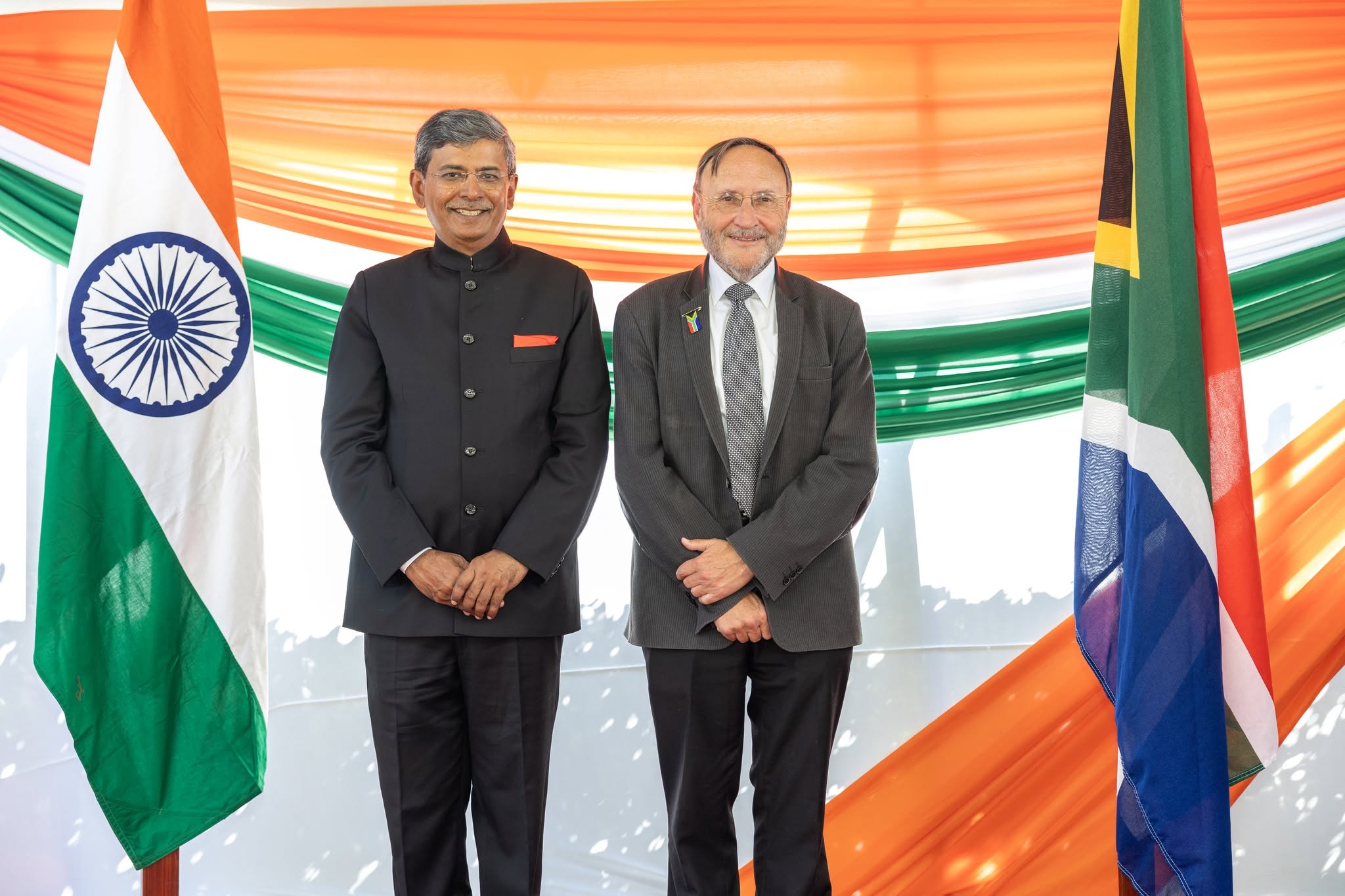
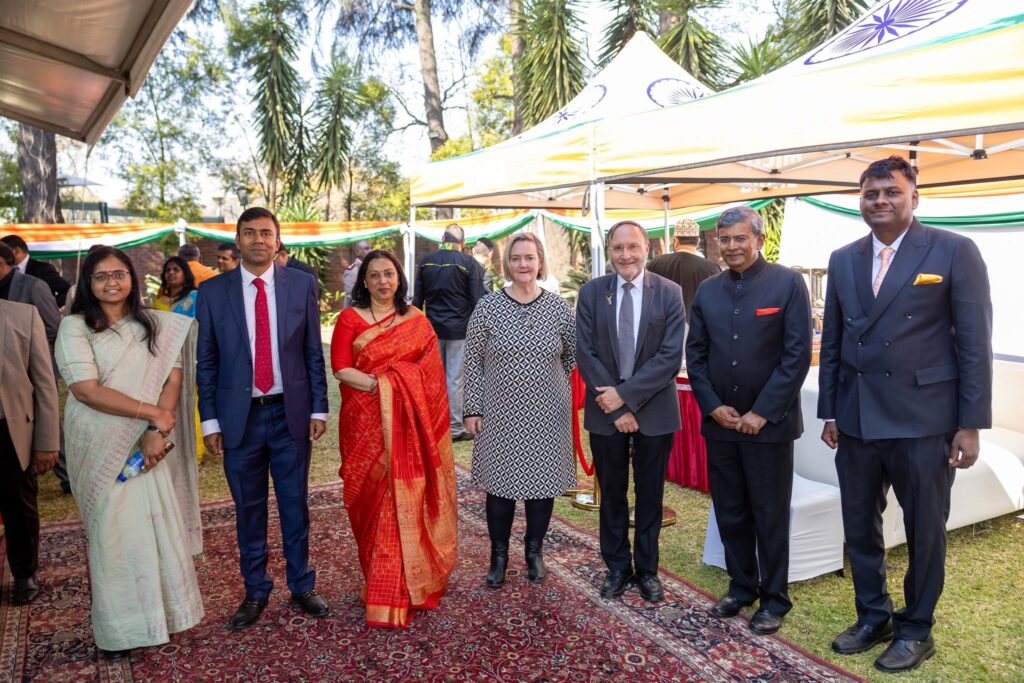
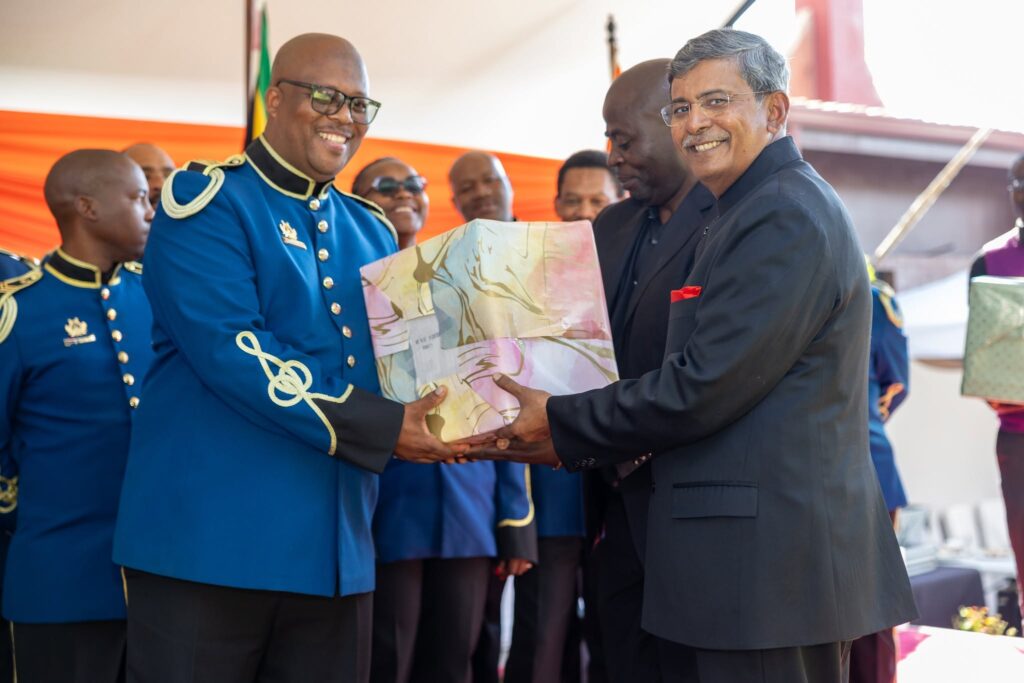
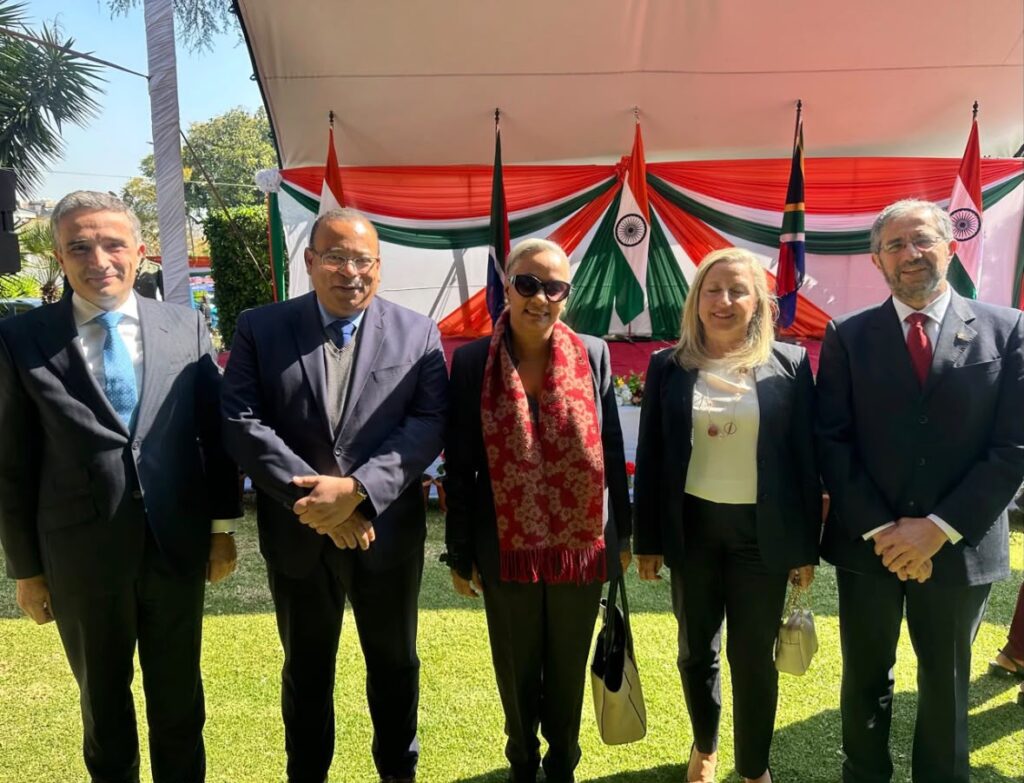
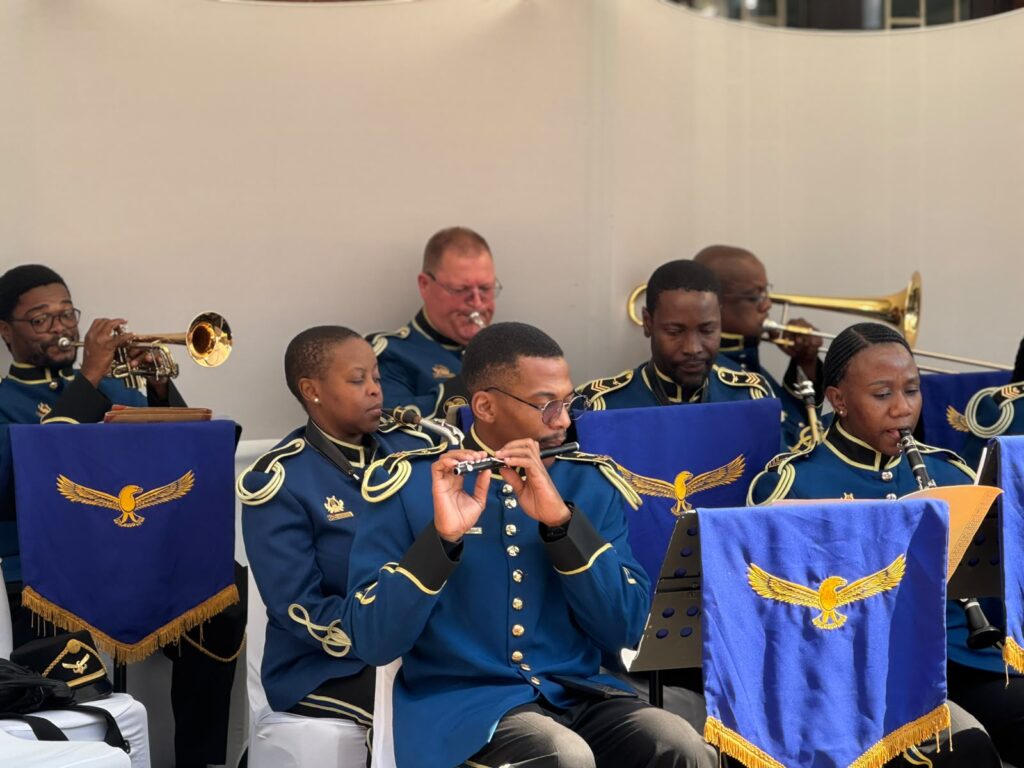
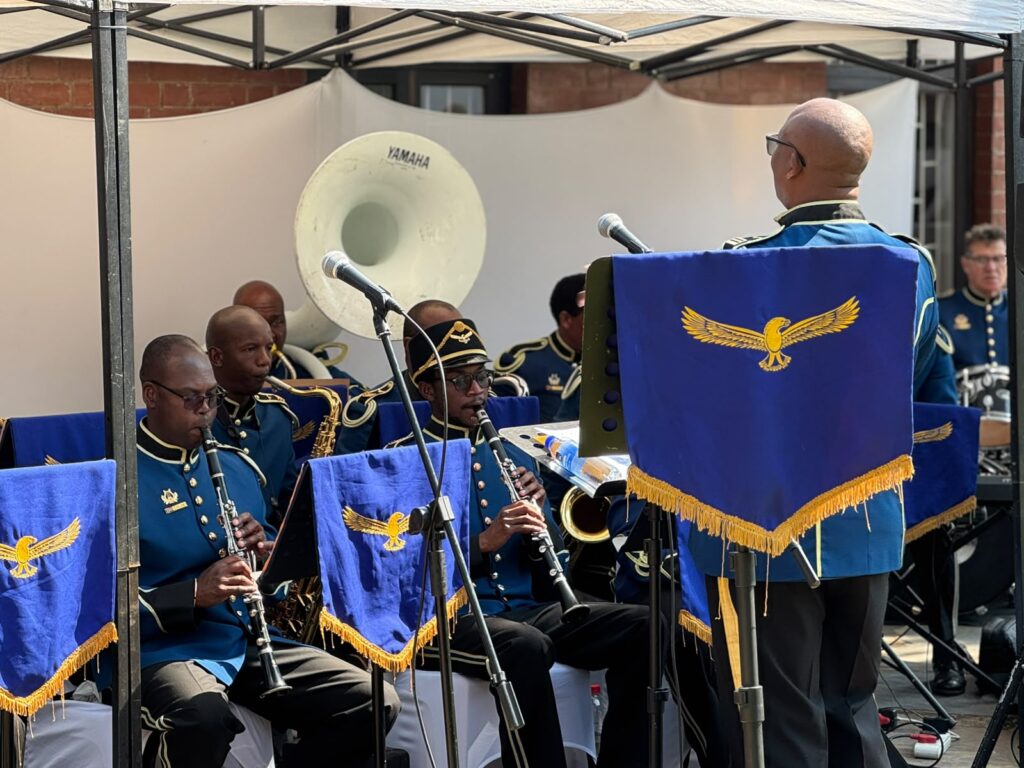
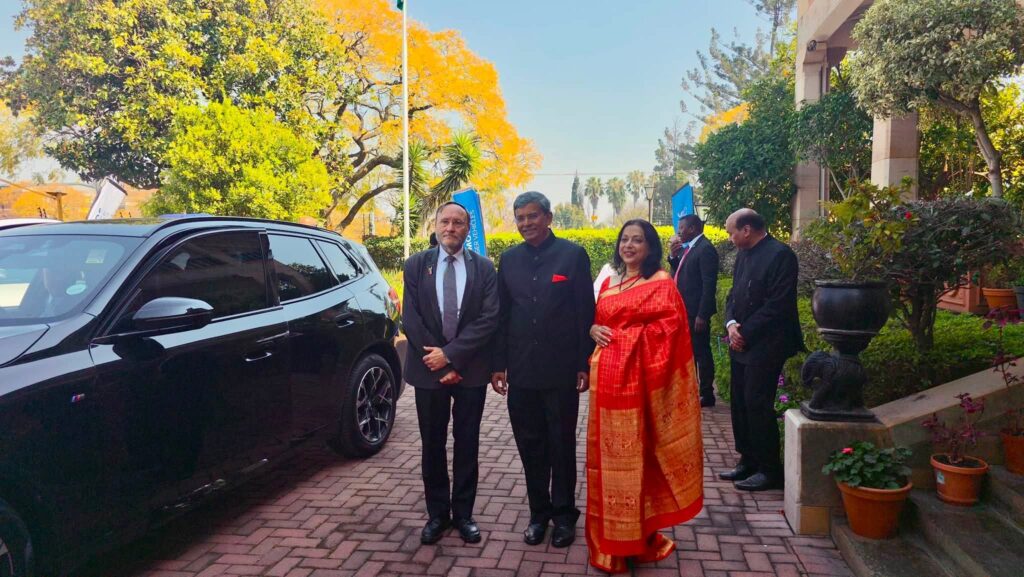
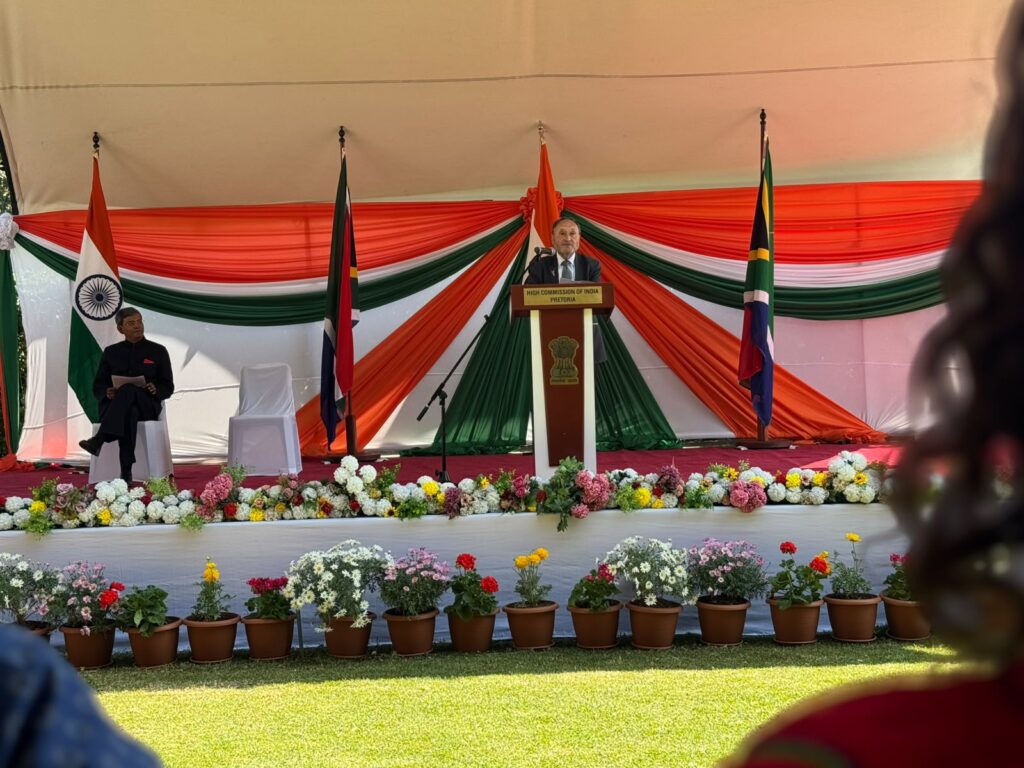
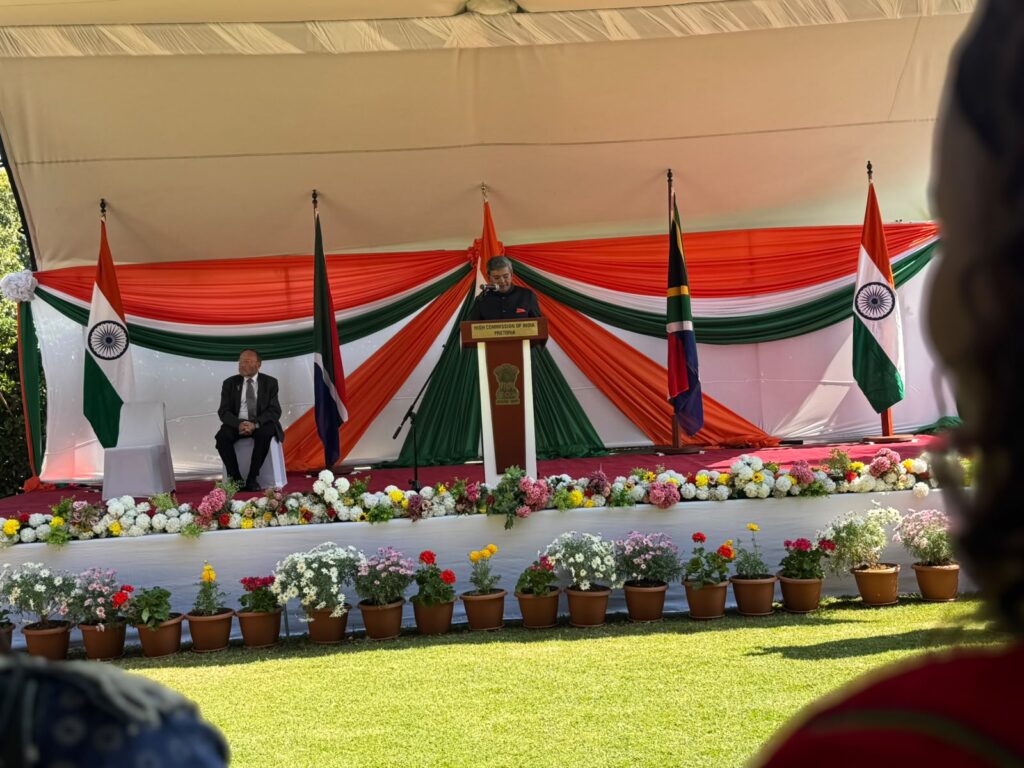
The High Commission of India in Pretoria hosted a reception to mark India’s 80th Independence Day, bringing together senior South African government officials, members of the diplomatic corps, business leaders, representatives of the Indian community and other distinguished guests to celebrate India’s independence and the enduring partnership between India and South Africa.
The event provided an opportunity not only to commemorate India’s historic independence on 15 August 1947, but also to reflect on the depth and breadth of relations between India and South Africa, with particular attention to political, economic, trade, defence, education, cultural and people-to-people cooperation.
A celebration of India’s independence and democratic journey
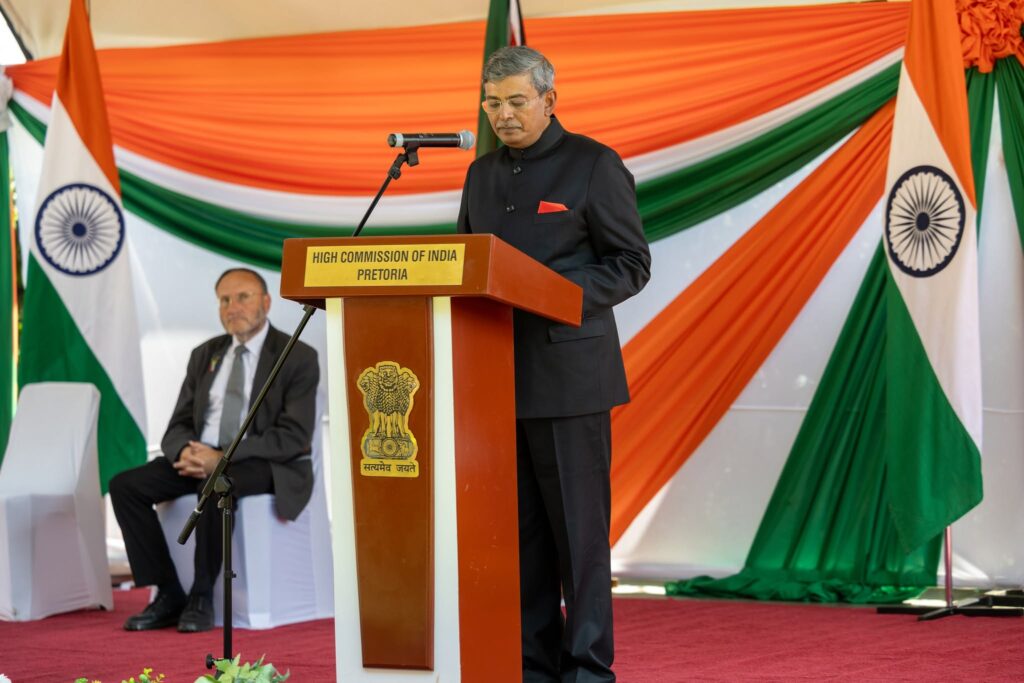
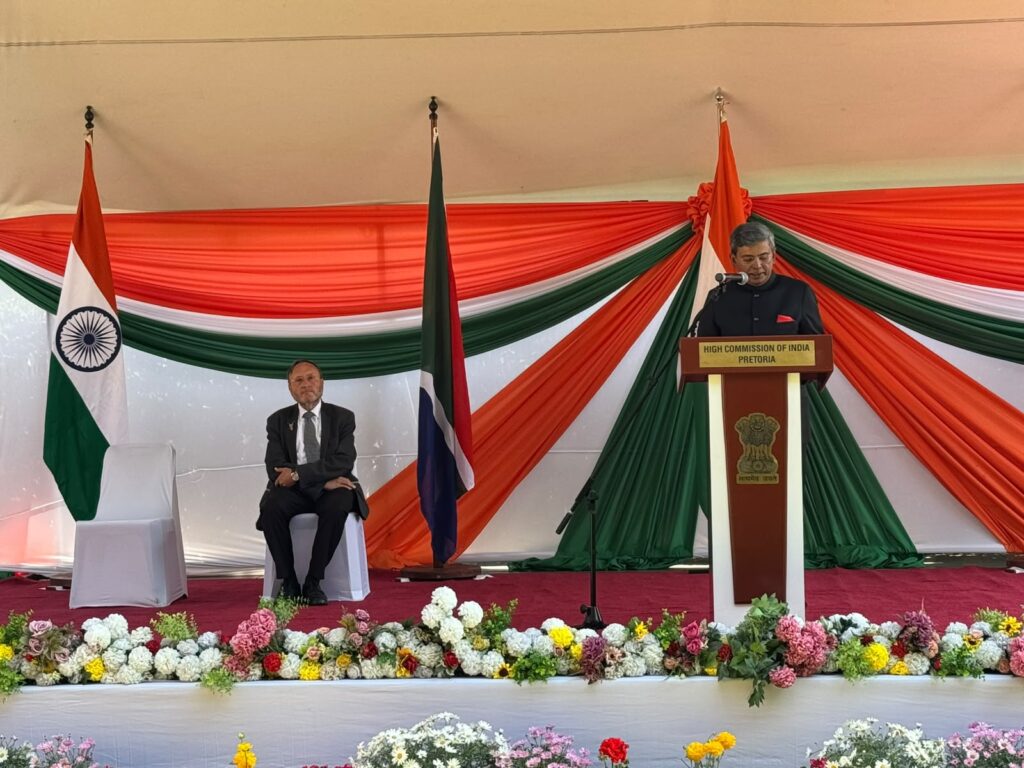
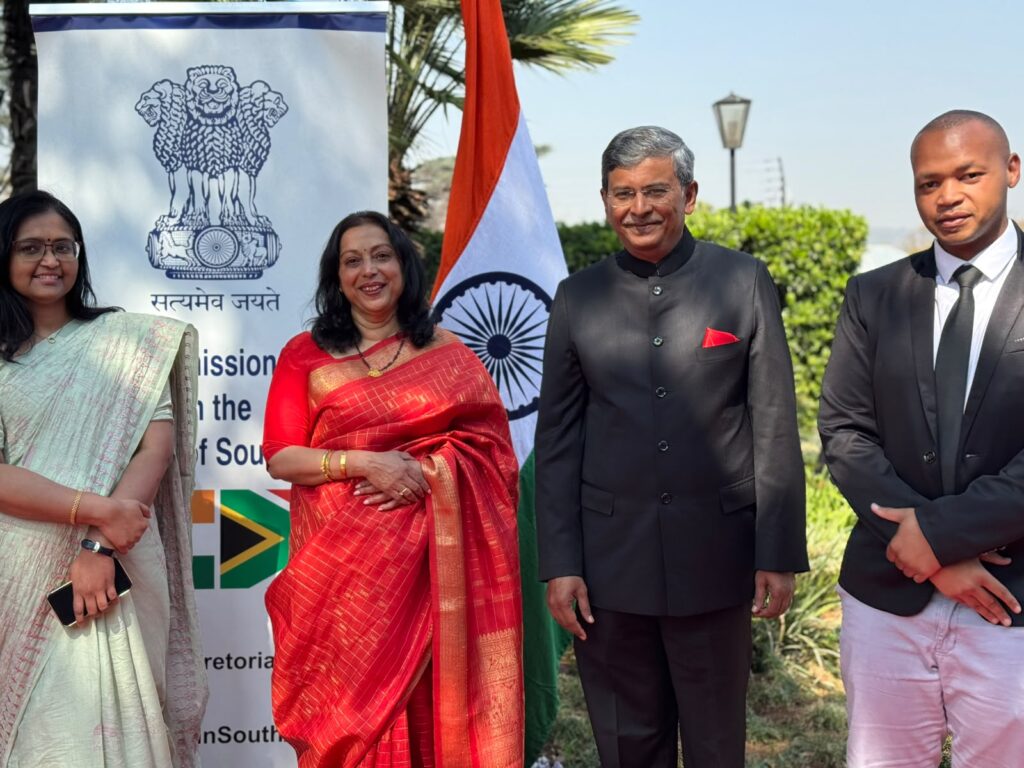
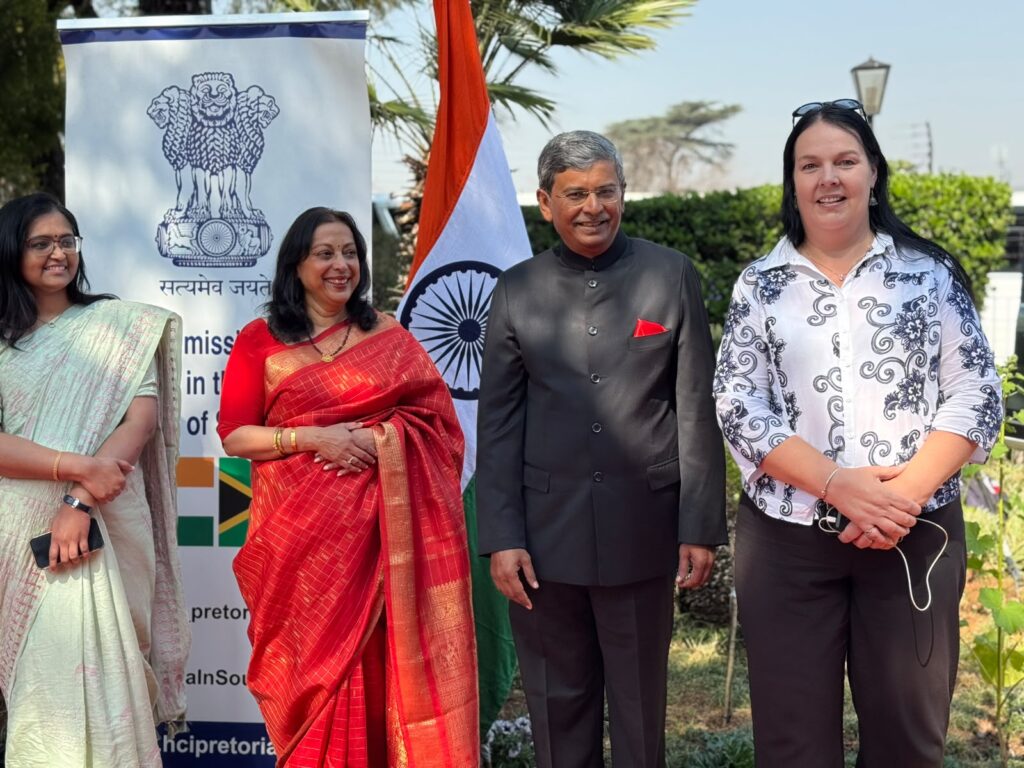
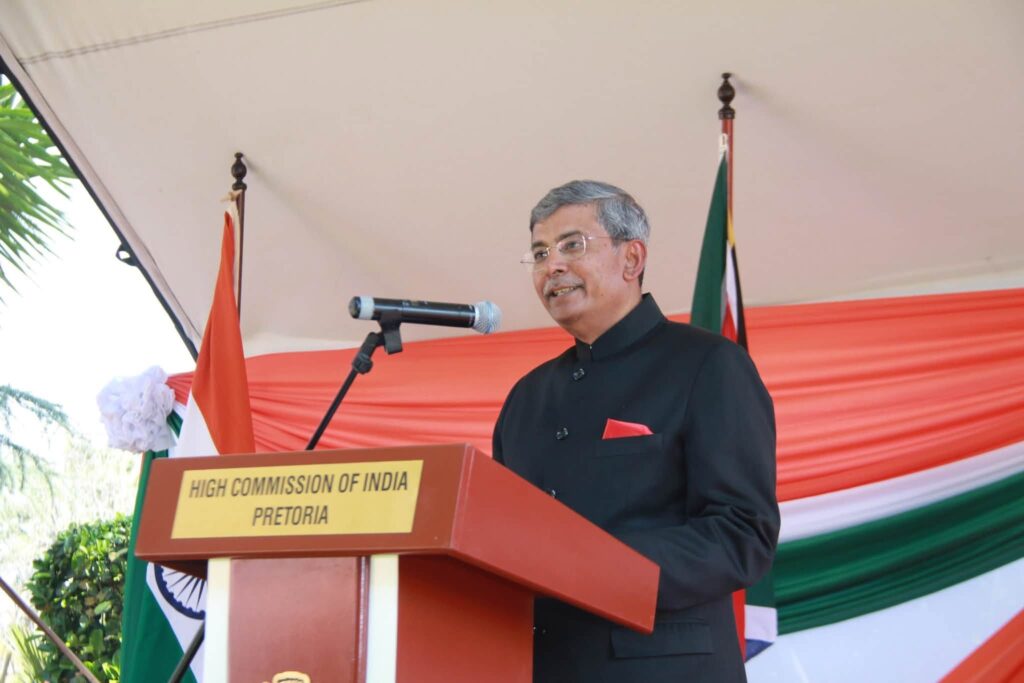
Welcoming guests, High Commissioner of India to South Africa Shri Prabhat Kumar reflected on India’s journey since independence and the foundations laid by the adoption of the country’s Constitution in 1950.
He described these foundations as central to India’s socio-economic transformation over the decades, while emphasising the country’s evolution as an inclusive, vibrant and democratic state.
The High Commissioner used the occasion to highlight the substantial progress made in the India–South Africa relationship during the past year.
Among the senior dignitaries attending the reception was Dr Jack Bloom, Deputy Minister of Water and Sanitation of the Republic of South Africa, who served as the Chief Guest and represented the South African Government.
The gathering also included members of the diplomatic corps, senior government officials, business leaders, representatives of Indian diplomatic missions and consulates, members of the Indian community and other invited guests.
G20 strengthens India–South Africa engagement
A major focus of High Commissioner Kumar’s remarks was the close cooperation between India and South Africa through multilateral platforms.
He highlighted the visit of Prime Minister Narendra Modi to Johannesburg for the 20th G20 Summit in November 2025, where the Indian Prime Minister held bilateral discussions with President Cyril Ramaphosa and participated in the IBSA Leaders’ Meeting on the margins of the summit.
India also participated actively in the ministerial and working-level processes during South Africa’s G20 Presidency.
The High Commissioner expressed appreciation to South Africa for its leadership of the G20 process, describing the presidency as an important platform for advancing cooperation on issues of shared global concern.
BRICS provides another platform for closer cooperation
With India chairing BRICS in 2026, the grouping has become another important avenue for strengthening bilateral and multilateral cooperation between India and South Africa.
High Commissioner Kumar noted South Africa’s active participation in BRICS meetings being hosted in India, including visits by senior South African ministers.
He also looked ahead to the upcoming BRICS Summit in New Delhi on 12 and 13 September 2026, where South African President Cyril Ramaphosa is expected to participate.
The BRICS relationship, he emphasised, provides both countries with an opportunity to advance their common interests within the broader Global South.

Trade and investment remain central to the relationship
Economic cooperation featured prominently in the High Commissioner’s address.
According to Kumar, bilateral trade reached approximately US$15.57 billion, while Indian investment in South Africa during 2025 stood at approximately R3 billion.
An important development highlighted at the reception was the signing of the Terms of Reference for negotiations towards a trade agreement between India and the Southern African Customs Union (SACU).
The agreement was presented as an important step towards expanding trade and investment between India and SACU member states.
The High Commissioner also pointed to the role of Indian companies and business leaders in South Africa and the potential for further commercial cooperation between the two countries.

Critical minerals and mining emerge as strategic opportunities
Mining and critical minerals were identified as promising areas for future India–South Africa cooperation.
Kumar highlighted India’s participation in the Mining Indaba in Cape Town, including the involvement of India’s Minister of State for Mines, Shri Satish Chandra Dubey, who led a business delegation.
He also spoke about his recent visit to the Northern Cape with a delegation of Indian business leaders, aimed at deepening engagement in mining and investment.
Another important initiative was the India–Africa Critical Minerals Symposium, held in partnership with the University of Pretoria in March 2026.
The symposium brought together mining companies, industry experts, consultants and academics from leading Indian institutions, including the Indian Institutes of Technology, to explore opportunities for cooperation in critical minerals.
The sector is increasingly important as countries seek secure and diversified access to minerals required for modern technologies, manufacturing and the energy transition.


Defence cooperation continues to expand
Defence relations also featured in the High Commissioner’s assessment of bilateral ties.
Following the 9th India–South Africa Joint Defence Committee meeting in June 2025, Navy-to-Navy talks were held later that year.
The South African Navy frigate SAS Amatola, accompanied by a senior naval delegation led by Chief of the South African Navy Vice Admiral Monde Lobesi, participated in the International Fleet Review 2026 and Milan 2026 in Visakhapatnam, India.
The engagements demonstrated the continued development of defence and maritime cooperation between the two countries.


People-to-people ties remain at the heart of the relationship
Beyond government and economic relations, the reception highlighted the importance of the longstanding people-to-people connection between India and South Africa.
High Commissioner Kumar referred to the Indian diaspora as a living bridge between the two countries, noting the historical and contemporary contribution of South Africans of Indian origin.
He also highlighted the second edition of PIO Connect, hosted in Pretoria, as part of efforts to strengthen engagement with the Indian diaspora.
The High Commission has continued to promote community, cultural and educational links, including through initiatives such as International Yoga Day and other programmes.

Education, tourism and development cooperation
Education was another important area highlighted during the reception.
According to Kumar, Indian universities have entered into new partnerships with South African higher education institutions, while more than 100 academic scholarships were offered to students from South Africa and Lesotho under the India-Africa Merit Scholarship Programme.
Tourism cooperation has also continued to develop, with initiatives aimed at making travel between the two countries easier and increasing tourism flows.
The High Commissioner further noted that approximately 50 South African nationals travelled to India during the previous year under various capacity-building and training programmes.
These initiatives reflect a broader development partnership focused on skills, knowledge-sharing, capacity-building and sustainable development.
Culture connects two societies
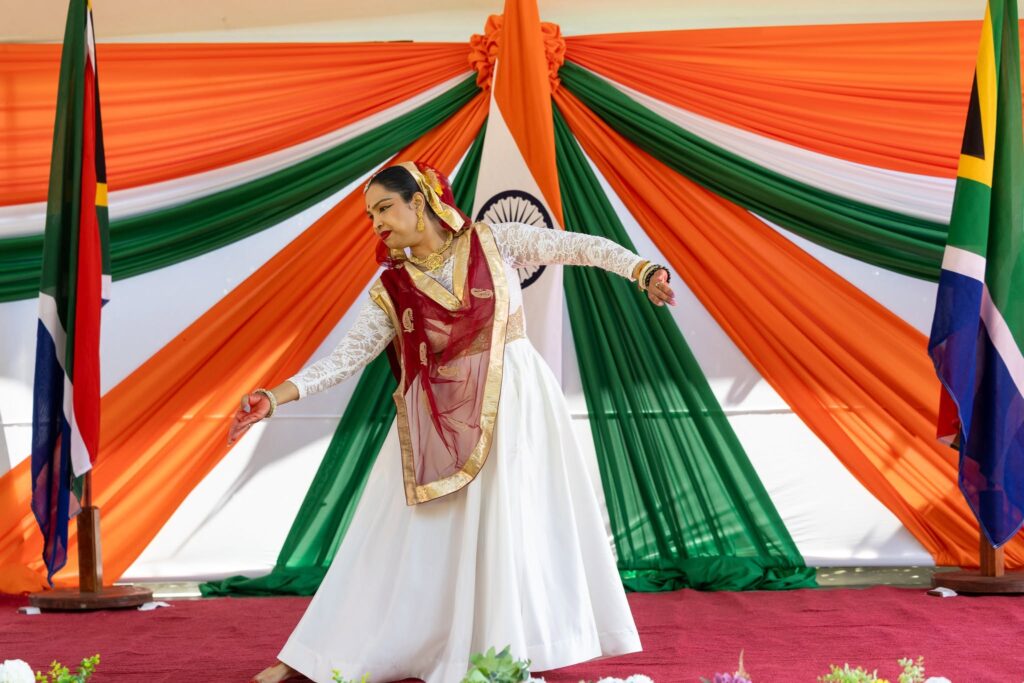
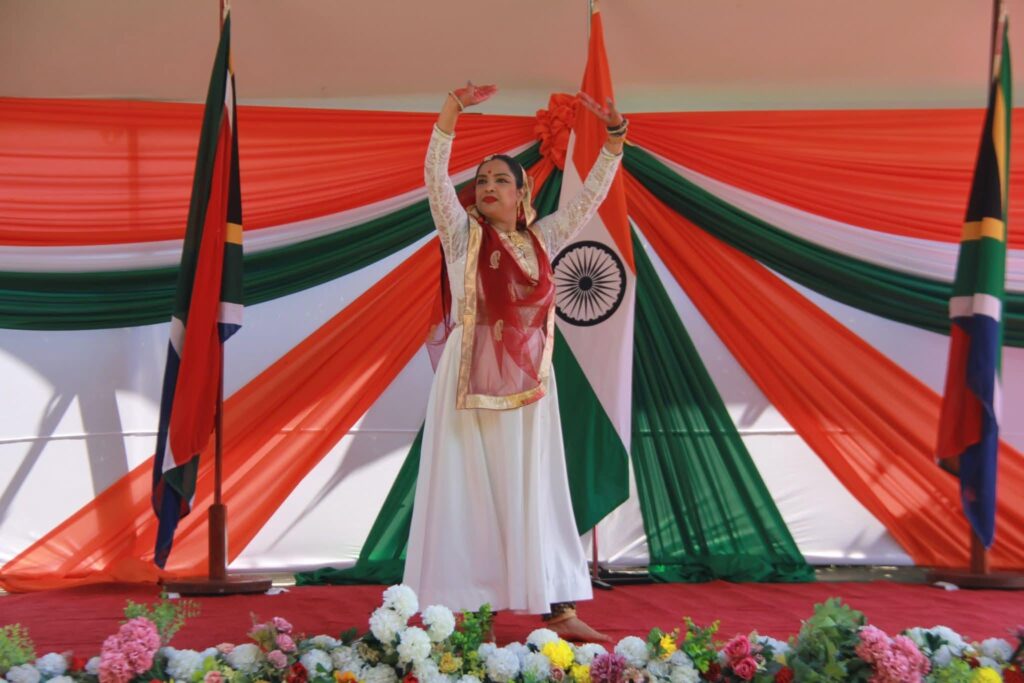
Cultural diplomacy featured strongly in the celebration.
The High Commissioner welcomed the installation of a bust of Mahatma Gandhi at the War Museum in Bloemfontein, recognising Gandhi’s legacy of peace as well as the historical experiences of people of Indian origin in South Africa.
He also highlighted the documentary Caught in the Crossfire, which explores aspects of the shared history and cultural connections between India and South Africa.
An Indian Film Festival in Durban in March 2026 featured eight films dubbed in isiZulu, accompanied by discussions involving Indian and South African filmmakers.
The International Day of Yoga celebrations also attracted significant participation across South Africa, with more than 20,000 participants taking part in activities in Pretoria, Johannesburg, Durban and Cape Town.
Cricket adds a lighter dimension to bilateral relations
No discussion of India–South Africa people-to-people relations would be complete without cricket.
High Commissioner Kumar referred humorously to the countries’ sporting rivalry, noting that India’s women’s team defeated South Africa in the ODI World Cup, while South Africa prevailed over India in a T20 series on home soil.
He described the outcome, diplomatically, as a “balanced outcome”—a light-hearted reflection of the sporting rivalry that continues to bring the two nations together.
Jack Bloom reflects on India’s civilisational contribution
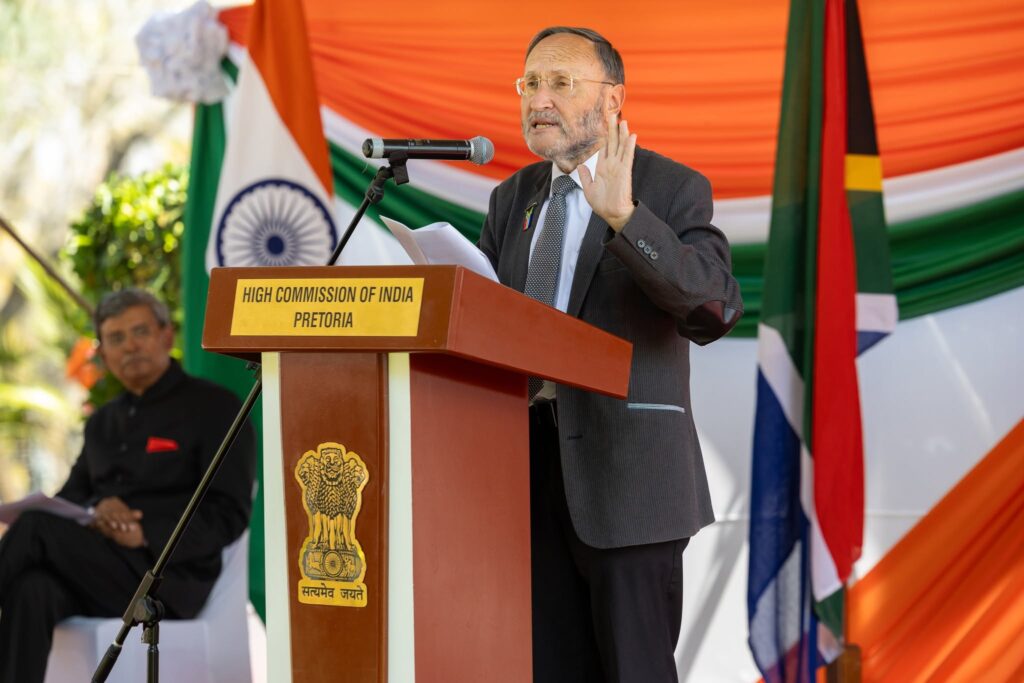
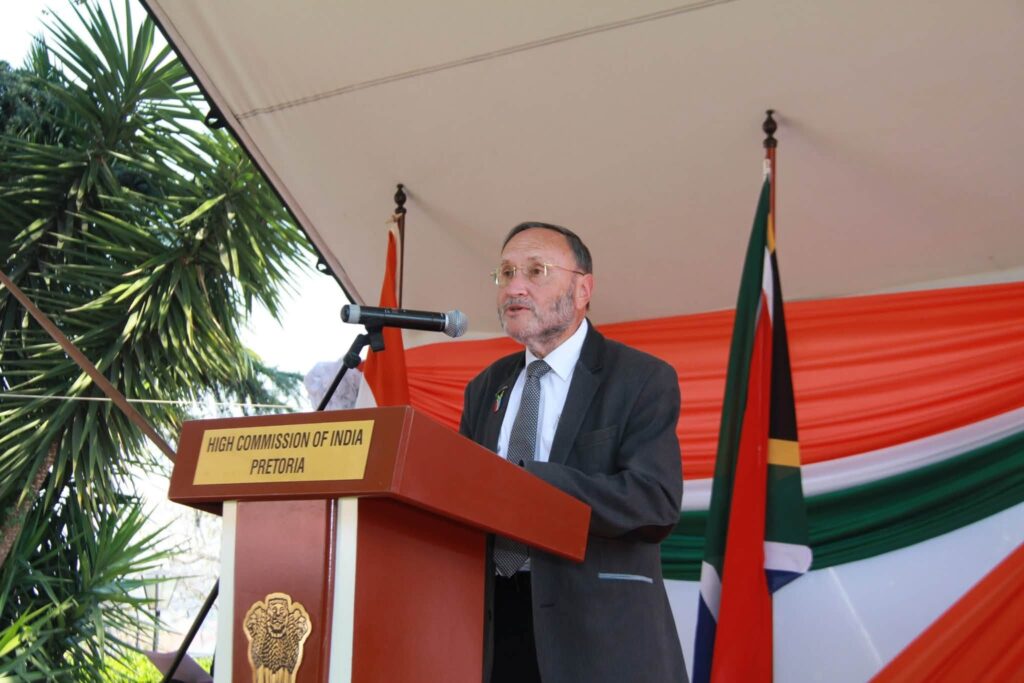
Delivering the keynote remarks as Chief Guest, Dr Jack Bloom, Deputy Minister of Water and Sanitation, congratulated India on its 80th Independence Day and reflected on the country’s extraordinary historical and civilisational contributions.
Bloom spoke about India’s contributions to mathematics, medicine, astronomy, engineering, architecture, religion and philosophy.
He particularly highlighted the Indian origins of the decimal numeral system and the concept of zero, while recalling his own visit to Delhi and the remarkable ancient iron pillar known for its resistance to corrosion.
India’s diversity and democratic achievement
Bloom also placed significant emphasis on India’s extraordinary linguistic, cultural and demographic diversity.
He noted that India has hundreds of languages and a vast number of dialects and scripts, making the country’s democratic achievements particularly significant.
The Deputy Minister highlighted India’s 2024 general election as an example of the enormous logistical undertaking involved in maintaining democracy across such a vast and diverse country.
The scale of India’s electorate, geography and parliamentary constituencies, he argued, demonstrated the complexity of conducting democratic elections in the world’s most populous country.
Bloom used the observation of his late parliamentary colleague and former ambassador Douglas Gibson to underline this point: that the diversity found within a single Indian province could, in some respects, exceed that of South Africa as a whole.
India’s economic rise attracts South African attention
The Deputy Minister also praised India’s economic transformation.
He pointed to India’s rapid economic growth since the liberalisation reforms of 1991 and its emergence as one of the world’s largest economies.
Bloom highlighted India’s achievements in manufacturing, technology, steel, automobiles, entrepreneurship and digital connectivity.
For South Africa, he suggested, India’s experience provides valuable lessons as the country seeks to unlock economic growth, entrepreneurship and development.
A shared history of solidarity against apartheid
Perhaps one of the strongest themes in Bloom’s speech was the historic solidarity between India and South Africa.
He recalled that India took the issue of apartheid to the United Nations in 1946, before India’s independence, and subsequently severed trade relations with apartheid South Africa.
India remained a strong supporter of the international struggle against racial discrimination and apartheid.
Bloom also highlighted the relationship between Nelson Mandela and India, noting the importance of the Red Fort Declaration of 1997, which provided an institutional framework for the strategic partnership between the two countries.
The history of solidarity between the two nations remains one of the strongest foundations of their modern diplomatic relationship.