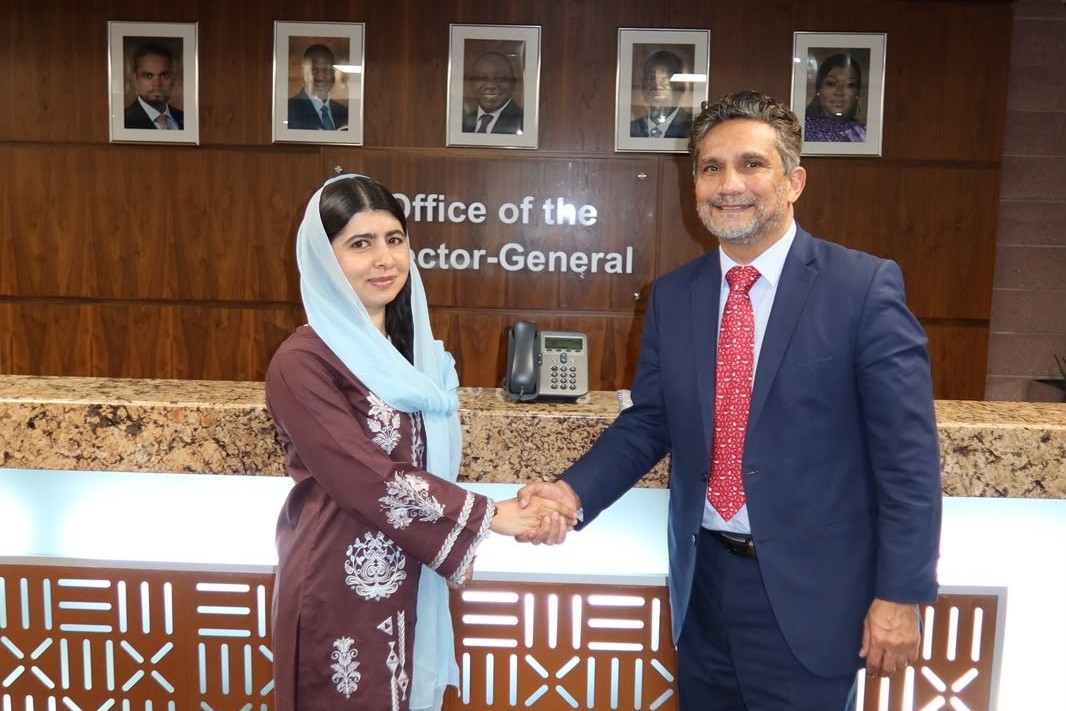
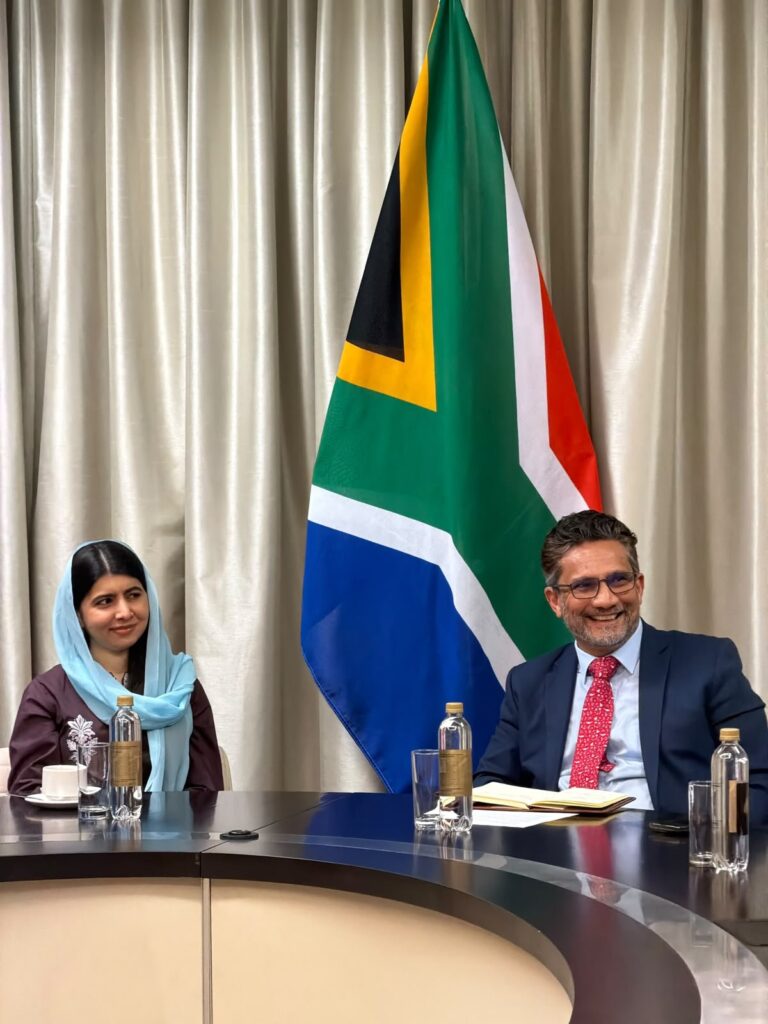
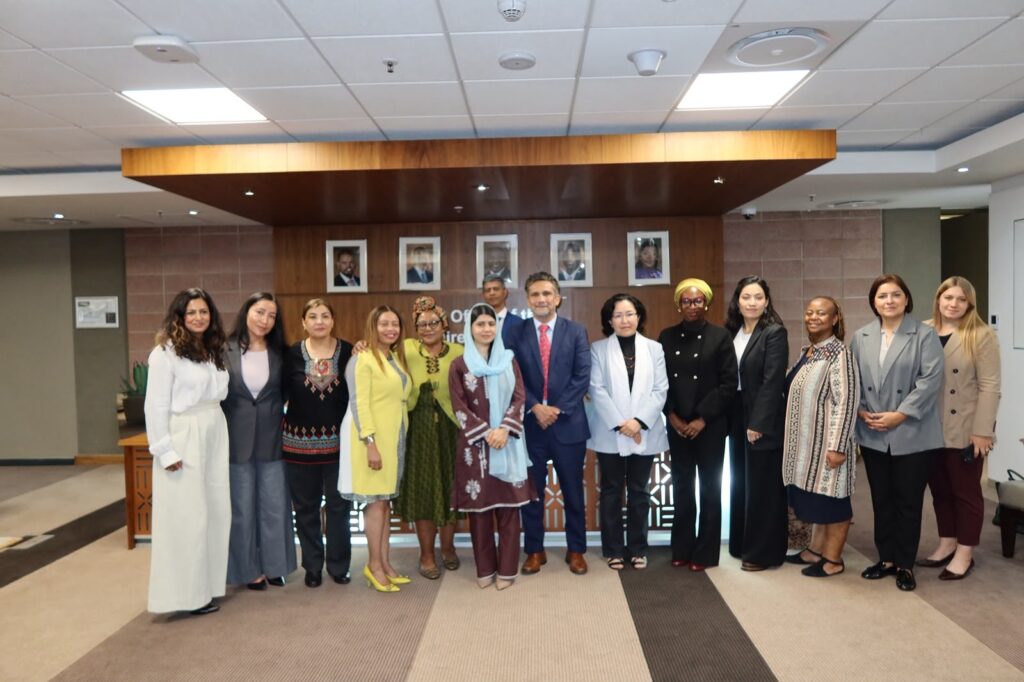
South Africa’s Director-General of the Department of International Relations and Cooperation (DIRCO), Mr Zane Dangor, has met with Nobel Peace Prize laureate Malala Yousafzai and a delegation of Afghan women leaders to discuss the deteriorating situation of women and girls in Afghanistan and the growing international call for accountability.
The engagement focused on the issue of gender apartheid in Afghanistan, as well as ways in which the international community can provide stronger political support to Afghan women and girls in their pursuit of justice, equality and accountability.
The meeting brought together prominent voices advocating for the rights of Afghan women at a time when restrictions imposed under Taliban rule continue to severely limit women’s and girls’ access to education, employment, political participation and public life.
Focus on justice and accountability
Central to the discussions was the question of how the international community can move beyond expressions of concern and take meaningful political action to support Afghan women.
The participants discussed the importance of ensuring that Afghan women remain at the centre of international discussions concerning Afghanistan, particularly in efforts aimed at securing justice and accountability for systematic violations of their rights.
The engagement also highlighted the importance of strengthening international mechanisms capable of addressing serious human rights violations and ensuring that those responsible are held accountable.
The issue has previously featured in South Africa’s engagement at the multilateral level. In 2023, Dangor, then representing South Africa’s Permanent Mission to the United Nations, participated in a high-level discussion on combating gender apartheid in Afghanistan. During that engagement, he raised questions around the use of international law to hold perpetrators accountable.
Afghan women facing unprecedented restrictions
The discussions take place against the backdrop of what UN Women has described as the world’s most severe women’s rights crisis.
Since the Taliban returned to power in August 2021, Afghan women and girls have faced increasingly extensive restrictions. These include bans on secondary and higher education for girls and women, restrictions on employment and limitations on participation in political and public life. UN Women has reported that none of the major directives restricting women and girls had been reversed as of its 2025 assessment.
The consequences extend beyond education and employment. Restrictions on women’s participation in public life and decision-making have effectively removed women from formal political structures, with UN Women reporting that Afghanistan’s de facto Cabinet remained entirely male.
The impact is also being felt across Afghanistan’s education and healthcare systems. A 2026 UNICEF analysis warned that Afghanistan could lose up to 20,000 female teachers and 5,400 female healthcare workers by 2030 if restrictions on girls’ education and women’s employment continue. More than one million girls have already been denied secondary education since the ban was introduced in 2021.
Malala Yousafzai’s continued advocacy
Malala Yousafzai has for years been one of the world’s most prominent advocates for girls’ education and women’s rights.
Her advocacy gained international prominence after she was attacked by the Taliban in Pakistan in 2012 for speaking publicly in support of girls’ education. She later became the youngest-ever Nobel Peace Prize laureate and has continued to campaign internationally for every girl’s right to education.
Her engagement with Afghan women leaders is particularly significant as Afghanistan remains the only country in the world where girls are systematically barred from secondary and higher education.
The meeting with Dangor therefore provided an opportunity to connect the experiences and demands of Afghan women activists with South Africa’s broader commitment to multilateralism, human rights and international accountability.
South Africa and the question of international responsibility
For South Africa, the discussions also fit within its longstanding emphasis on the importance of international law and accountability in addressing serious human rights violations.
Dangor has previously argued for stronger international mechanisms to ensure that powerful actors and perpetrators of violations cannot evade accountability. His earlier engagement on Afghanistan similarly emphasised the need to explore international legal mechanisms capable of addressing systemic oppression against women and girls.
The latest engagement reinforces the importance of ensuring that the voices of Afghan women themselves remain central to international policymaking concerning Afghanistan.
Beyond humanitarian assistance, the discussions point to the need for sustained political engagement, diplomatic pressure and international mechanisms that can support Afghan women’s demands for rights, justice and meaningful participation in decisions affecting their future.
Keeping Afghan women and girls on the international agenda
The meeting between South Africa’s DIRCO Director-General, Malala Yousafzai and Afghan women leaders underscores the growing concern over the systematic exclusion of women and girls from Afghan society.
As restrictions continue to affect education, employment, healthcare, political participation and freedom of movement, the question of how the international community responds has become increasingly urgent.
The discussions also reinforce a broader message: support for Afghan women cannot be limited to statements of solidarity. It requires sustained political engagement, meaningful international action and credible pathways towards justice and accountability.
For Afghan women and girls whose rights have been progressively restricted, keeping their voices at the centre of international diplomacy remains critical to ensuring that their struggle is neither forgotten nor normalised.