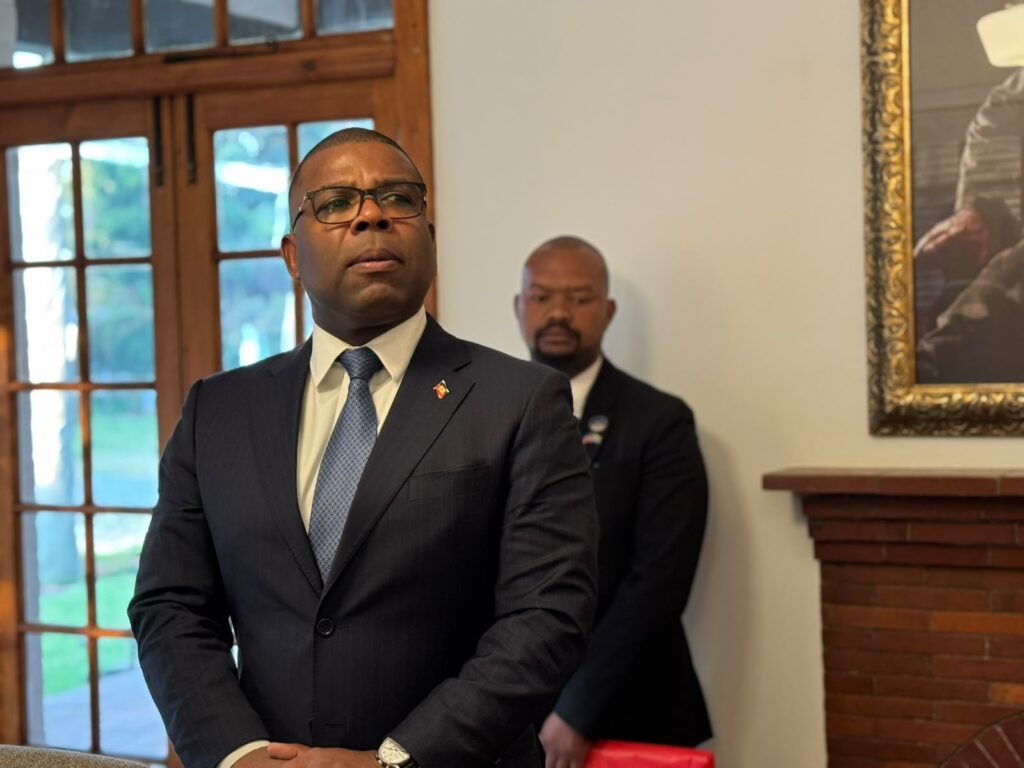
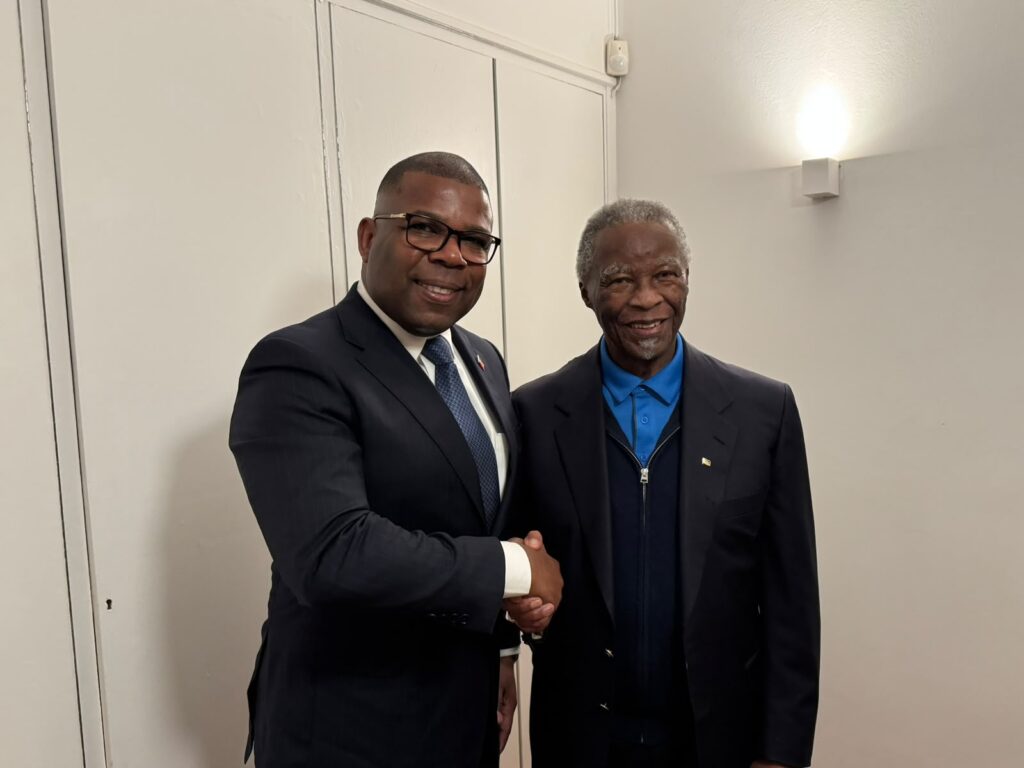
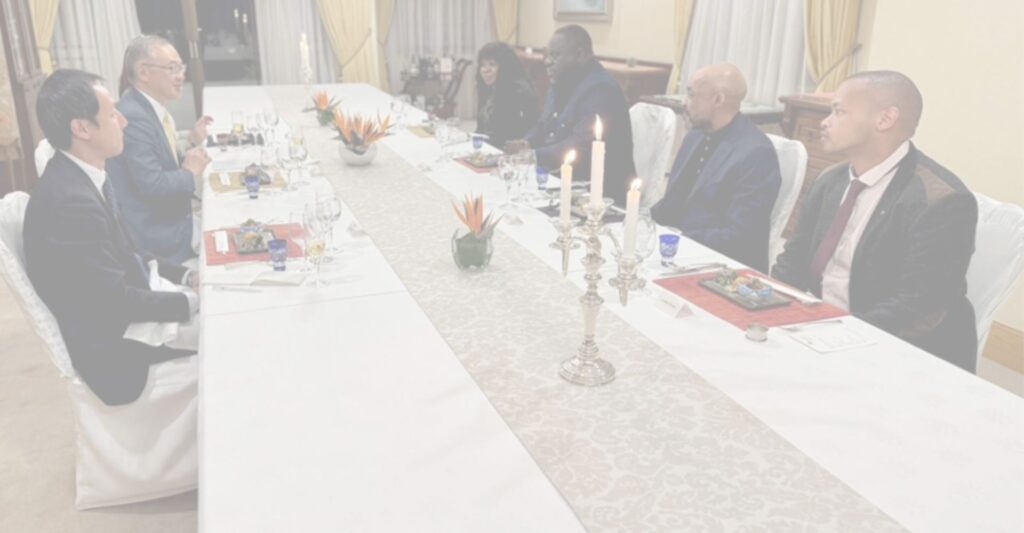
The Ambassador of the Republic of Haiti to South Africa, H.E. Jean Pillard, today paid a courtesy visit to former President Thabo Mbeki at the Thabo Mbeki Foundation in Johannesburg, where the two leaders engaged in a wide-ranging discussion on the historical relationship between Haiti and South Africa, the enduring ties between Haiti and the African continent, and the importance of preserving this shared legacy for future generations.
The meeting reflected a shared commitment to strengthening cooperation founded on historical understanding, Pan-African solidarity and the collective responsibility to ensure that the stories of liberation continue to inspire future generations. Throughout the engagement, discussions moved beyond diplomacy, focusing on history, education, culture and the enduring bonds linking Africa and its diaspora.
A Relationship Built on Shared Struggles for Freedom
Ambassador Jean Pillard and former President Mbeki reflected on the remarkable history that connects Haiti and Africa. They noted that although separated by geography, both have been shaped by struggles for freedom, justice and human dignity.
The discussions highlighted the importance of ensuring that these historical connections continue to inform modern diplomatic relations while creating opportunities for collaboration in education, culture, research and people-to-people exchanges.
Both leaders agreed that strengthening Haiti–South Africa relations also means strengthening the historical consciousness that binds the two peoples together.


President Mbeki Reflects on Haiti’s Bicentennial Celebrations
Former President Mbeki recalled his official visit to Haiti on 1 and 2 January 2004, when he travelled to Port-au-Prince and Gonaïves at the invitation of then-President Jean-Bertrand Aristide to participate in the country’s bicentennial celebrations commemorating 200 years of independence.
Reflecting on the visit, he spoke of Haiti’s immense contribution to world history and the significance of witnessing the bicentennial celebrations firsthand. He noted that the experience further strengthened his appreciation of Haiti’s place within the broader African story and reinforced the historical relationship between South Africa and the Caribbean nation.
Passing History to the Next Generation
One of the strongest messages to emerge from the meeting was the importance of educating young people about the shared history of Haiti, Africa and South Africa.
President Mbeki emphasised that history should not remain confined to archives or commemorative events but should become part of everyday learning for younger generations.
He stressed that understanding the struggles and achievements of previous generations enables young people to appreciate the value of freedom while equipping them to become responsible custodians of democracy, justice and social progress.
Both leaders agreed that preserving historical memory is essential in building stronger relations between nations and ensuring that the sacrifices of the past continue to inspire future generations.
A Proposal to Tell the Story of Three Historic Victories
President Mbeki also shared an idea that could become a significant educational initiative for young people across Africa and the Caribbean.
He proposed the development of a concise publication centred on three defining moments in the history of people of African descent: Haiti’s independence in 1804, Ethiopia’s victory at the Battle of Adwa in 1896, and South Africa’s democratic transition in 1994.
Although separated by almost a century, he explained that these milestones collectively demonstrate the resilience, determination and capacity of African people to shape their own destiny.
Rather than presenting them as isolated historical events, President Mbeki suggested weaving them into a single narrative that would encourage young readers to appreciate the continuity of the struggle for liberation across different generations and regions.
He further noted that the publication should not only celebrate these victories but also encourage reflection on the challenges that emerged after liberation and the responsibility of each generation to continue building peaceful, democratic and prosperous societies.
Haiti Unveils Vision for a Pan-African Memorial
A significant moment during the discussions came when Ambassador Jean Pillard shared Haiti’s vision for a landmark commemorative initiative designed to honour the country’s revolutionary history while strengthening its enduring connection with Africa.
The Ambassador explained that Haiti is preparing to mark two defining moments in its national journey later this year.
The first will commemorate the uprising of enslaved Africans in August 1791—an event that ignited the Haitian Revolution and fundamentally altered the course of world history. The second will honour the Battle of Vertières on 18 November, the decisive victory that secured Haiti’s independence and established the world’s first independent Black republic.
To mark these historic anniversaries, Haiti intends to establish a memorial monument in South Africa that would serve as both a place of remembrance and a symbol of the enduring relationship between Africa and its diaspora.
The proposed monument is envisioned as a tribute to those who lost their lives during Haiti’s devastating 2010 earthquake, to the countless Africans whose lives were forever changed by the Trans-Atlantic Slave Trade, and to the unbreakable historical, cultural and spiritual ties that continue to connect Haiti with the African continent.
A Monument Inspired by Memory and Return
Explaining the deeper meaning behind the proposed memorial, Ambassador Pillard spoke about a traditional Haitian expression that reflects the enduring spiritual connection between Haiti and Africa.
He described how generations of enslaved Africans carried the hope that, although they had been forcibly removed from their ancestral homeland, their spirits would one day find their way back to Africa.
According to the Ambassador, the memorial seeks to give physical expression to that enduring belief, representing not only remembrance but also reconciliation, belonging and the reaffirmation of shared identity between Africa and its descendants across the world.
He emphasised that the initiative extends beyond Haiti alone, describing it as a Pan-African project dedicated to honouring a common history while strengthening unity across the African continent and the global African diaspora.
In this spirit, Ambassador Pillard invited the Thabo Mbeki Foundation to become a partner in the initiative, recognising the Foundation’s longstanding commitment to Pan-Africanism, historical scholarship and African renewal.
A Symbolic Exchange of Friendship
At the conclusion of the meeting, Ambassador Jean Pillard presented former President Thabo Mbeki with a commemorative painting as a gesture of friendship and appreciation.
The presentation symbolised the enduring relationship between Haiti and South Africa and reflected the mutual respect shared between the two leaders.
Strengthening an Enduring Partnership
The courtesy visit reaffirmed that the relationship between Haiti and South Africa extends well beyond diplomatic engagement. It is a partnership rooted in shared history, common aspirations and a collective commitment to preserving the legacy of those who fought for freedom.
The discussions demonstrated a shared vision for promoting historical education, strengthening cultural and academic cooperation, and ensuring that young people inherit a deeper understanding of the ties that unite Haiti, Africa and South Africa.
As both nations continue to deepen their engagement, initiatives such as the proposed educational publication and the planned Pan-African memorial have the potential to further strengthen people-to-people relations while celebrating the enduring spirit of resilience, solidarity and liberation that continues to connect Haiti with the African continent.