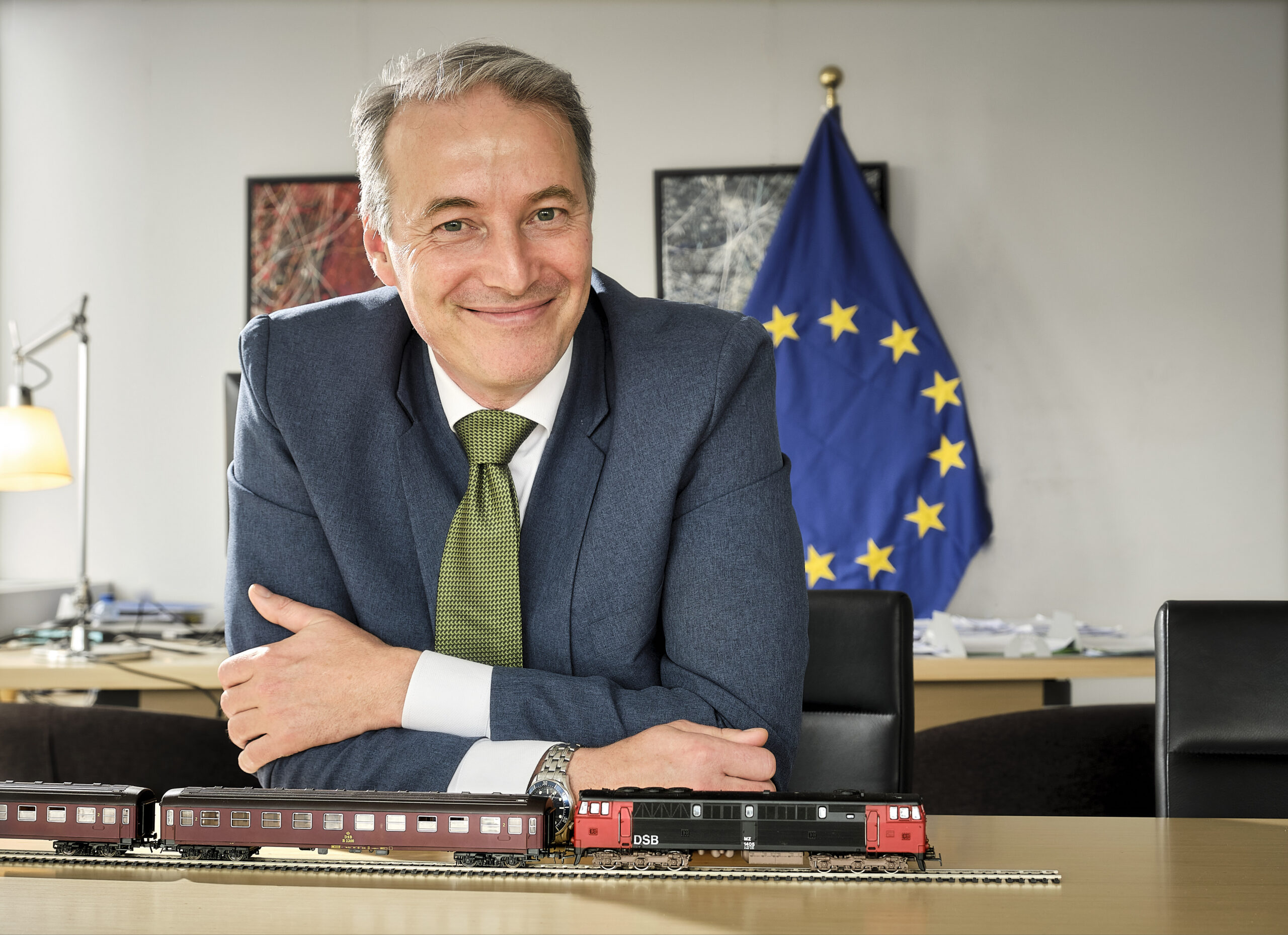
Kristian Schmidt, the Ambassador-Designate and incoming Head of the European Union Delegation to South Africa, has arrived in South Africa to take up his new diplomatic assignment. His arrival marks the beginning of a new chapter in EU–South Africa relations, placing a highly experienced European diplomat, development-policy specialist and former ambassador at the helm of the EU’s diplomatic presence in Pretoria.
The appointment was announced in June 2026 as part of a wider rotation of EU ambassadors. The EU High Representative for Foreign Affairs and Security Policy, Kaja Kallas, nominated Schmidt for South Africa, with the appointments subject to the relevant host-country approval and administrative procedures. The official EEAS website now lists him as the new Ambassador of the EU Delegation to South Africa.
Who is Kristian Schmidt?
Schmidt is a Danish national and a career diplomat and senior European Commission official whose professional life has combined diplomacy, international development, foreign policy, humanitarian affairs, institutional management and, most recently, transport policy.
He was born on 12 July 1967. His academic background is particularly international. He holds a Master’s degree in Economics from the University of Copenhagen, completed a Master of Philosophy in International Relations with Distinction at the University of Cambridge, and undertook additional studies in economics and international relations in France and Italy, including at the Institut d’Études Politiques de Paris and the University of Bologna.
This combination of economics and international relations is significant because much of his career has sat at the intersection of diplomacy, development, international cooperation and economic policy.
A long career in European diplomacy
Schmidt began his professional diplomatic career in the Danish Ministry of Foreign Affairs in the early 1990s. He worked in areas including foreign and security policy, peacekeeping operations, and East and West Africa. From 1997 to 1999 he served as First Secretary at Denmark’s Permanent Mission to the United Nations in New York.
He subsequently moved into senior positions within the European Commission.
From 1999 to 2004, he served as Deputy Head/Member of the Cabinet of EU Commissioner Poul Nielson, whose portfolio included development and humanitarian aid. From 2004 to 2010, Schmidt was Deputy Head of Cabinet to European Commission Vice-President Siim Kallas, working in an environment dealing with administration, audit and anti-fraud.
He then moved into senior management roles in EuropeAid/DG DEVCO, the European Commission structures responsible for international development cooperation. Between 2010 and 2013, he held several senior positions, including Director for Human and Society Development and Acting Director for Sustainable Growth and Development.
This part of his career gives him substantial experience in areas that are highly relevant to South Africa’s relationship with the EU: development cooperation, economic development, social development, international partnerships, infrastructure and sustainable growth.
Previous experience in Africa: Uganda
South Africa is not Schmidt’s first diplomatic assignment on the African continent.
From 2013 to 2017, he served as EU Ambassador and Head of the EU Delegation to Uganda. During his tenure, he was involved in high-level political dialogue covering issues including trade, investment, business opportunities, democracy, human rights, regional security, jobs and development.
His work in Uganda also extended beyond traditional diplomatic engagements. For example, he represented the EU in discussions around development projects, energy, governance, human rights and vulnerable communities. During his tenure, he was involved in the EU’s engagement around Uganda’s Soroti Solar Plant, which was presented as an example of renewable-energy investment and development cooperation.
That African experience is particularly relevant now because Schmidt returns to the continent with more than a decade of additional experience since his first ambassadorial posting.
Ambassador to Myanmar
After Uganda, Schmidt was appointed EU Ambassador and Head of Delegation to Myanmar, serving from 2017 to 2020.
He formally presented his credentials to Myanmar’s President U Htin Kyaw in October 2017. At the time, the EU described Schmidt as having extensive experience in development cooperation, security and peacekeeping matters.
His posting in Myanmar placed him in a highly complex diplomatic environment involving democratic transition, ethnic conflicts, human rights and the country’s international relationships.
His public engagements there included support for democracy, civil society and human rights. In 2020, for example, Schmidt presented the EU’s Schuman Awards to individuals working for freedom, women’s rights and minority rights in Myanmar.
Return to Brussels and transport policy
Following his Myanmar assignment, Schmidt spent a short period as an Adviser to the Secretary-General of the European External Action Service in 2020–2021.
In April 2021 he became Director for Land Transport in the European Commission’s Directorate-General for Mobility and Transport (DG MOVE). He held that position until his new diplomatic appointment to South Africa.
This was a significant senior-management role. His responsibilities covered major areas of European land-transport policy, including rail and road transport, transport connectivity, infrastructure, digitalisation, sustainability and safety.
He also became the European Road Safety Coordinator, making him a prominent voice in the EU’s efforts to reduce road deaths and serious injuries. In 2026, for example, he continued to participate in European discussions around road safety, including the implementation of the EU’s road-safety framework and emerging issues such as automated mobility and the use of technology in road management.
His transport portfolio also gave him considerable exposure to infrastructure, logistics, cross-border connectivity, rail, trade corridors and sustainable transport—areas that have direct relevance to South Africa and the wider African market.
An interesting connection to trade and market opportunities
One particularly interesting aspect of Schmidt’s background is that his career has repeatedly moved between diplomacy and economic/development policy.
Before becoming a transport director, he worked extensively on development cooperation. In his current transport work, he has dealt with the movement of people and goods, logistics, infrastructure, rail freight, cross-border connectivity and competitiveness.
In a recent discussion on European rail freight, Schmidt highlighted the importance of investment, digitalisation, removing cross-border barriers and improving the competitiveness of European transport systems. He argued that doubling rail freight by 2030 is important not only for climate objectives but also for strategic autonomy and European competitiveness.
That experience could prove particularly useful in his South African posting, where questions around trade, investment, industrialisation, infrastructure, logistics, green transition and supply chains are central to the relationship between South Africa and the EU.
Why his appointment matters for South Africa
Schmidt is arriving at a particularly important point in EU–South Africa relations.
The EU is one of South Africa’s most significant international economic and political partners. Consequently, the role of EU Ambassador is much broader than conventional diplomatic representation. The Head of Delegation is involved in political dialogue, economic relations, development cooperation, trade and investment, climate and energy cooperation, research and innovation, human rights, multilateral diplomacy and engagement with South African government, business and civil-society stakeholders.
For someone working specifically in international relations and market opportunities, Schmidt’s appointment is therefore worth watching closely.
His background suggests that he is likely to have a strong appreciation for the relationship between:
- Diplomacy and economic development
- Trade and investment
- Infrastructure and logistics
- SME development
- Sustainable development
- Green transition
- European and African markets
- Business-to-business cooperation
- Development finance
- Regional integration
- Political and economic dialogue
This makes him potentially an important interlocutor not only for DIRCO and other government departments, but also for institutions dealing with trade, investment, industrial development, infrastructure, transport, energy, innovation and small-business development.
His African experience is especially valuable
There is also an important distinction between Schmidt and someone arriving in South Africa with no previous African diplomatic experience.
He has already served as EU Ambassador in Uganda, worked extensively on African development issues in Brussels, and then served as ambassador in Myanmar. He therefore comes to Pretoria with first-hand experience of African political and development environments as well as experience managing an EU delegation.
During his Uganda tenure, EU–Uganda political dialogue covered jobs, trade, investment, business opportunities, democracy, human rights and regional security—precisely the kinds of interconnected issues that increasingly define modern economic diplomacy.