The diplomatic relationship between South Africa and the European Union (EU) has entered a new chapter following the presentation of copies of Letters of Credence by H.E. Kristian Schmidt, Ambassador-Designate of the European Union to South Africa.
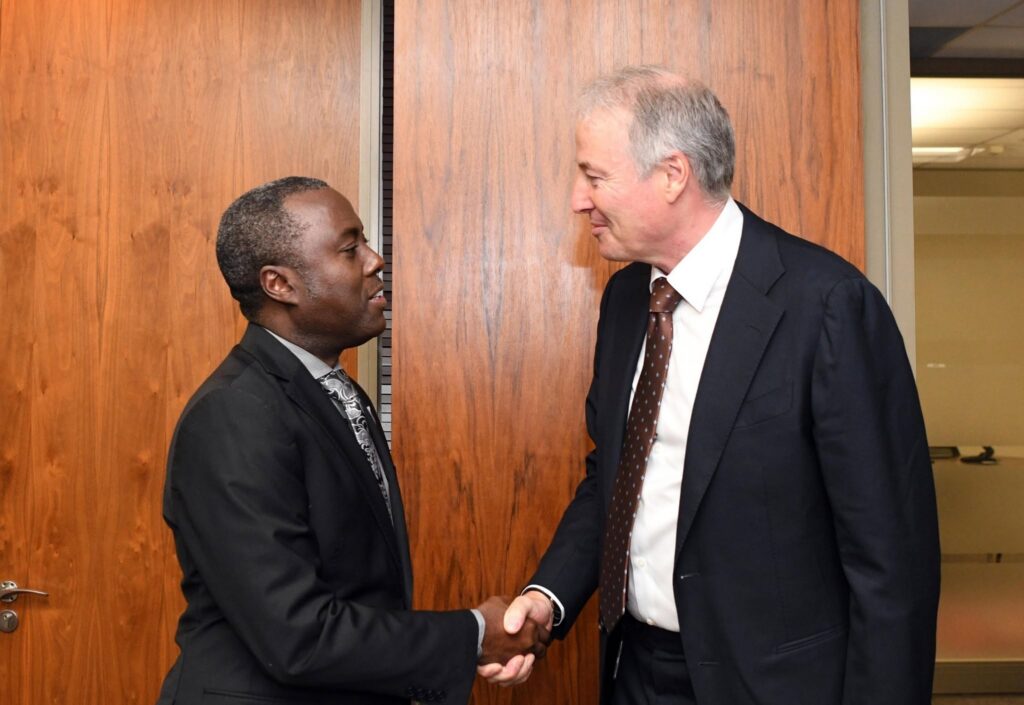
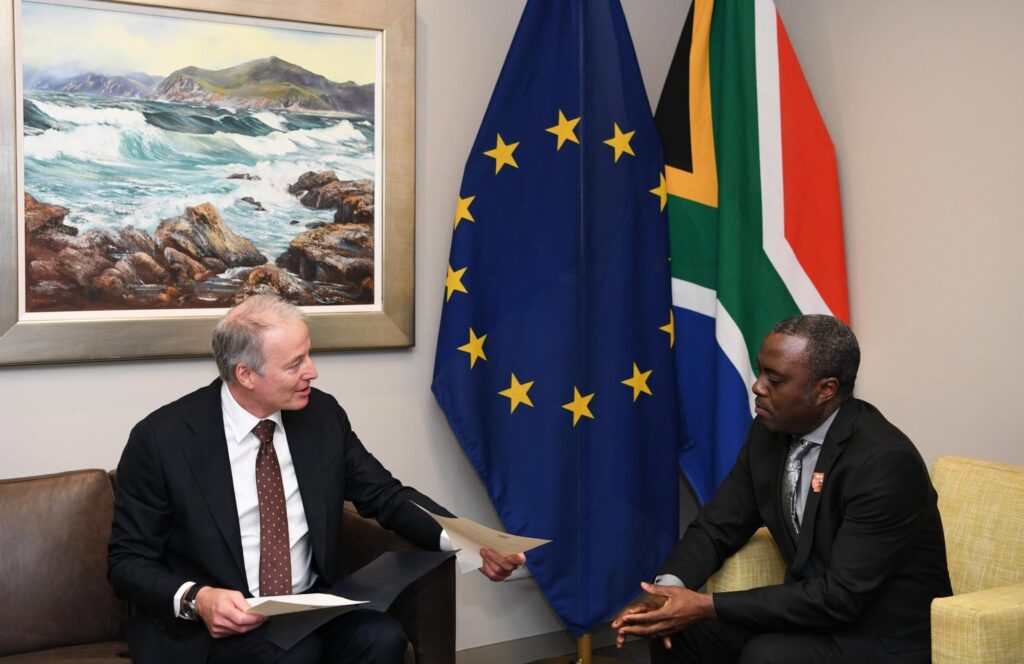
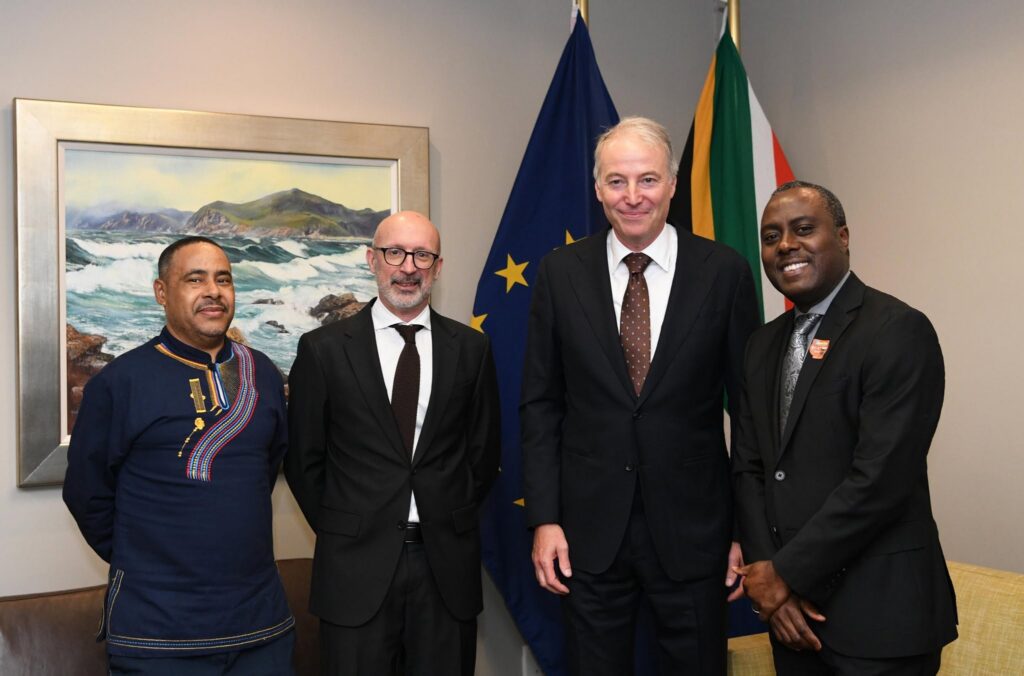
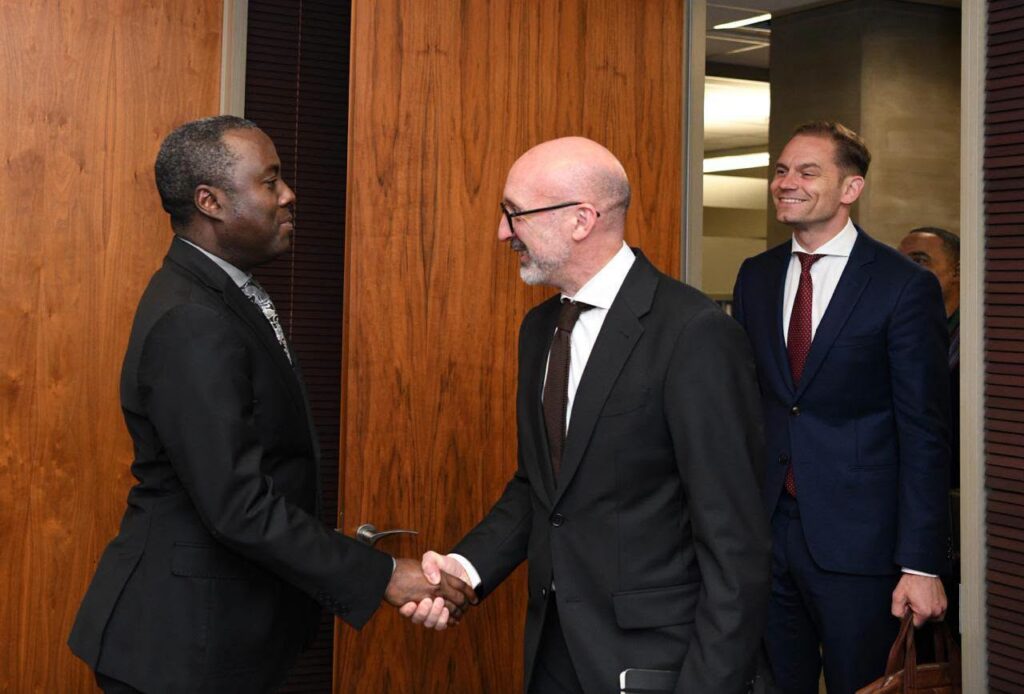
On 4 September 2026, Mr Clayson Monyela, Acting Chief of State Protocol, received copies of the Letters of Credence from Ambassador Schmidt, marking an important step in the commencement of his diplomatic assignment in South Africa.
Schmidt formally assumed his role as Ambassador-Designate of the European Union to South Africa on 1 September 2026, bringing extensive experience in diplomacy, international development, European policymaking and transport and infrastructure policy to his new position.
Kristian Schmidt: A Career in Diplomacy and International Cooperation
A Danish national, Kristian Schmidt began his diplomatic career at the Danish Ministry for Foreign Affairs, where his early work included foreign and security policy, peacekeeping and African affairs.
His international diplomatic experience includes serving at Denmark’s Permanent Mission to the United Nations in New York from 1997 to 1999. He subsequently moved into senior positions within the European Commission, where he worked at the intersection of European policymaking, international development and humanitarian affairs.
Between 1999 and 2004, Schmidt served as Deputy Head of Cabinet to EU Commissioner for Development and Humanitarian Aid Poul Nielson. From 2004 to 2010, he served as Deputy Head of Cabinet to European Commission Vice-President Siim Kallas.
He later served as Director for Human and Society Development at the European Commission’s Directorate-General for International Development Cooperation from 2010 to 2013.
His career then returned to diplomatic representation, with Schmidt serving as EU Ambassador to Uganda from 2013 to 2017 and subsequently as EU Ambassador to Myanmar from 2017 to 2020.
Before his appointment to South Africa, Schmidt served from 2021 to 2026 as Director in charge of Land Transport at the European Commission’s Directorate-General for Mobility and Transport. His professional experience therefore spans diplomacy, development cooperation, humanitarian affairs, international relations and transport policy.
Academic Background
Schmidt’s academic background combines economics and international relations.
He holds a Master’s degree in Economics from the University of Copenhagen, a Bachelor’s degree in Economics from the Université d’Aix-en-Provence, and a Master’s degree in International Relations with distinction from the University of Cambridge.
He also studied at the Institut d’Études Politiques de Paris and the Università di Bologna.
This academic and professional combination has informed a career that has moved between traditional diplomacy, international development and European economic and infrastructure policy.
South Africa and the European Union: A Strategic Partnership
Schmidt’s arrival comes within the context of a longstanding and wide-ranging South Africa–EU strategic partnership.
South Africa and the European Union have maintained strong relations since the advent of South Africa’s democracy in 1994, with the Strategic Partnership established in 2007 to deepen cooperation across political, economic, social and development sectors.
The partnership encompasses areas including:
- Trade and investment
- Sustainable development
- Climate change and the just energy transition
- Science, technology and innovation
- Infrastructure and connectivity
- Education and skills development
- Peace and security
- Human rights and democracy
- Multilateral cooperation
The EU describes South Africa as its largest trading partner in Africa, while South Africa is the EU’s largest trading partner in sub-Saharan Africa. The EU is also the largest foreign investor in South Africa, accounting for approximately 46% of foreign direct investment stocks in the country, according to EU figures.
The economic relationship is supported by the EU-SADC Economic Partnership Agreement, while the two sides continue to explore additional opportunities to expand investment and trade.
A Growing Focus on Trade, Investment and the Green Economy
Economic cooperation has become an increasingly important component of the relationship.
At the 8th South Africa-EU Summit in Cape Town in March 2025, South Africa and the EU agreed to strengthen trade and investment cooperation, particularly around clean technologies and sustainable supply chains. The EU also announced a €4.7 billion Global Gateway Investment Package for South Africa focused on areas including the Just Energy Transition, connectivity infrastructure and strengthening South Africa’s vaccine production capacity.
This cooperation has continued into 2026.
The EU-South Africa Clean Trade and Investment Partnership (CTIP) was signed in Johannesburg on 20 November 2025 and is now being implemented. The partnership seeks to create new trade and investment opportunities in strategic clean value chains while supporting decarbonisation and a just transition.
In August 2026, South Africa and the EU began the first government-to-government dialogue focused on implementing the CTIP, with cooperation centred on renewable energy, electricity-grid expansion, green hydrogen, regulatory cooperation and improving the business environment.
More recently, Team Europe launched projects worth more than R1 billion in September 2026 to support green hydrogen and minerals and metals value chains in South Africa. The initiatives involve the EU, Germany, Denmark and the Netherlands and are intended to support sustainable industrial development, investment, skills development and local value addition.
A Partnership Extending Beyond Trade
While trade and investment remain central, the South Africa–EU relationship extends into a broad range of political and social issues.
The EU and South Africa cooperate on peace and security, human rights, democracy, climate change, education, research, innovation and development. The partnership also operates through the wider Team Europe approach, bringing together the EU, its Member States and European financial and development institutions.
The EU Delegation notes that more than 1,700 European companies in South Africa directly and indirectly sustain approximately two million jobs, while educational and research cooperation connects South African institutions and students with European counterparts.
Schmidt’s Return to Africa
For Ambassador Schmidt, the appointment to South Africa represents a return to the African continent after his previous posting as EU Ambassador to Uganda.
His experience in Africa, combined with his later work in European development policy and transport and mobility, provides a broad professional background for his new assignment.
The EU Delegation has described South Africa as an important strategic partner and highlighted the country’s role in European cooperation across trade, investment, climate action, infrastructure, technology, development and multilateral affairs.
Schmidt has said that he considers it an honour to return to Africa and expressed his intention to further strengthen relations and build a relationship of trust, reliability and friendship between the European Union and South Africa.
Beginning a New Chapter
The presentation of copies of the Letters of Credence therefore marks more than a formal diplomatic procedure. It comes at a period of continued engagement between South Africa and the European Union, with cooperation increasingly encompassing trade and investment, clean energy, infrastructure, industrial development, innovation and sustainable growth.
With his diplomatic experience in Africa and Asia, senior European Commission background and expertise spanning development and transport policy, Ambassador-Designate Kristian Schmidt now begins his assignment in Pretoria at a significant point in the evolving South Africa–European Union partnership.
His tenure will take place against the backdrop of a relationship that continues to develop across diplomatic, economic and development spheres, with both South Africa and the EU pursuing areas of mutual interest and cooperation.