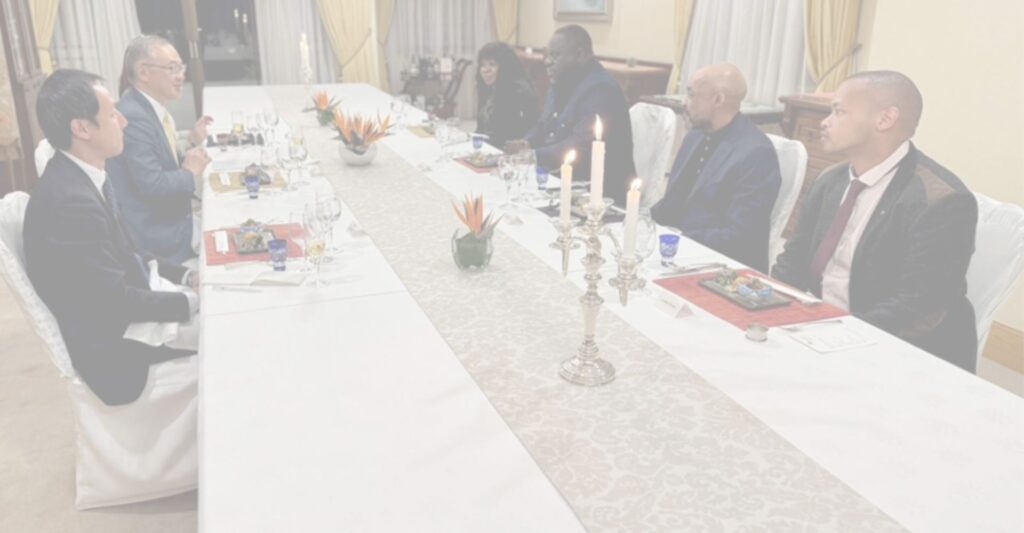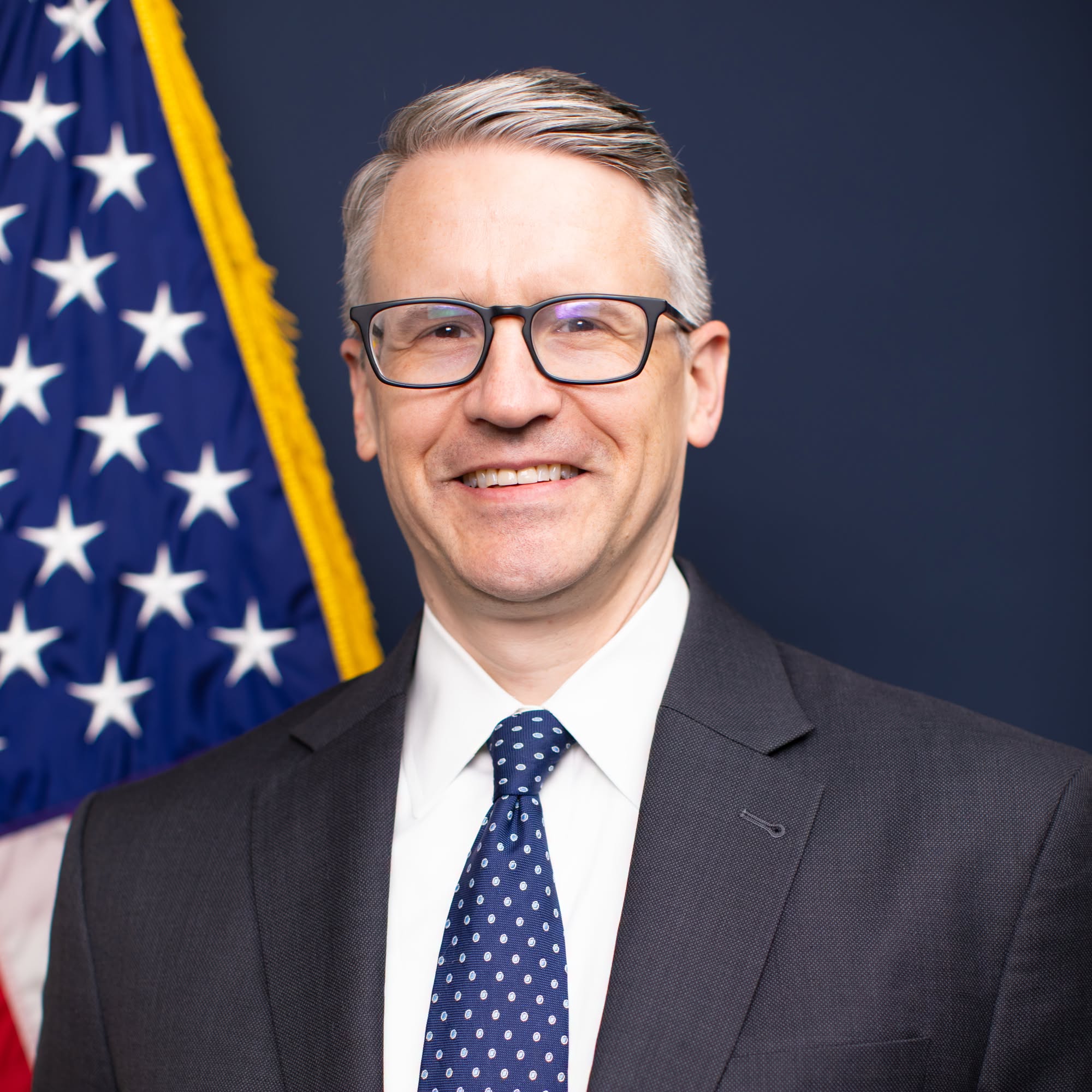
New Consul General James Liddle brings more than two decades of U.S. foreign service experience to Durban, with a focus on community engagement, economic partnerships and strengthening ties between the United States and South Africa.
The U.S. Consulate in Durban has welcomed Consul General James Liddle and his family to KwaZulu-Natal, marking the beginning of a new chapter in his diplomatic career and in the Consulate’s engagement across the province.
Taking up his new post in August 2026, Consul General Liddle arrives in Durban with extensive experience in U.S. foreign policy, diplomacy, conflict resolution, strategic planning and international engagement.
His tenure is expected to place a strong emphasis on connecting with the people of KwaZulu-Natal, understanding the province’s economic potential and strengthening the longstanding relationship between the United States and South Africa.
Strengthening U.S.–South Africa Economic Relations
One of the key areas of focus for Consul General Liddle will be strengthening economic ties and identifying opportunities for greater commercial cooperation between the United States and South Africa.
KwaZulu-Natal is one of South Africa’s strategically important economic regions, with significant opportunities across trade, tourism, logistics, manufacturing, agriculture, infrastructure and investment.
The U.S. Consulate in Durban plays an important role in facilitating connections between American and South African stakeholders, supporting commercial diplomacy and promoting opportunities that can contribute to investment, job creation and inclusive economic growth.
Consul General Liddle’s extensive experience in political-economic affairs and international policy provides a strong foundation for engaging government, business, civil society and other stakeholders across the province.
Discovering KwaZulu-Natal
Beyond economic diplomacy, Consul General Liddle has expressed an interest in discovering the diversity, culture, communities and natural beauty of KwaZulu-Natal.
From the Indian Ocean coastline and vibrant city of Durban to the Drakensberg Mountains and the province’s rich cultural heritage, KwaZulu-Natal offers a unique combination of tourism, community and economic opportunities.
His engagement across the province is expected to include interactions with local communities, business leaders, government representatives, civil society organisations, academic institutions and other stakeholders.
Such engagements will provide an opportunity for the new Consul General to deepen his understanding of KwaZulu-Natal while identifying areas where the United States and the province can strengthen cooperation.
James Liddle: A Career Spanning More Than Two Decades
Consul General Liddle brings an extensive background in the U.S. Foreign Service, having served in a range of senior diplomatic, political and strategic positions over more than two decades.
According to his professional profile, he joined the U.S. Department of State as a Foreign Service Officer in November 2002 and has subsequently undertaken assignments across Africa, the Middle East and Washington, D.C.
His career has included significant leadership responsibilities involving political affairs, economic diplomacy, humanitarian issues, regional security and conflict resolution.
Before arriving in Durban, Liddle served as Senior Advisor – Great Lakes from October 2025 to July 2026.
He previously served as Deputy Director of the Syria Regional Platform in Istanbul, Türkiye, from September 2024 to September 2025, following his role as Syria Stabilization Team Lead, also based in Istanbul, from July 2022.
These assignments placed him at the intersection of diplomacy, conflict resolution, regional security and international cooperation.
Experience Across Africa
Liddle’s professional experience has included several important assignments on the African continent.
From 2019 to 2021, he served as Political-Economic Chief at the U.S. Embassy in Addis Ababa, Ethiopia, where his responsibilities included political and economic affairs and engagement with key stakeholders.
Prior to that, he served as Eastern Congo Unit Chief at the U.S. Embassy in Kinshasa, Democratic Republic of the Congo, from 2015 to 2017.
He also served as Political Chief at the U.S. Embassy in Juba, South Sudan, from 2012 to 2014.
Earlier in his Foreign Service career, Liddle worked as an East Africa Desk Officer in Washington, D.C., from 2007 to 2010 and served as a Political-Consular Officer at the U.S. Embassy in Port Louis, Mauritius, from 2003 to 2005.
His experience in Africa therefore spans several countries and diplomatic environments, giving him considerable exposure to the political, economic and social dynamics of the continent.
Experience at the U.S. National Security Council
Among the notable positions on Liddle’s professional record is his service as Director of African Affairs at the National Security Council (NSC) at the White House from December 2010 to June 2012.
The position placed him at a senior level of U.S. government policymaking on African affairs and provided experience in strategic analysis, interagency coordination and high-level policy development.
His professional profile describes him as an experienced Foreign Service Officer with expertise in diplomacy, conflict resolution and policy, including experience supporting peace negotiations and contributing to strategy at the National Security Council.
Academic and Professional Background
Liddle’s academic background combines mathematics, history, military strategic studies and international policy.
He holds a Bachelor of Arts degree in Mathematics and History from Bucknell University, where he studied from 1992 to 1996.
He later completed a Master of Arts in Military Strategic Studies at the United States Army War College, studying from July 2021 to June 2022.
His studies at the U.S. Army War College culminated in recognition as a Distinguished Graduate, highlighting his academic and professional performance in strategic studies.
His educational background complements a career that has increasingly focused on strategic planning, diplomacy, security and international affairs.
Early International Experience in Ghana
Before entering the U.S. Foreign Service, Liddle gained international experience through the Peace Corps, serving in Ghana from June 1996 to August 1998.
During his Peace Corps service, he worked as a mathematics and science teacher at a secondary school in Ghana.
The experience provided an early foundation for his subsequent career in international engagement and Africa-focused diplomacy.
He also worked as a Government Affairs Officer at the National Environmental Trust in Washington, D.C., from 1999 to 2002 before beginning his Foreign Service career.
A New Chapter in Durban
The arrival of Consul General James Liddle represents a new chapter for the U.S. Consulate in Durban and its engagement with KwaZulu-Natal.
With more than two decades of experience across Africa, the Middle East and Washington, Liddle brings a broad understanding of international diplomacy, regional affairs, economic engagement and strategic policy to his new assignment.
His background in African affairs, combined with his experience in political-economic diplomacy and conflict resolution, positions him to engage a wide range of stakeholders as he begins his tenure in KwaZulu-Natal.
The relationship between the United States and South Africa is built on extensive people-to-people, commercial, diplomatic, educational and cultural connections. At the provincial level, KwaZulu-Natal provides important opportunities for expanding these links.
As Consul General Liddle begins his tenure, his engagement with communities, businesses, government institutions and other stakeholders across the province is expected to contribute to continued cooperation and the exploration of new opportunities between KwaZulu-Natal, South Africa and the United States.
The U.S. Consulate Durban has invited the people of KwaZulu-Natal to join in welcoming Consul General James Liddle and his family to the province as he begins his new assignment.
His arrival signals the start of a new period of engagement focused on partnership, economic opportunity, people-to-people connections and stronger U.S.–South Africa relations in KwaZulu-Natal.