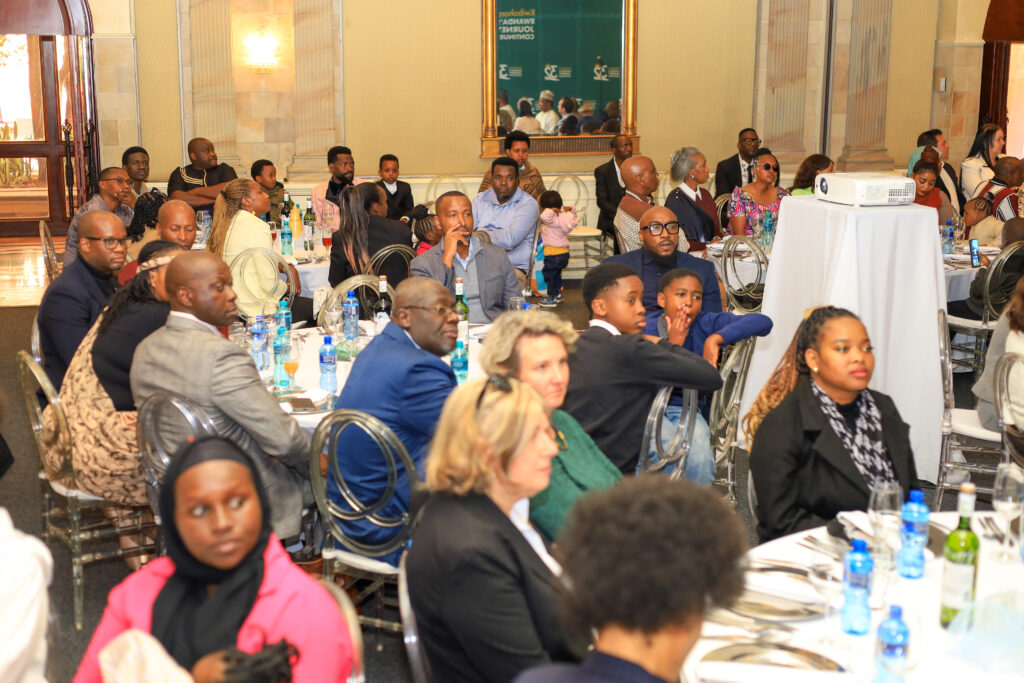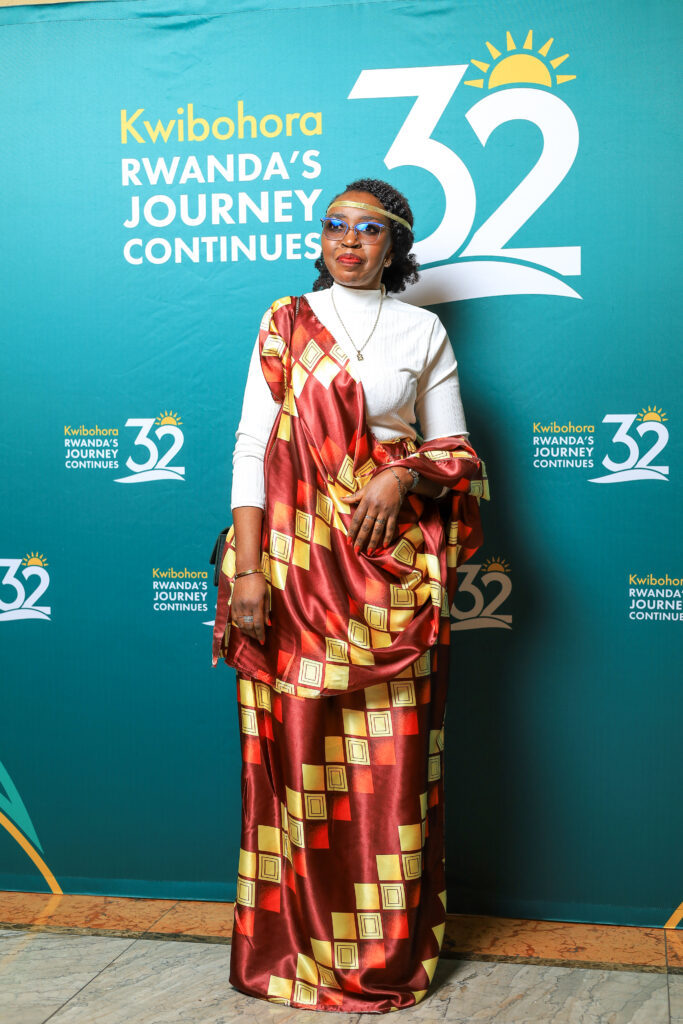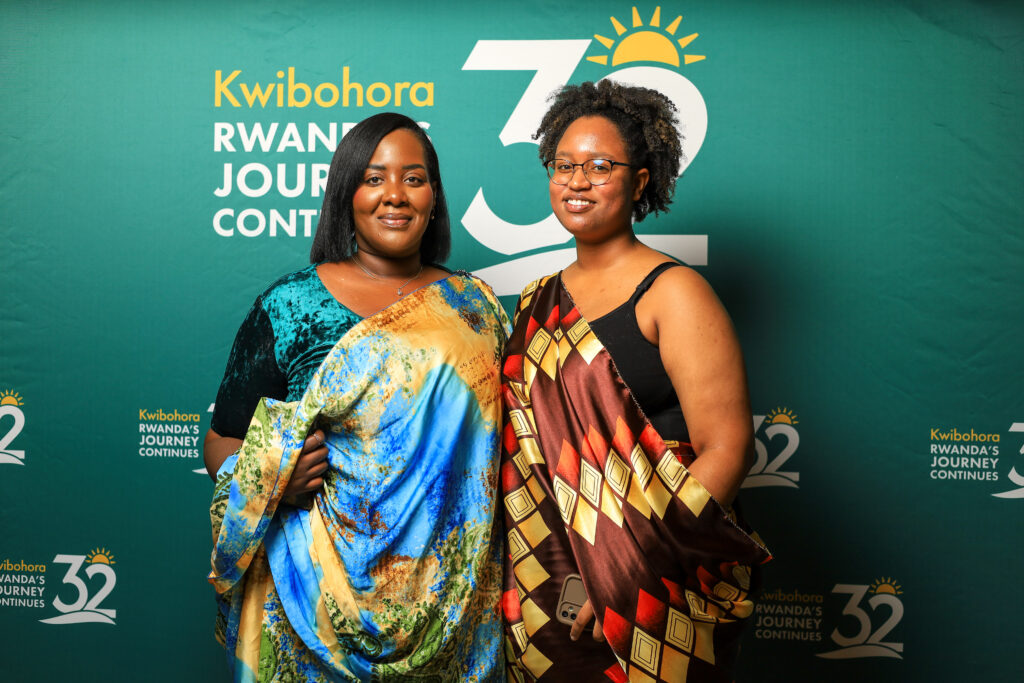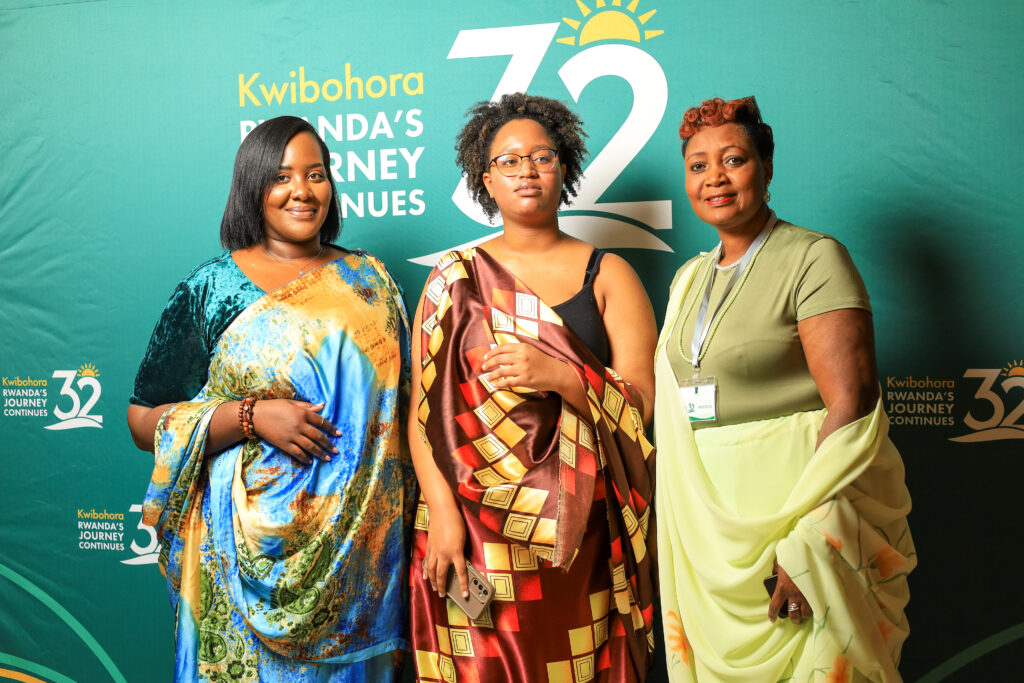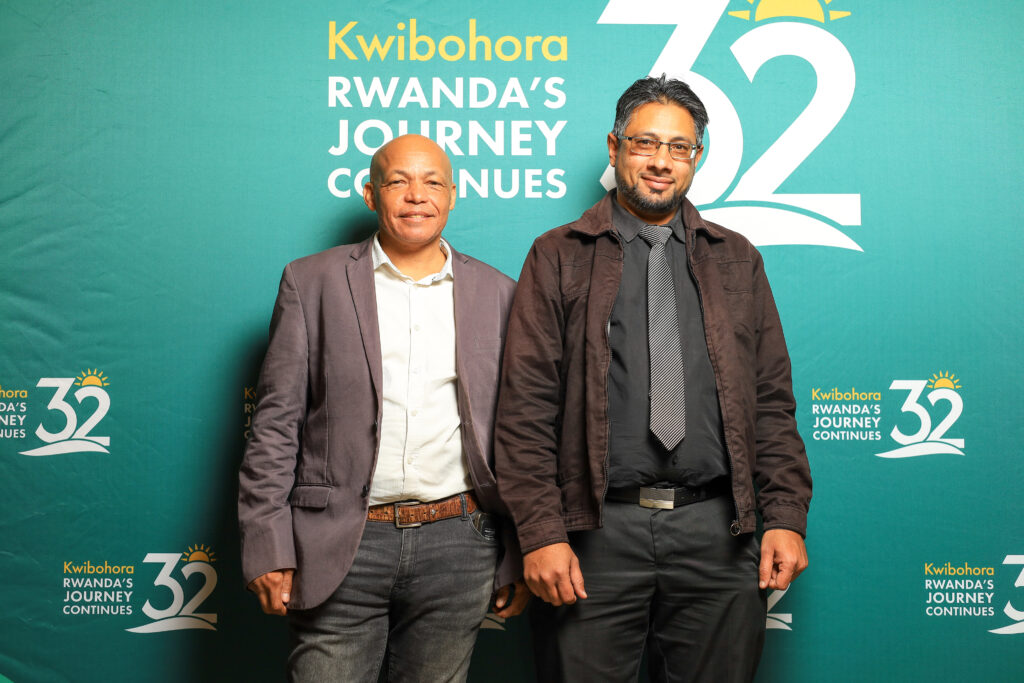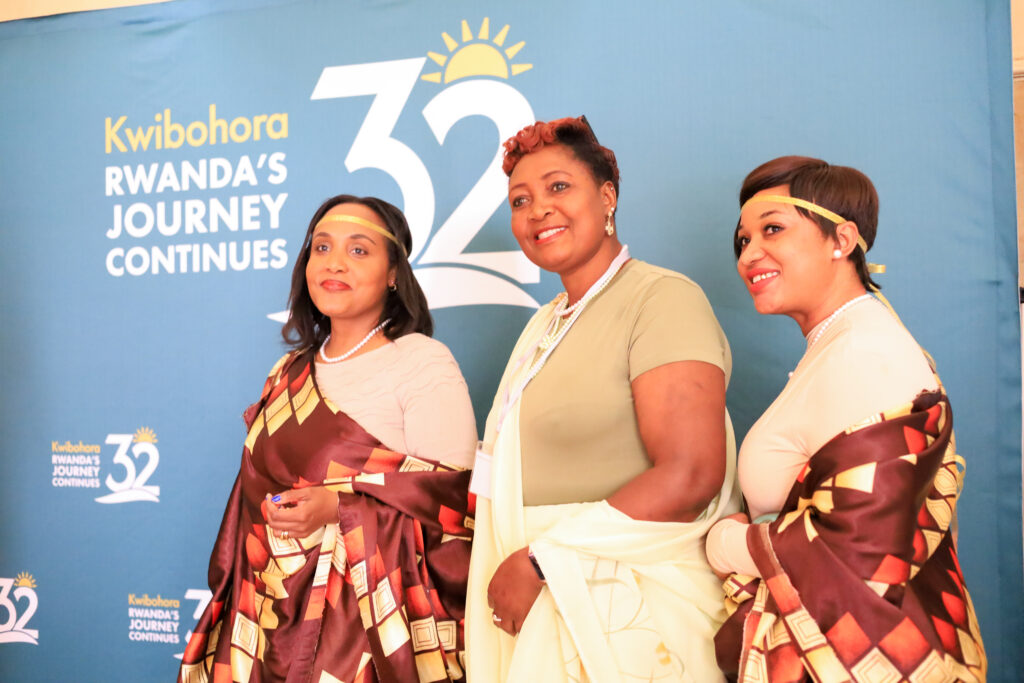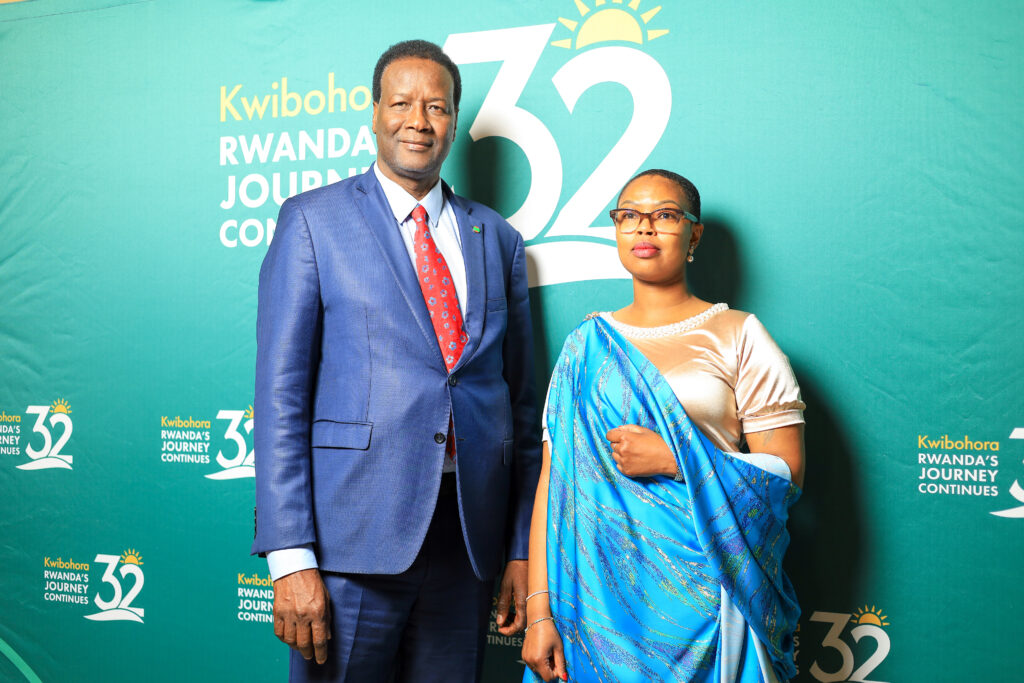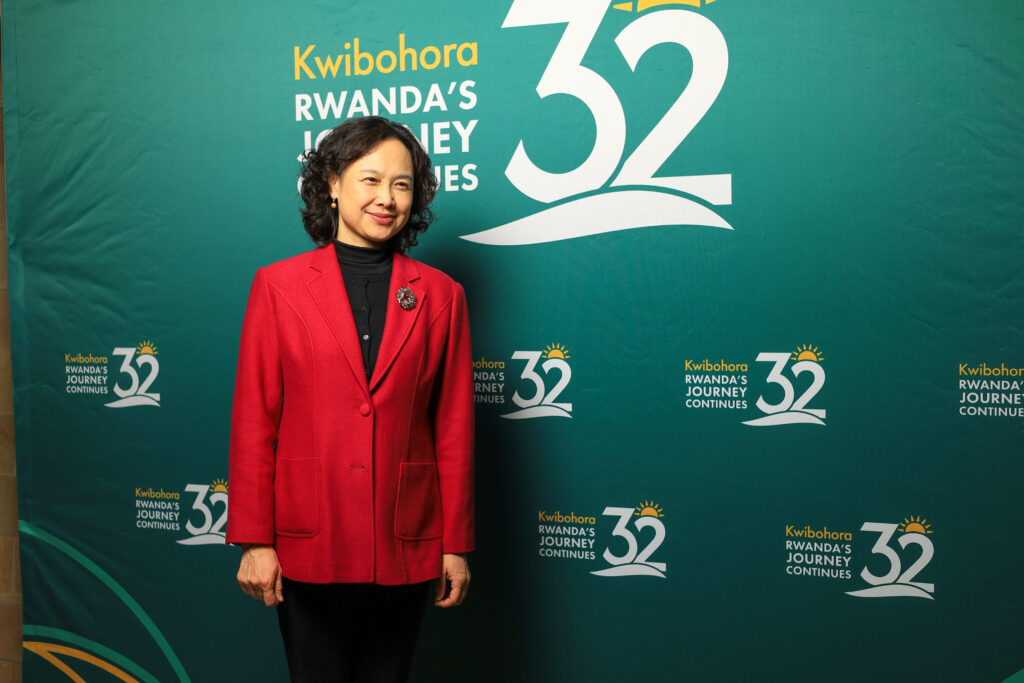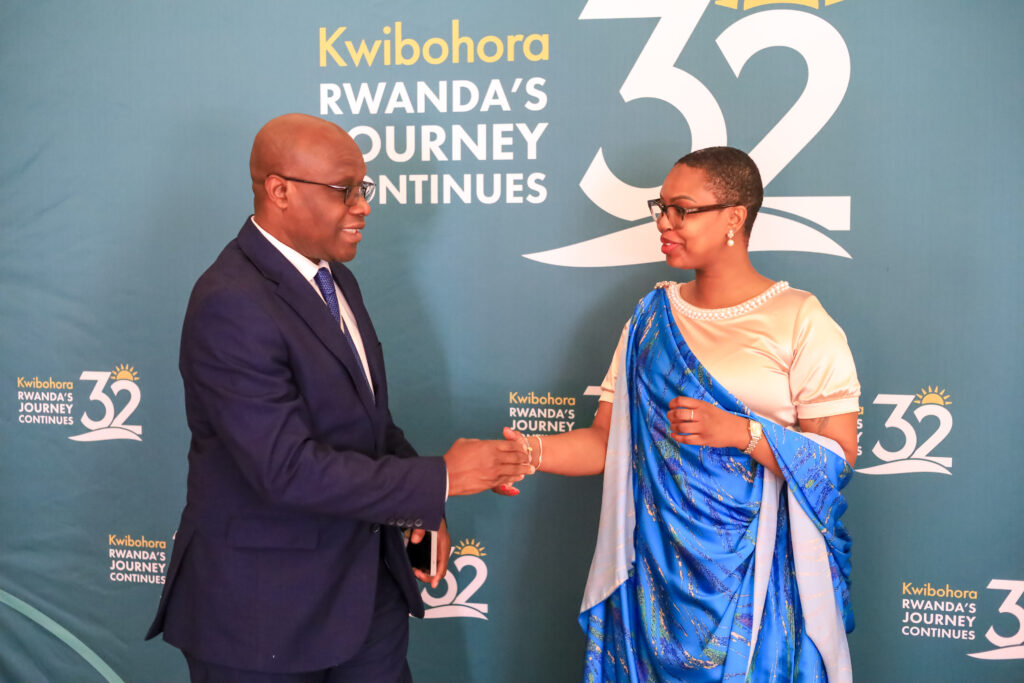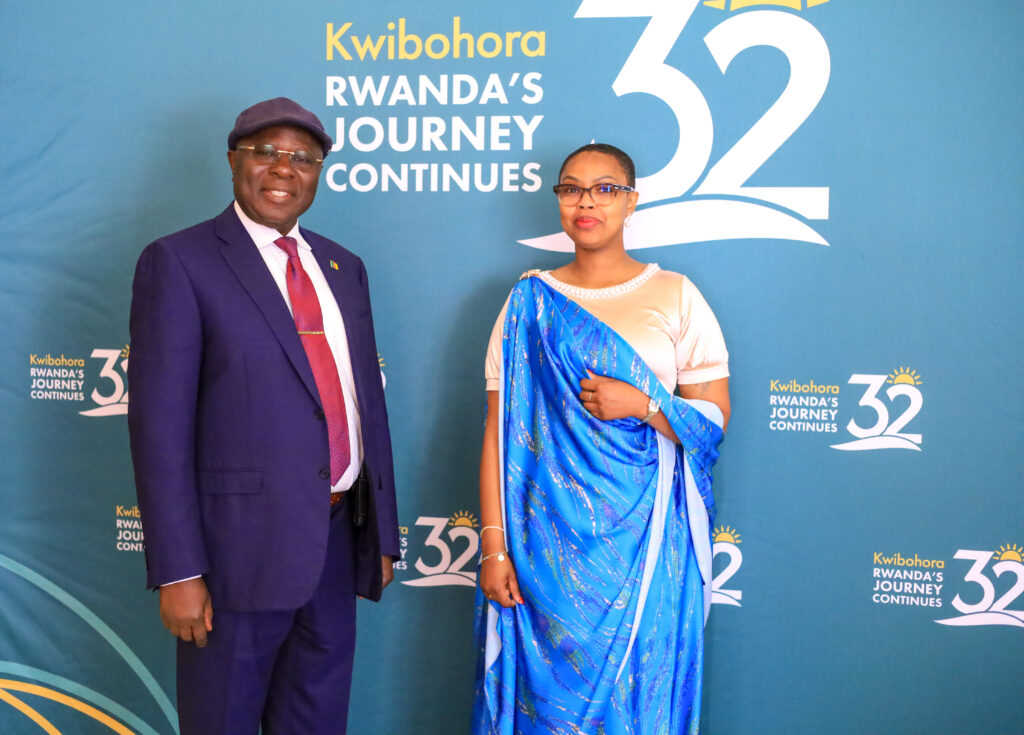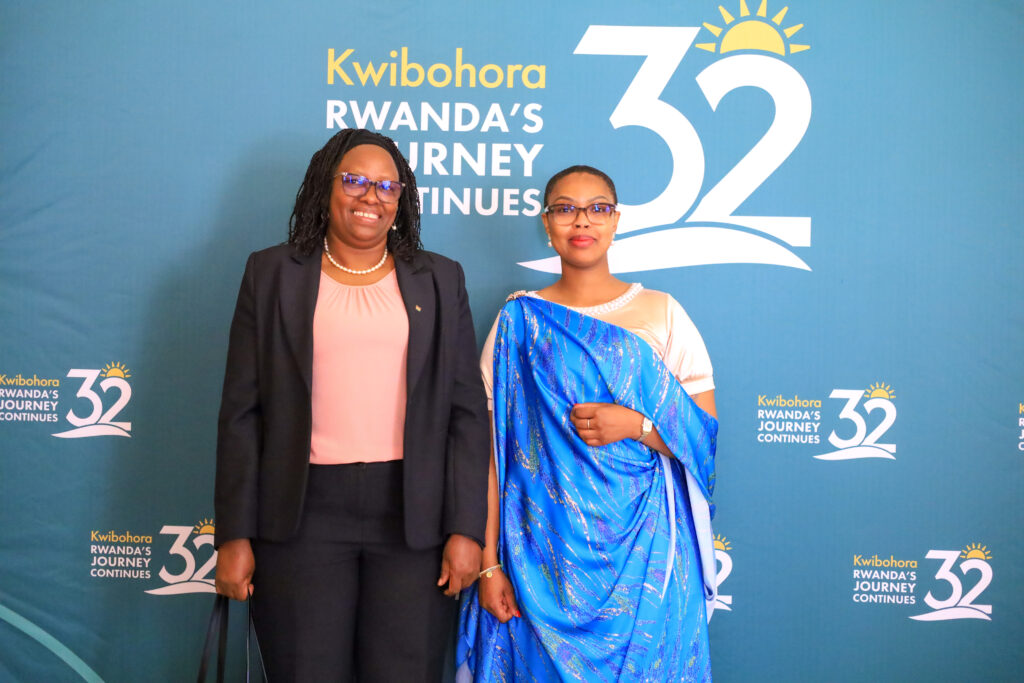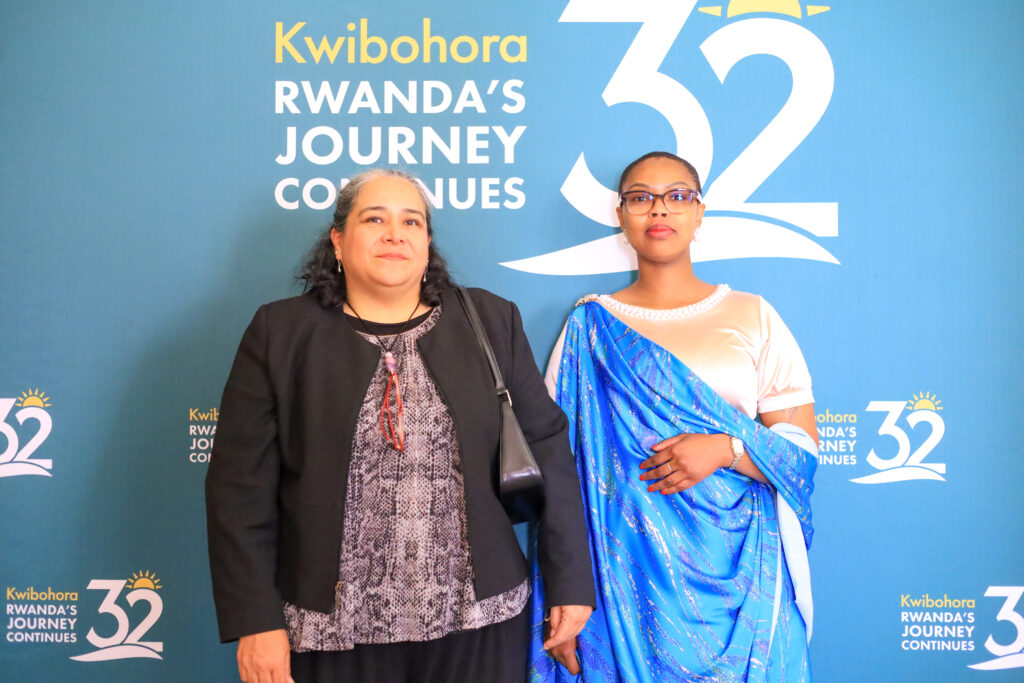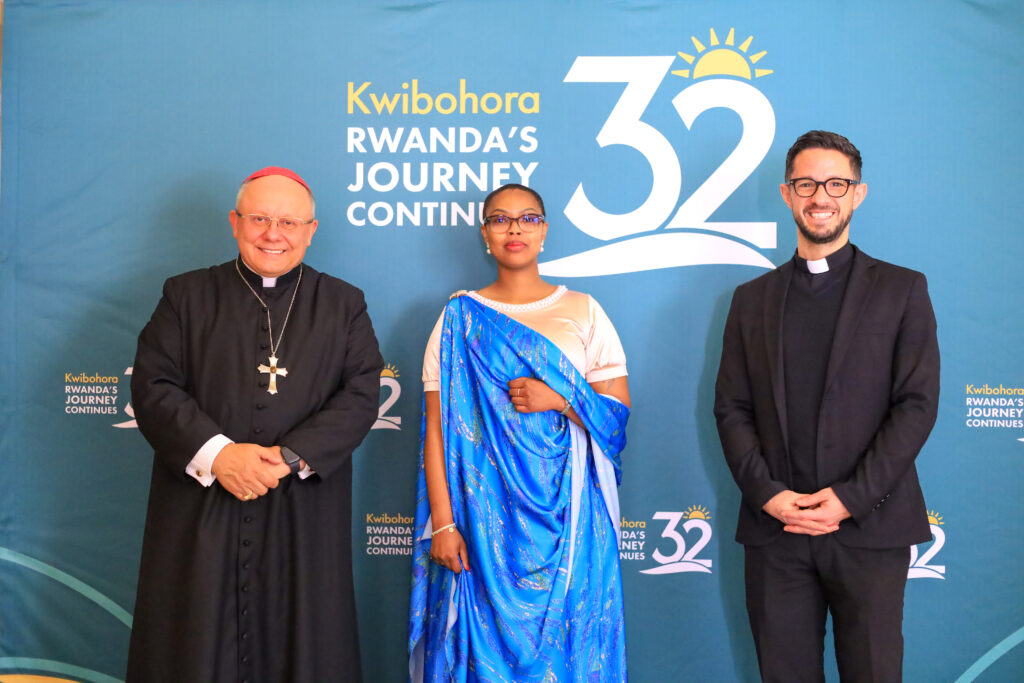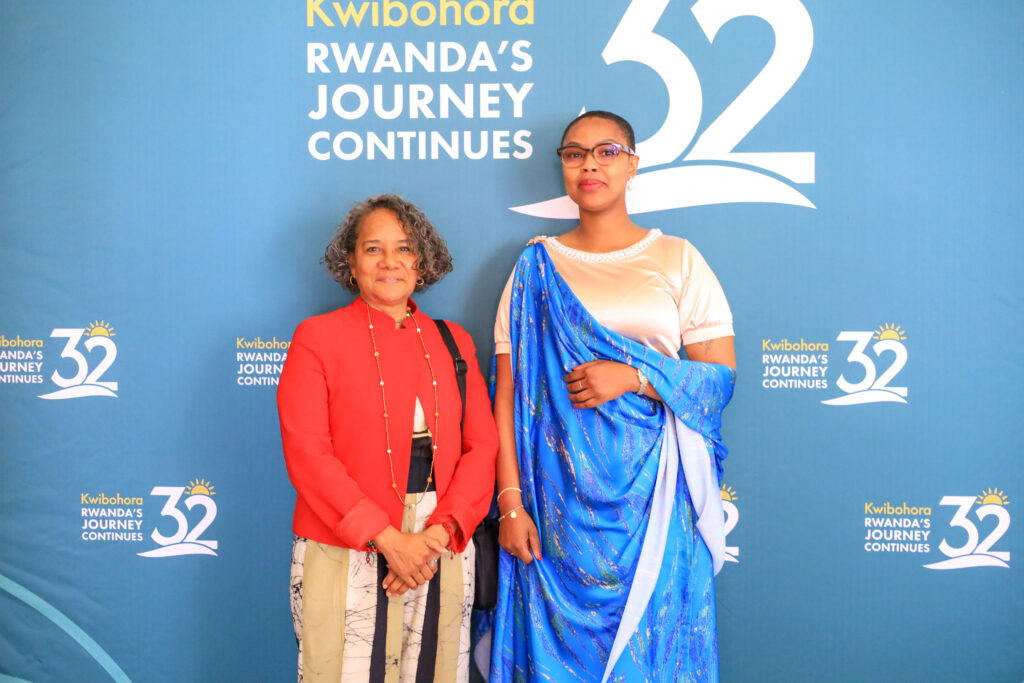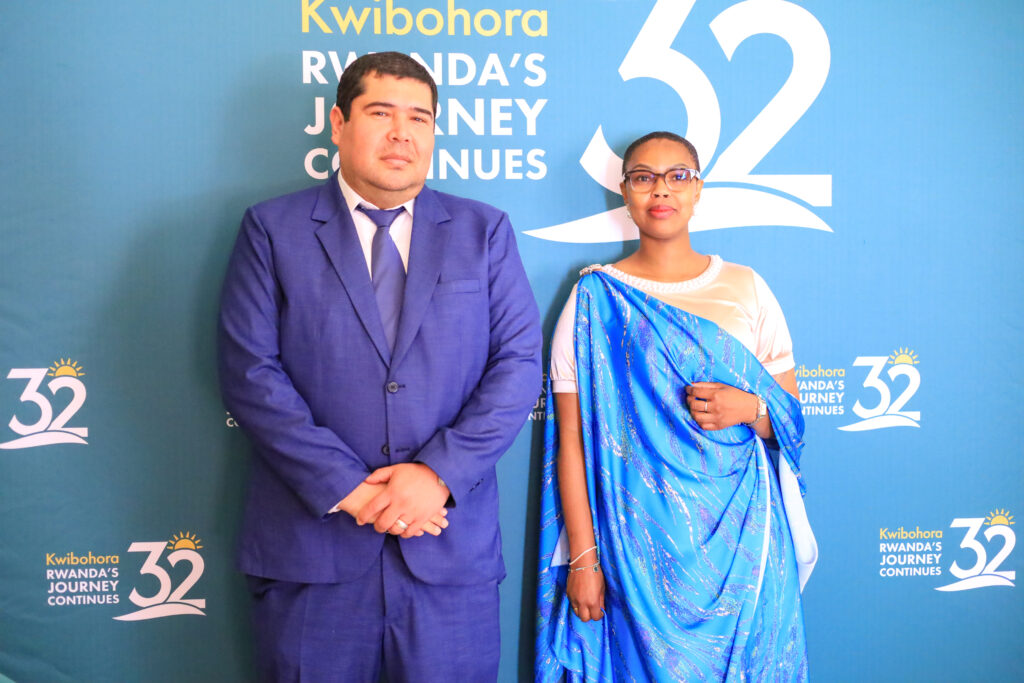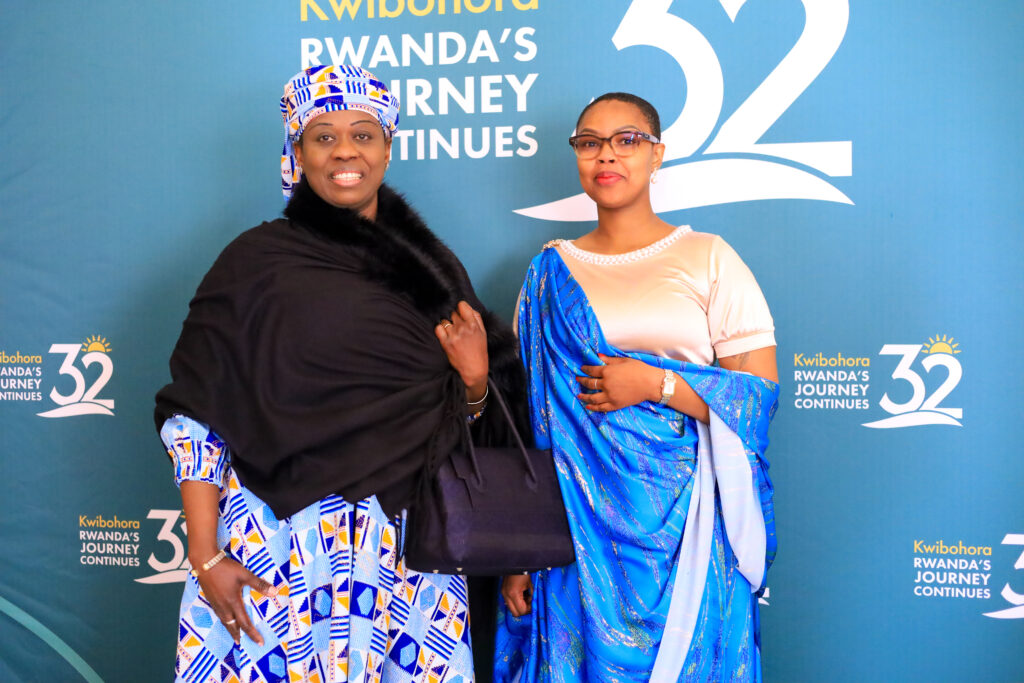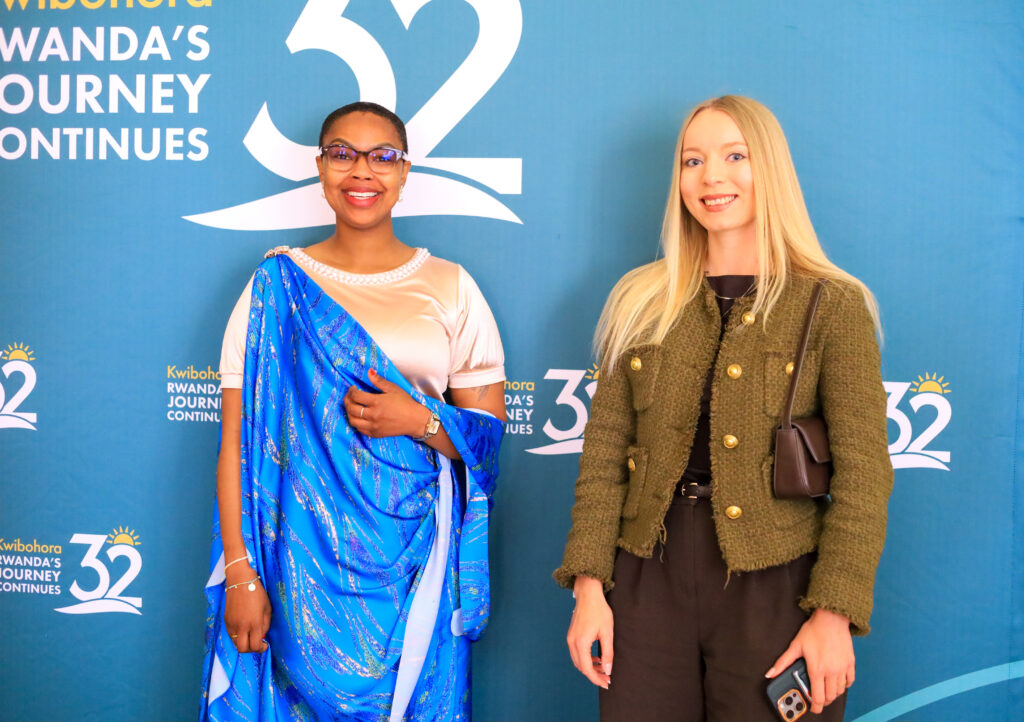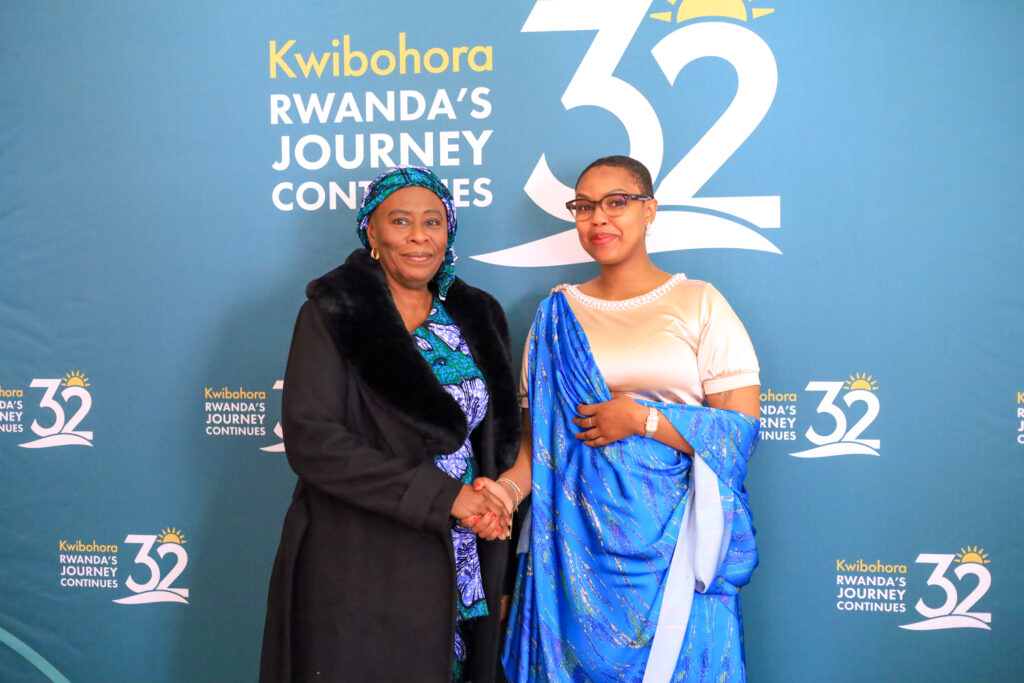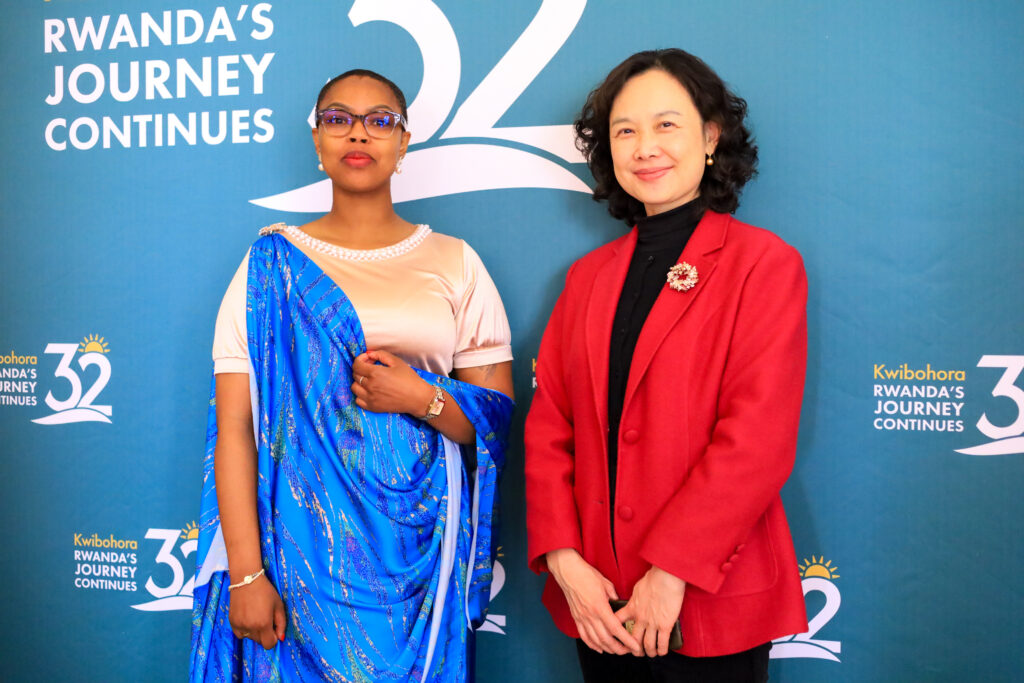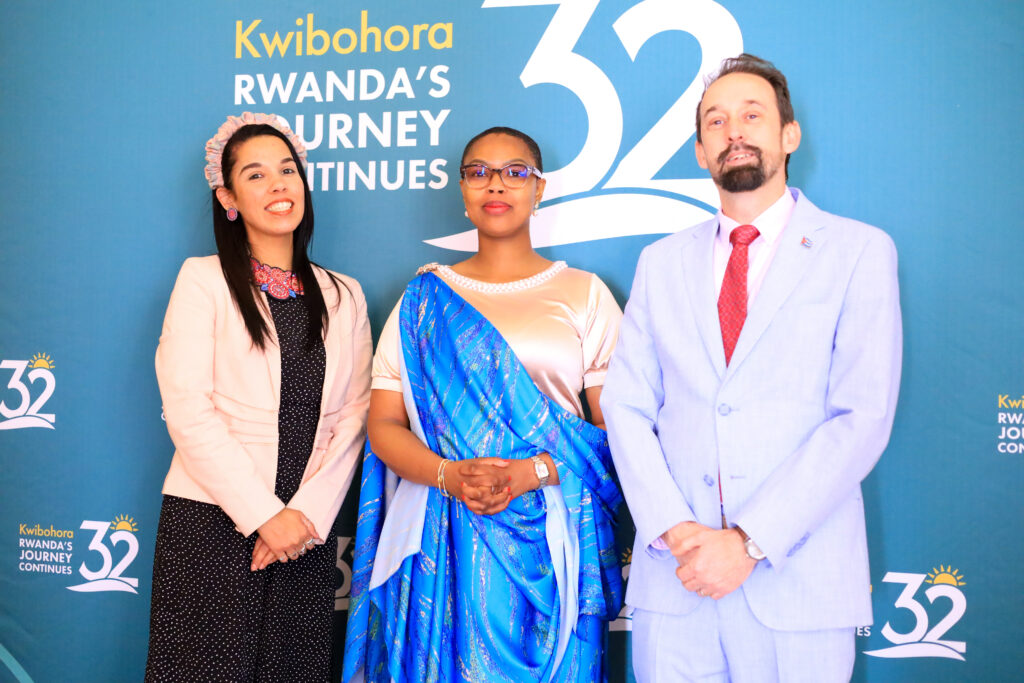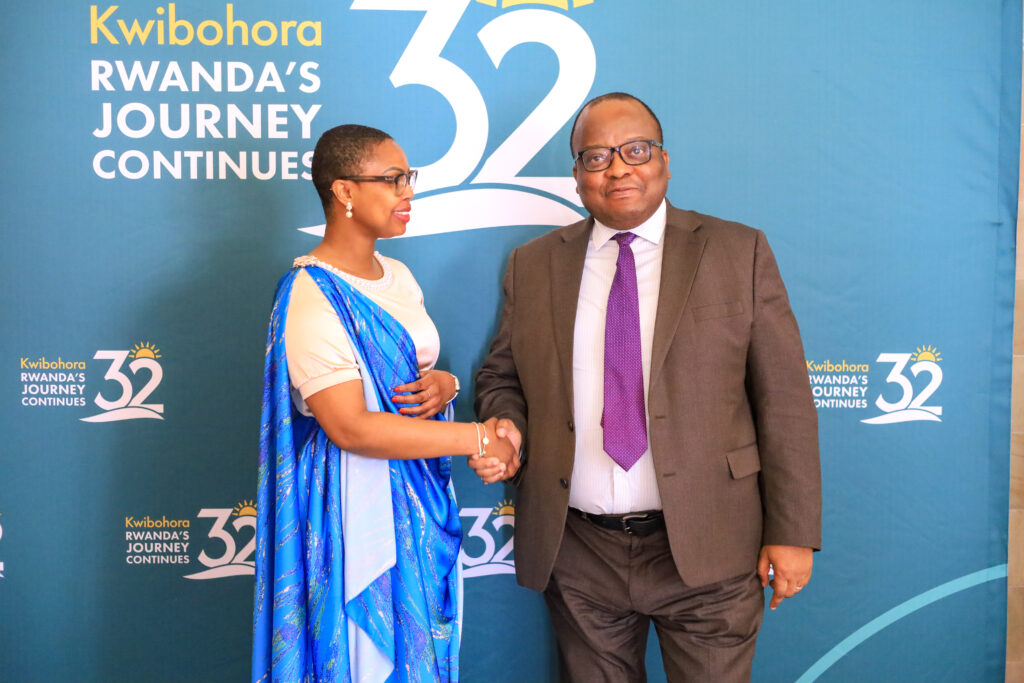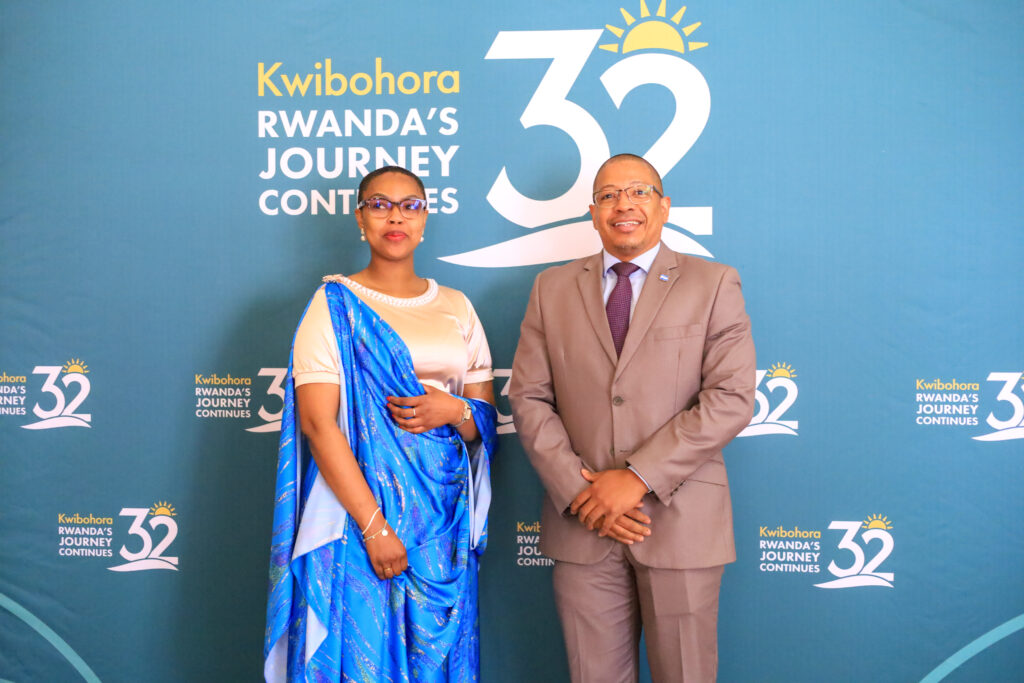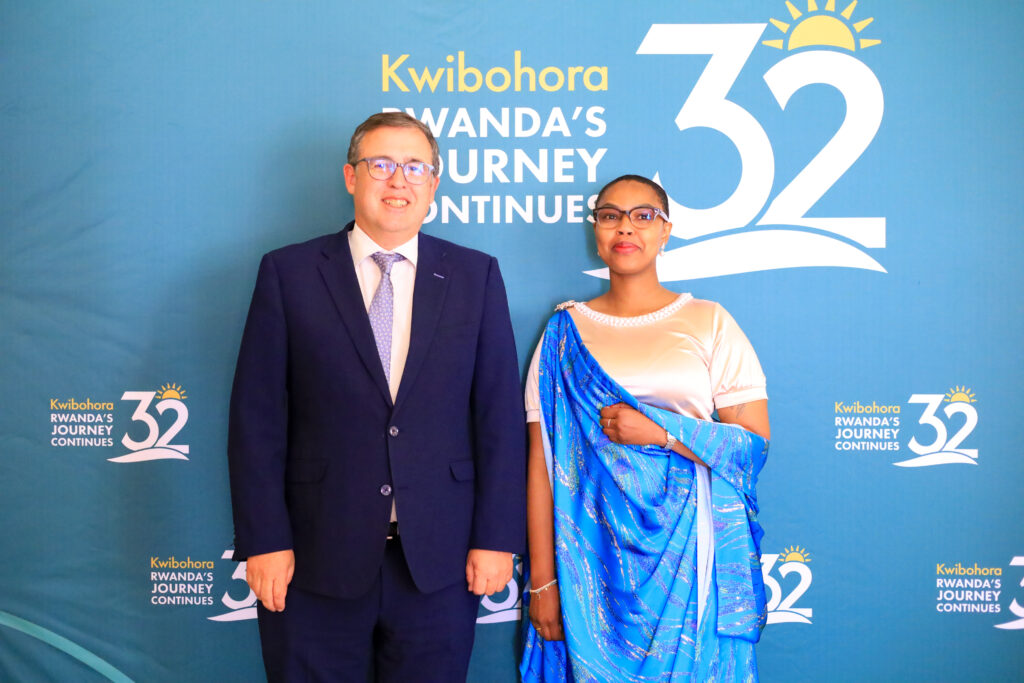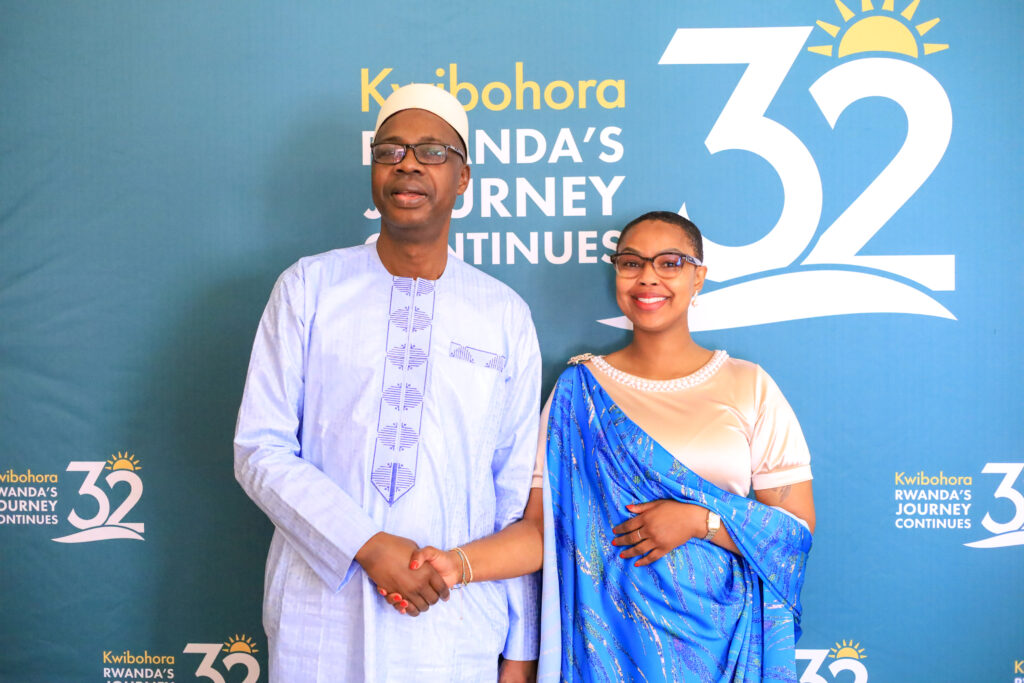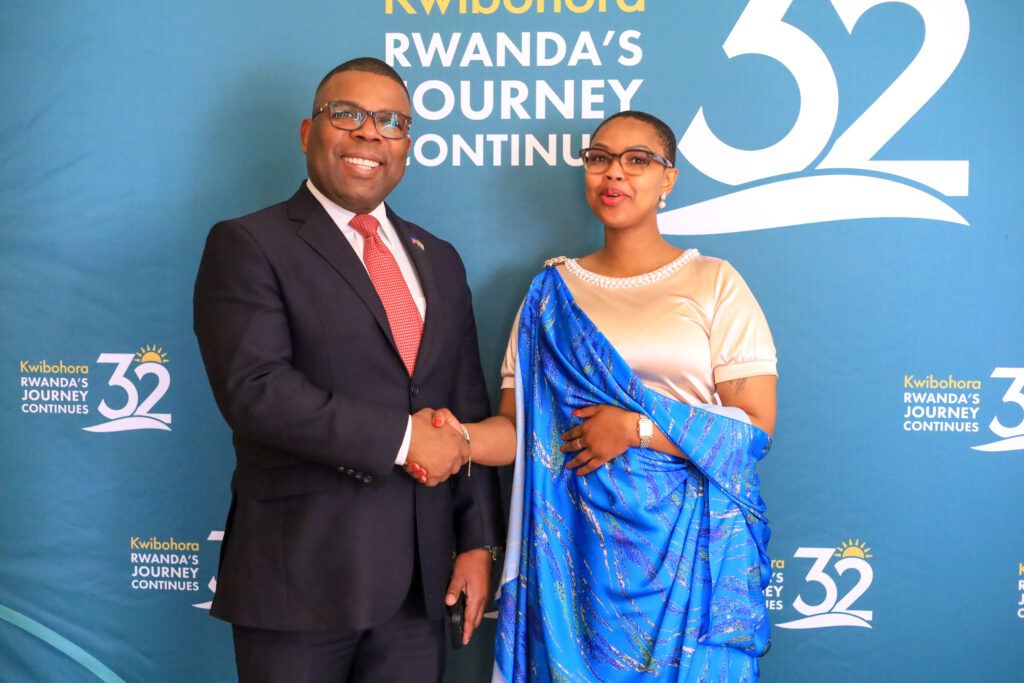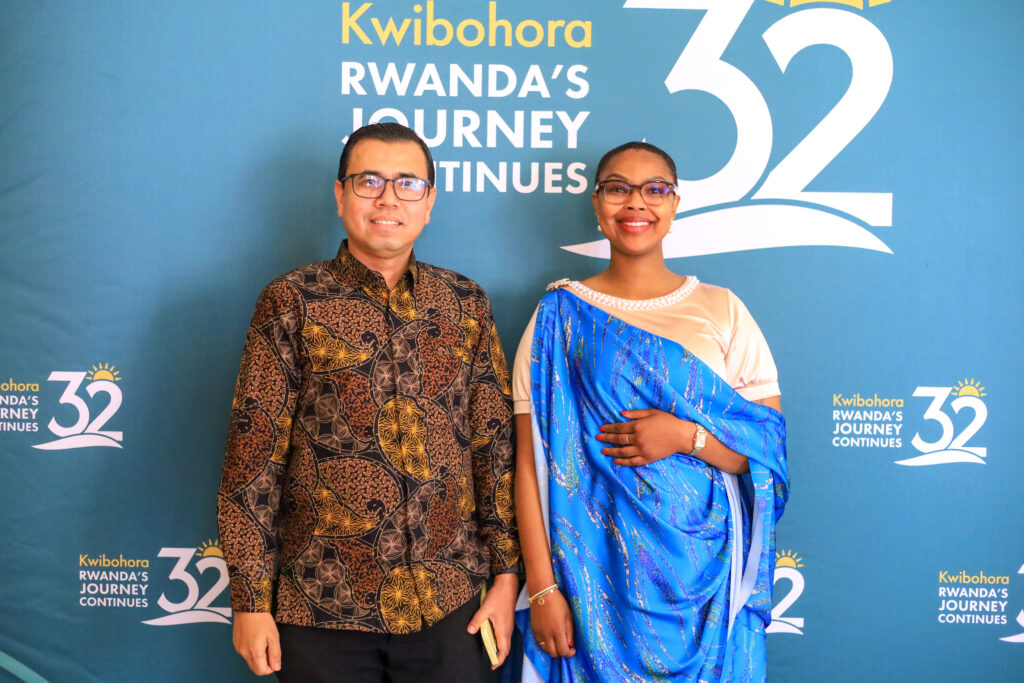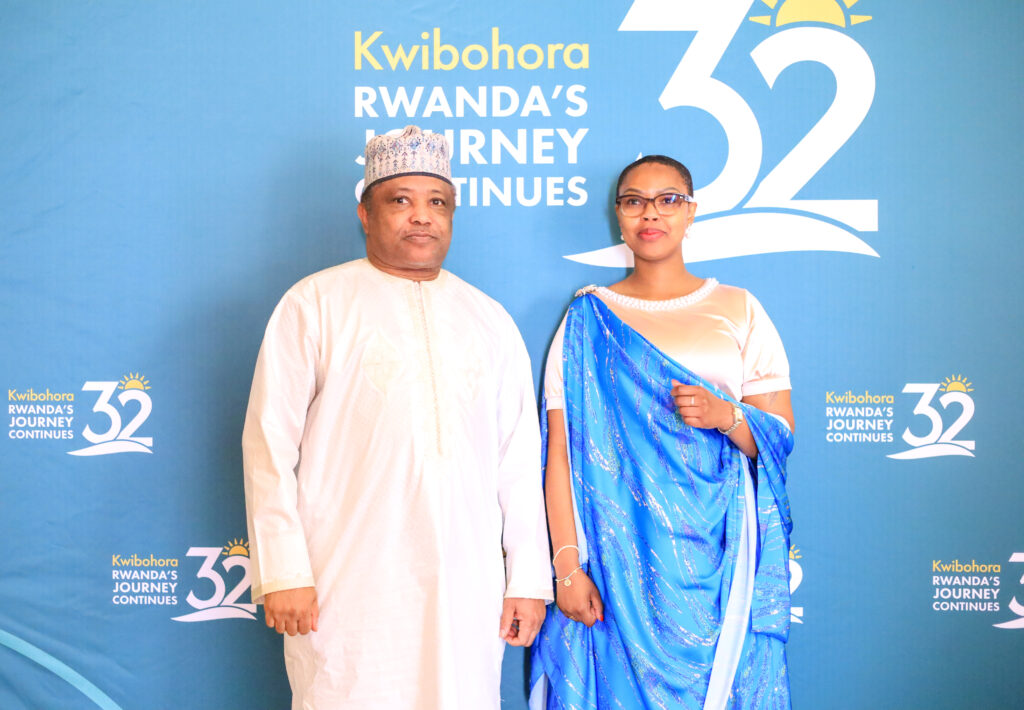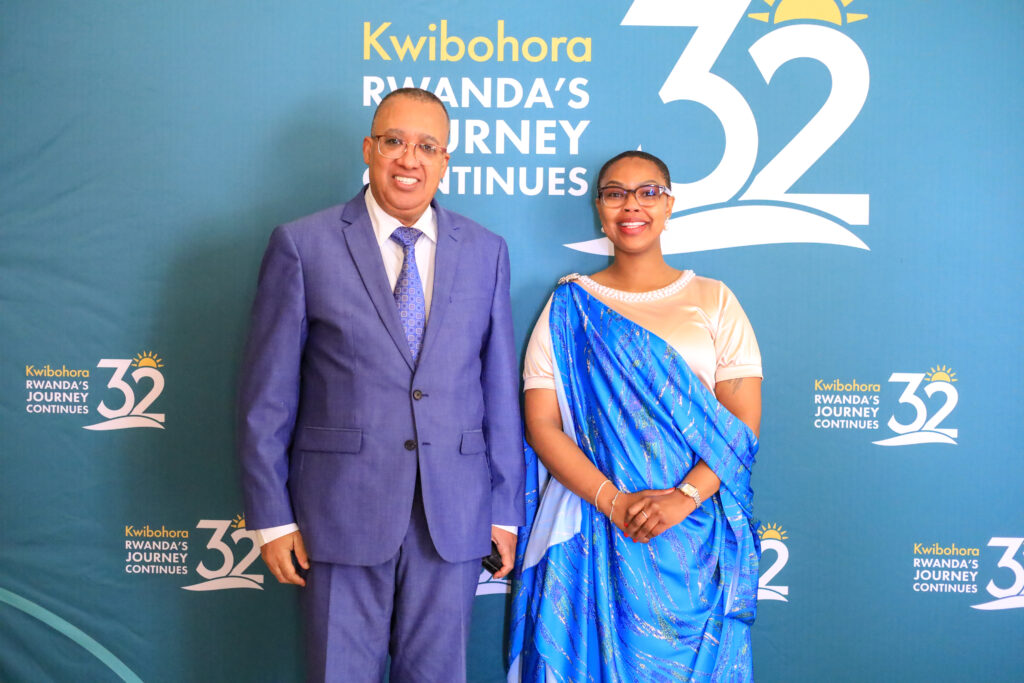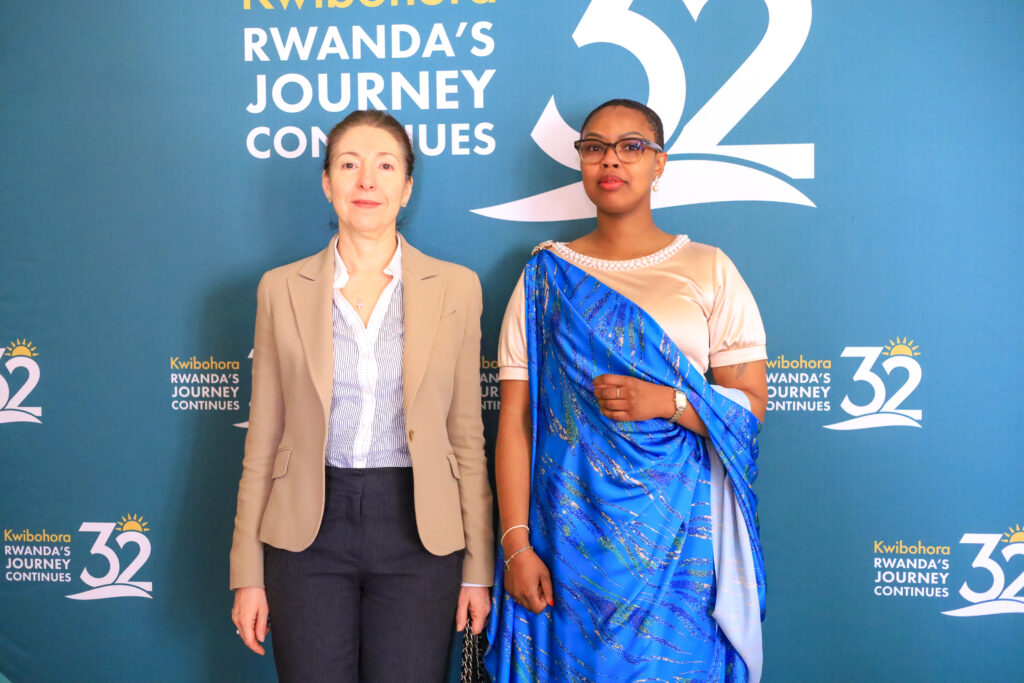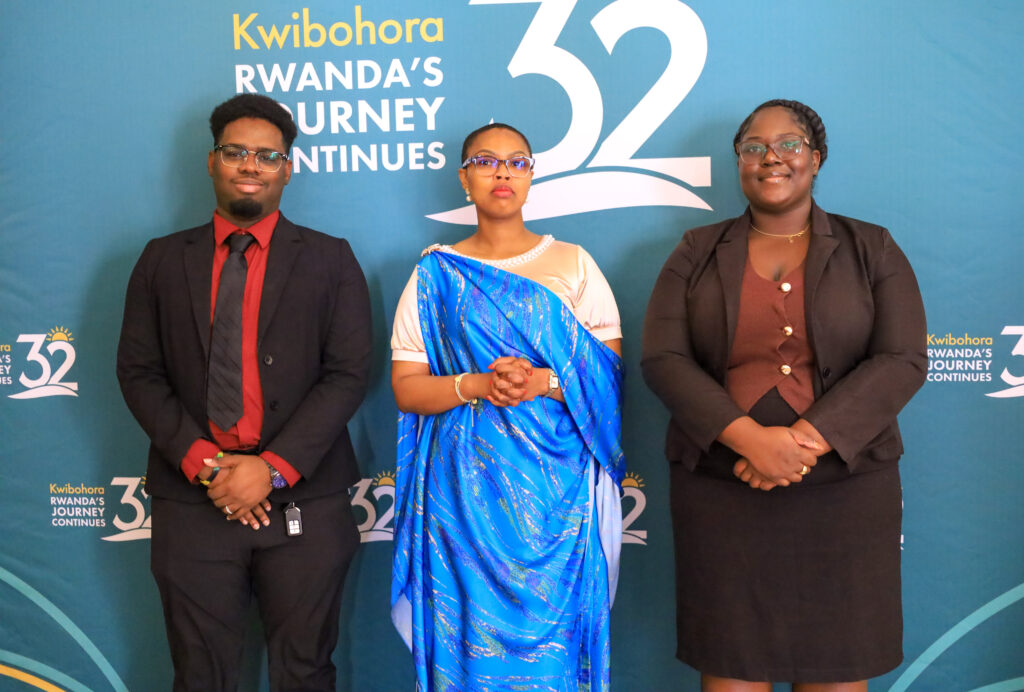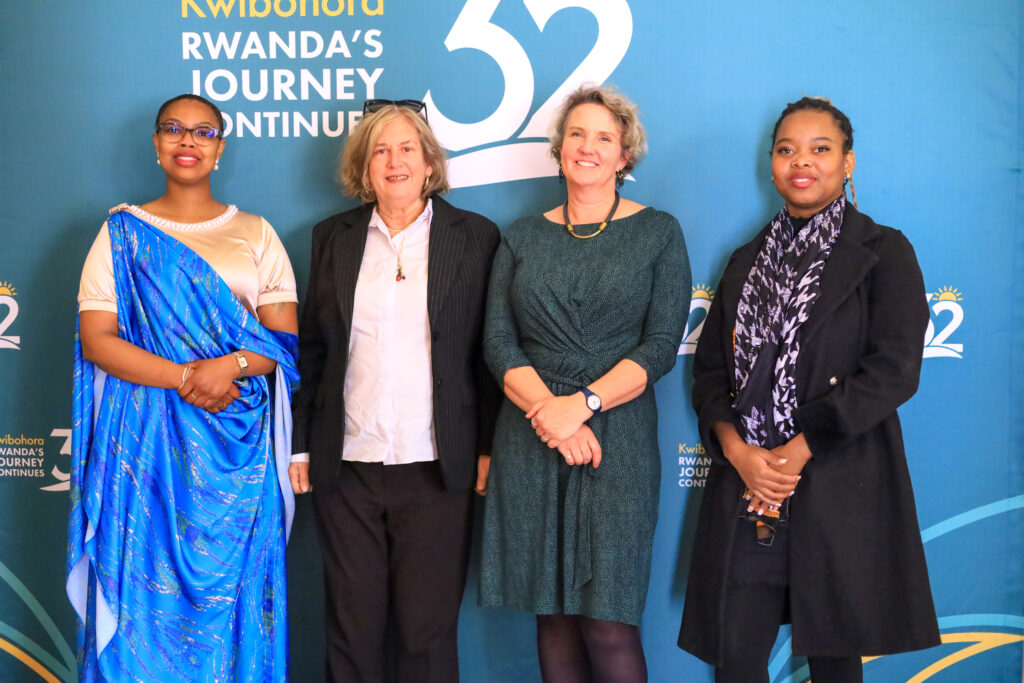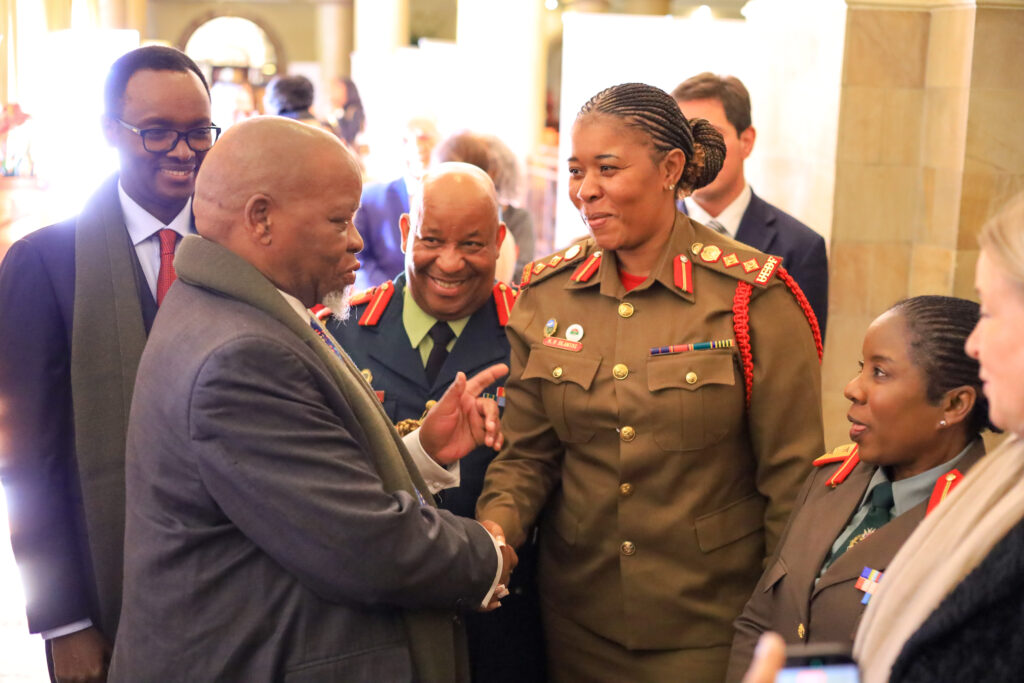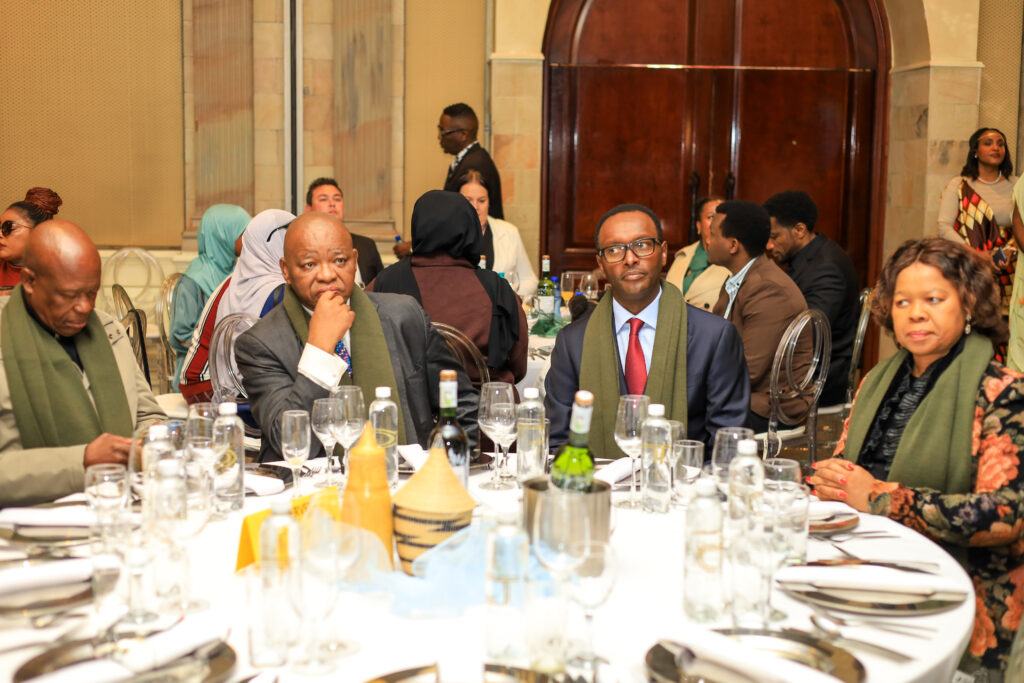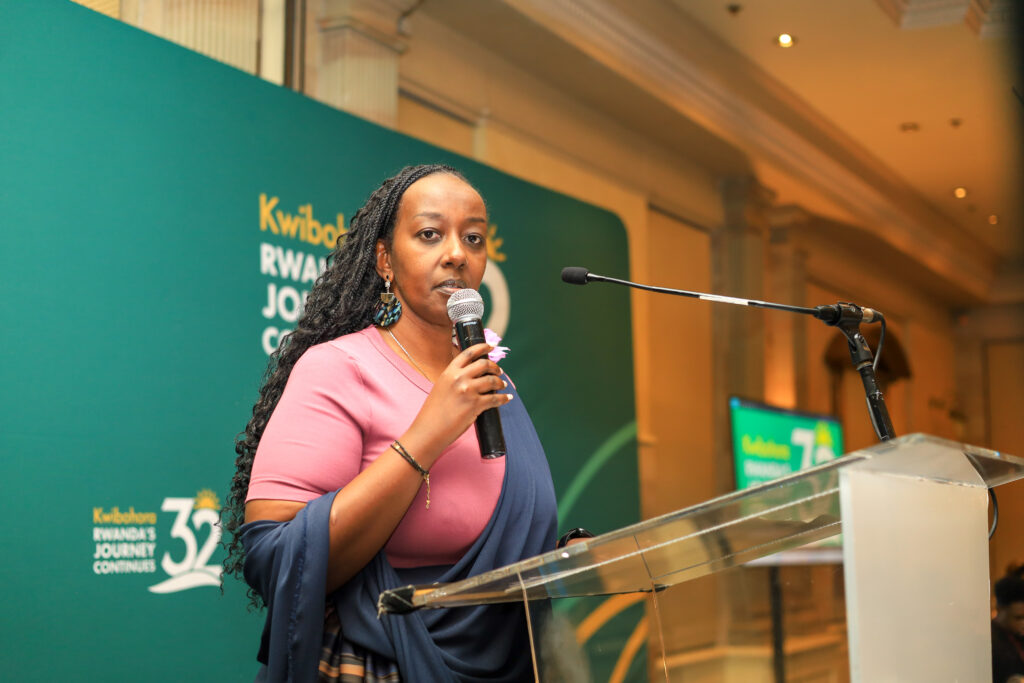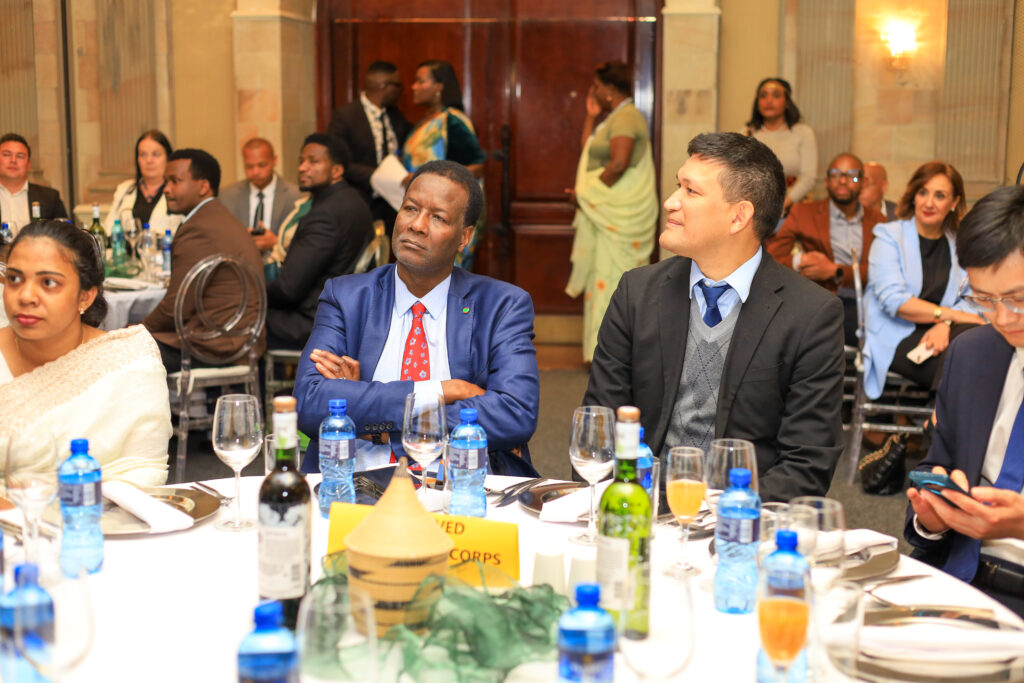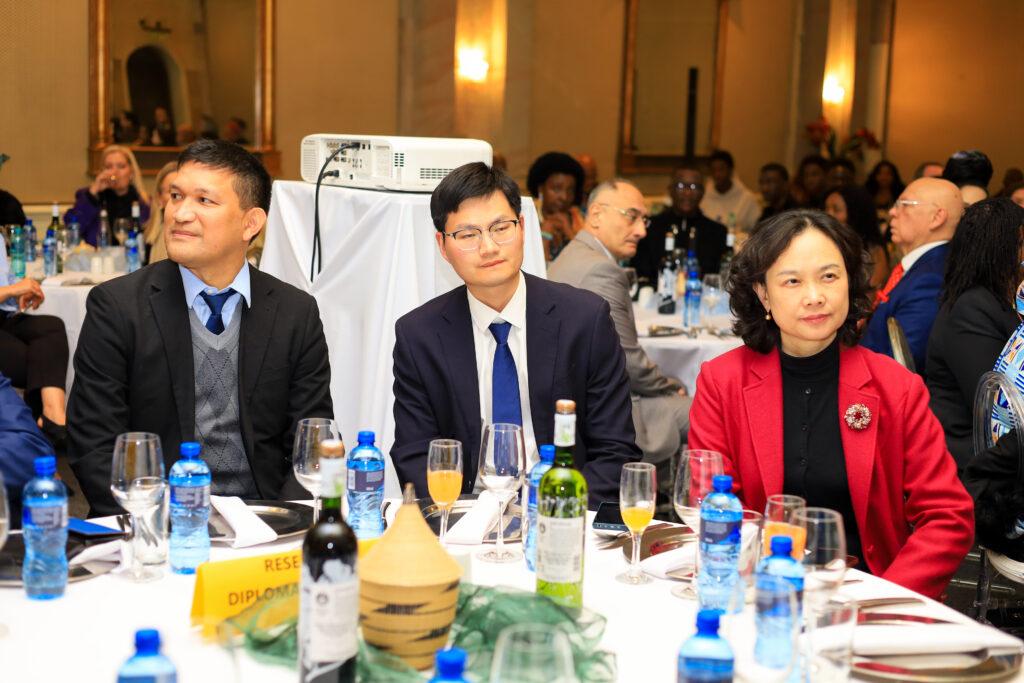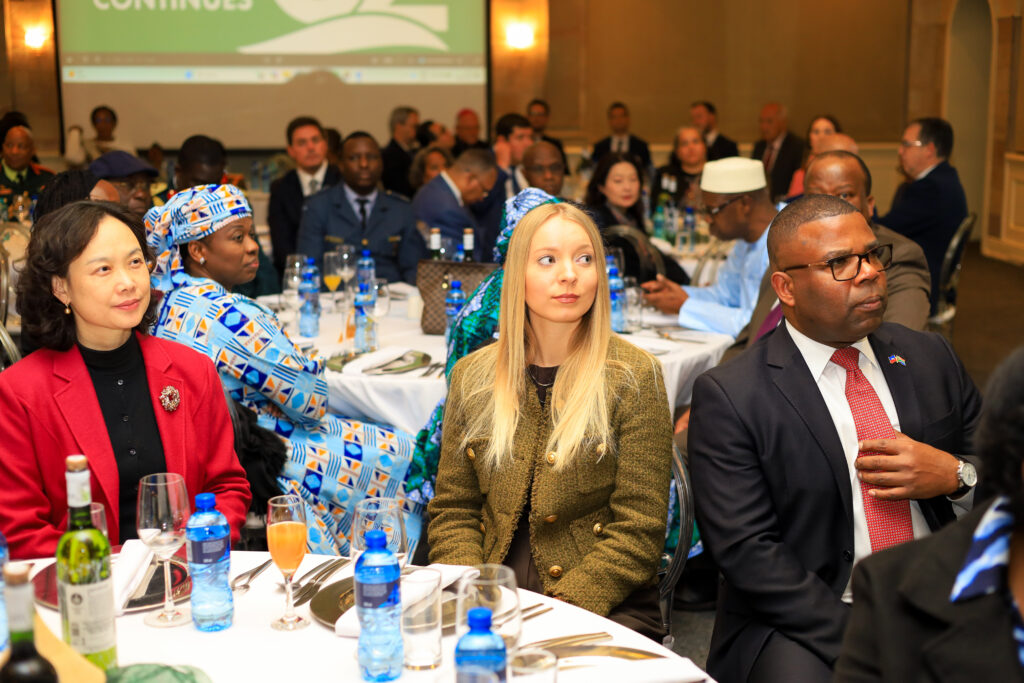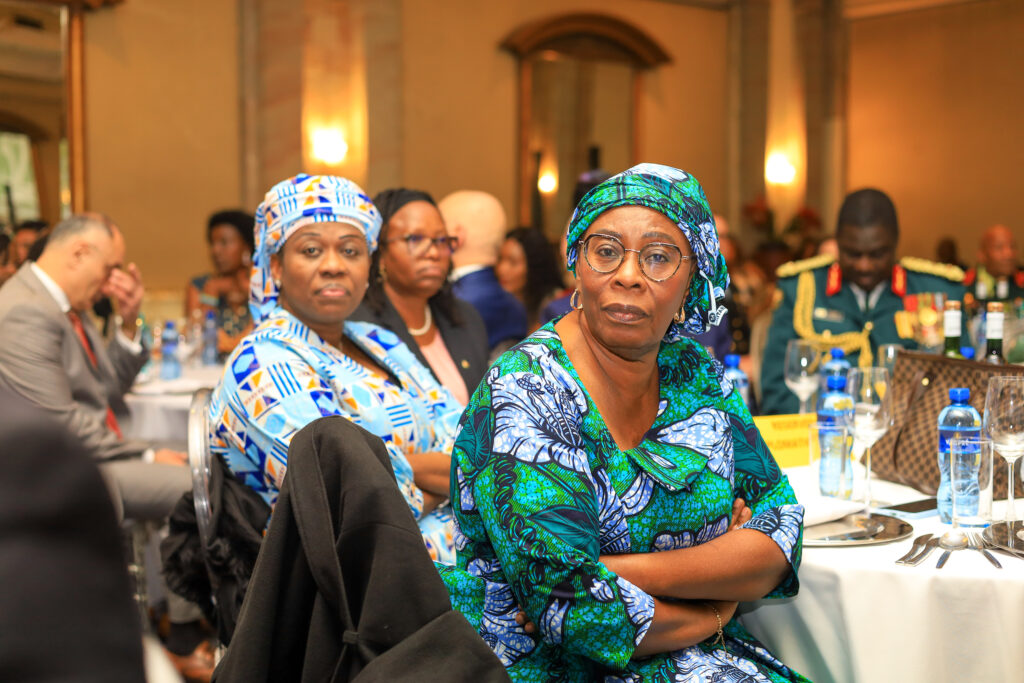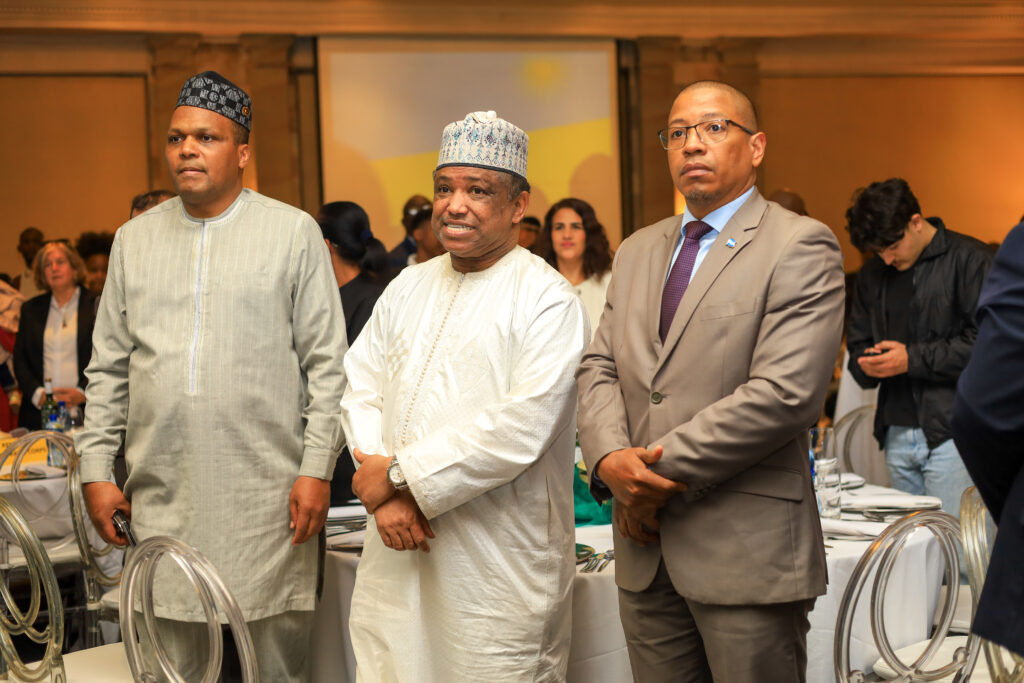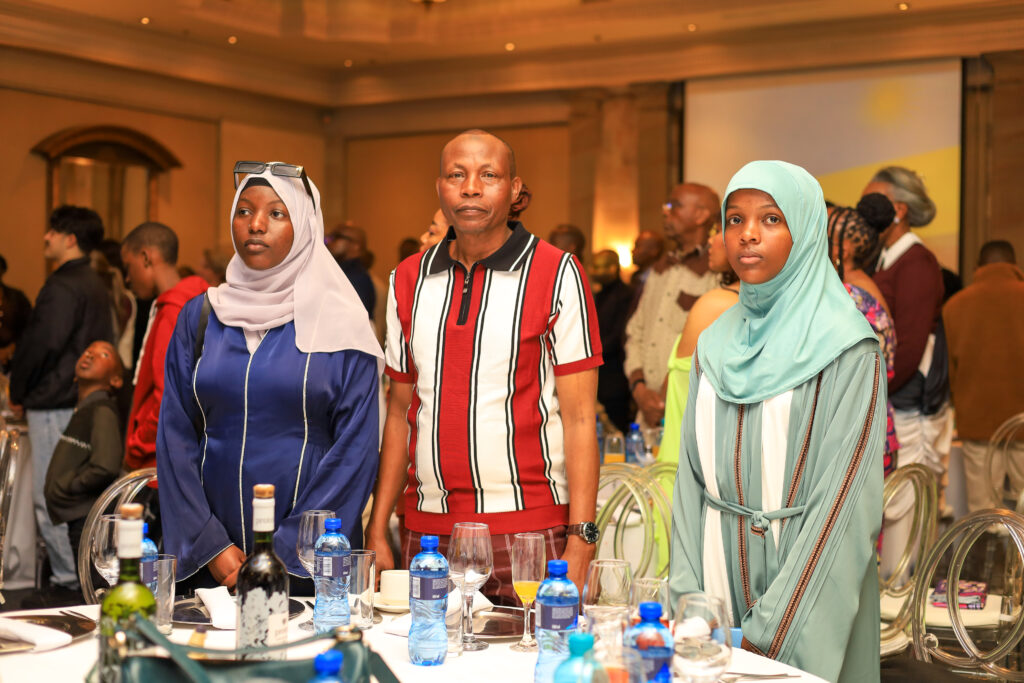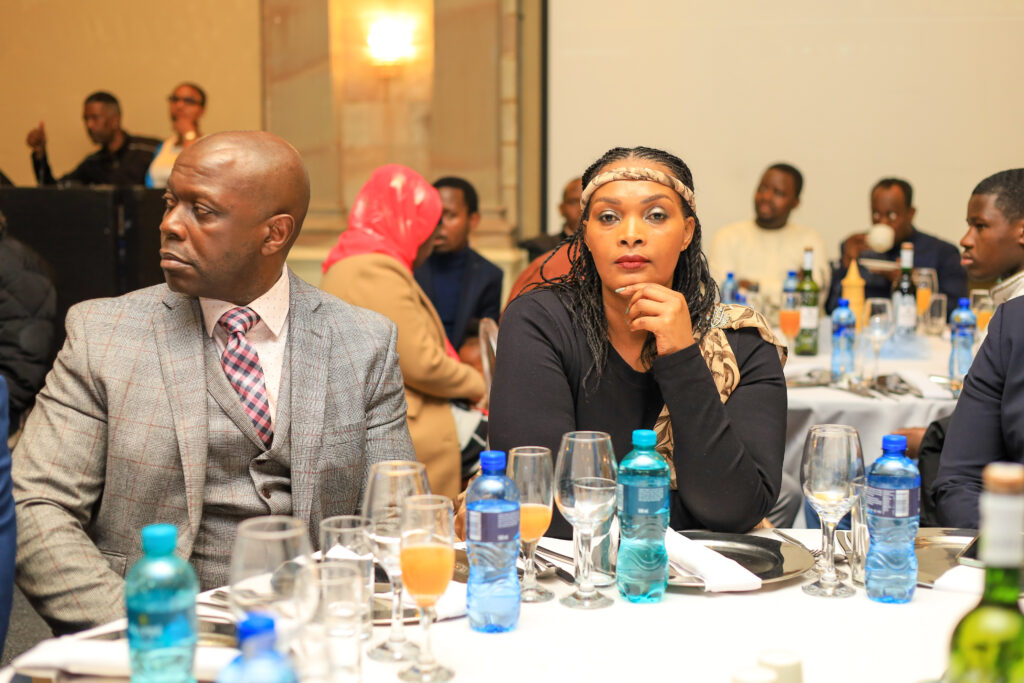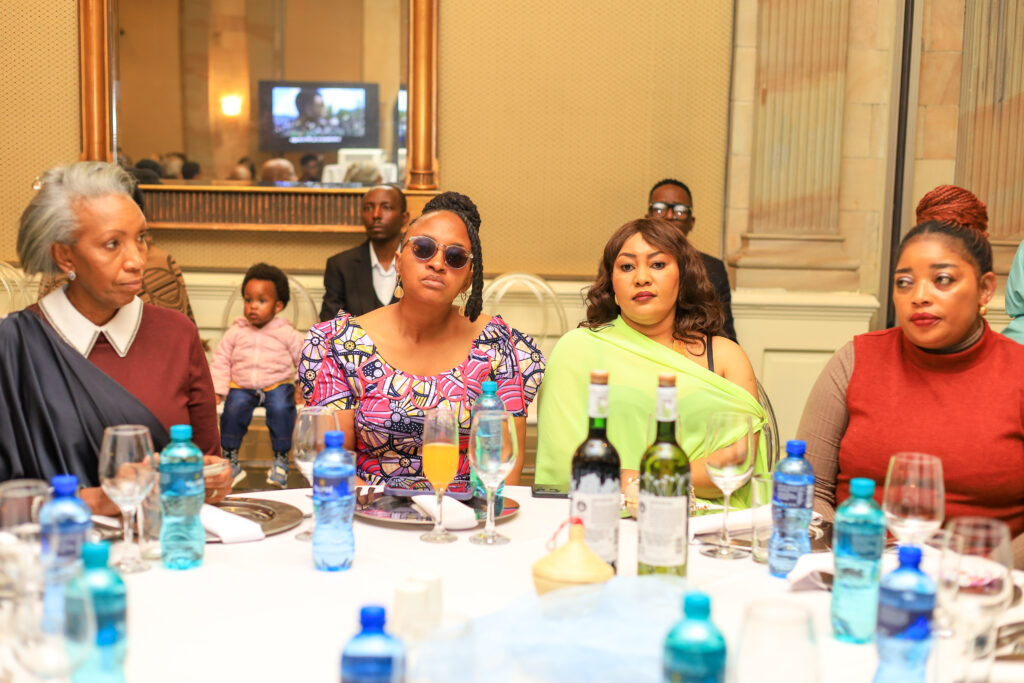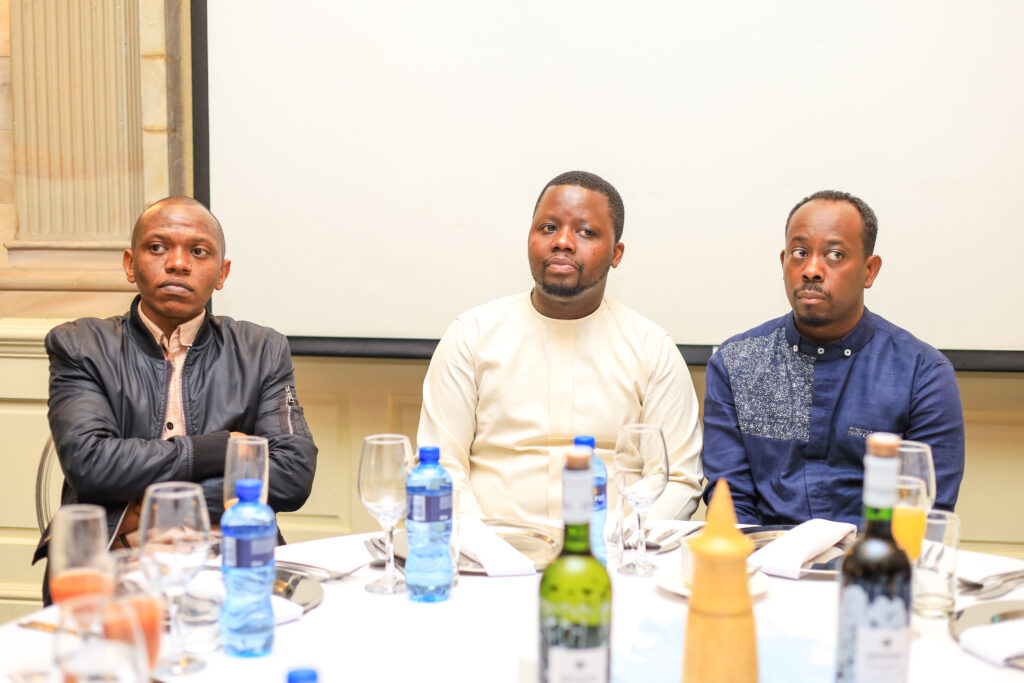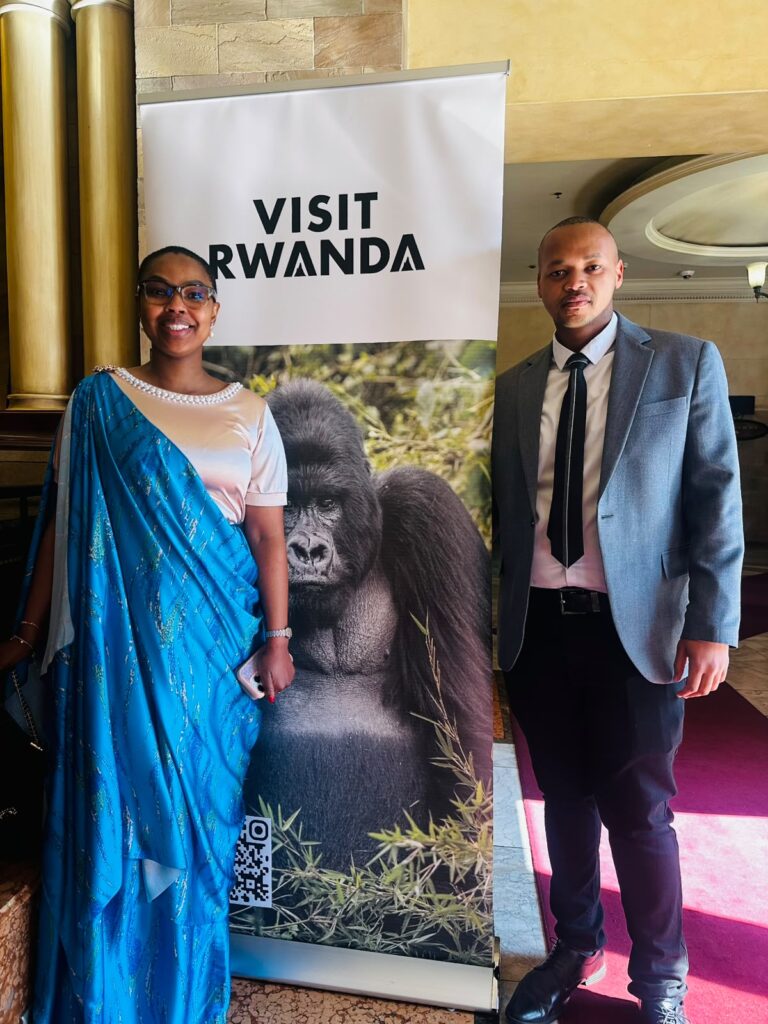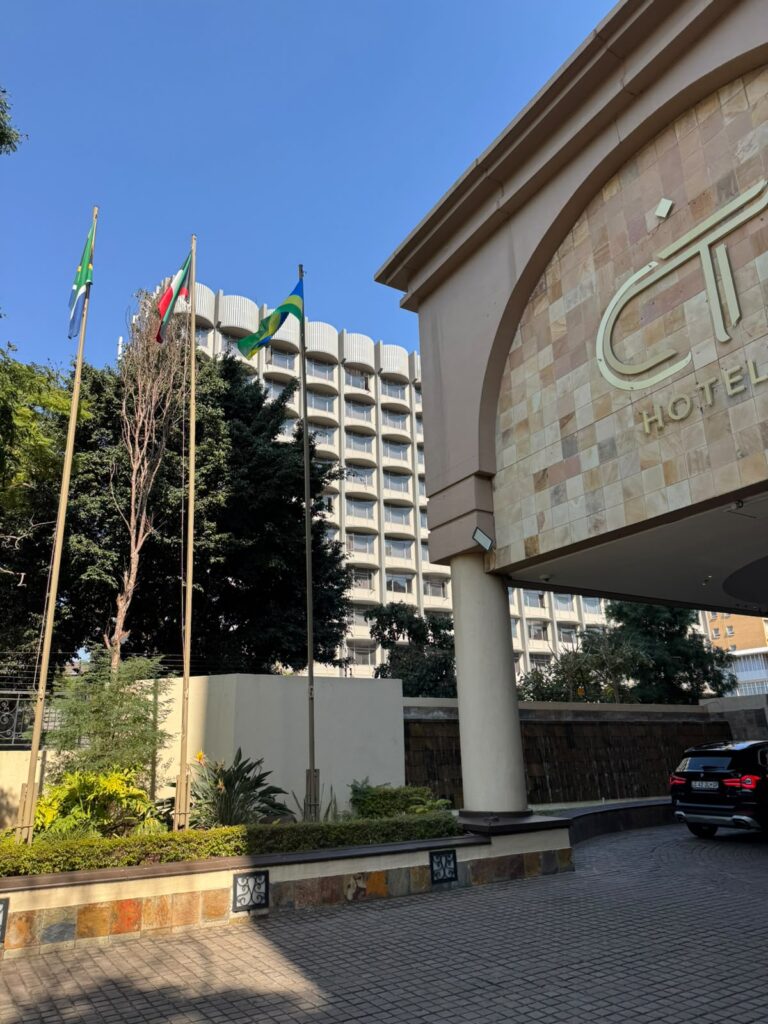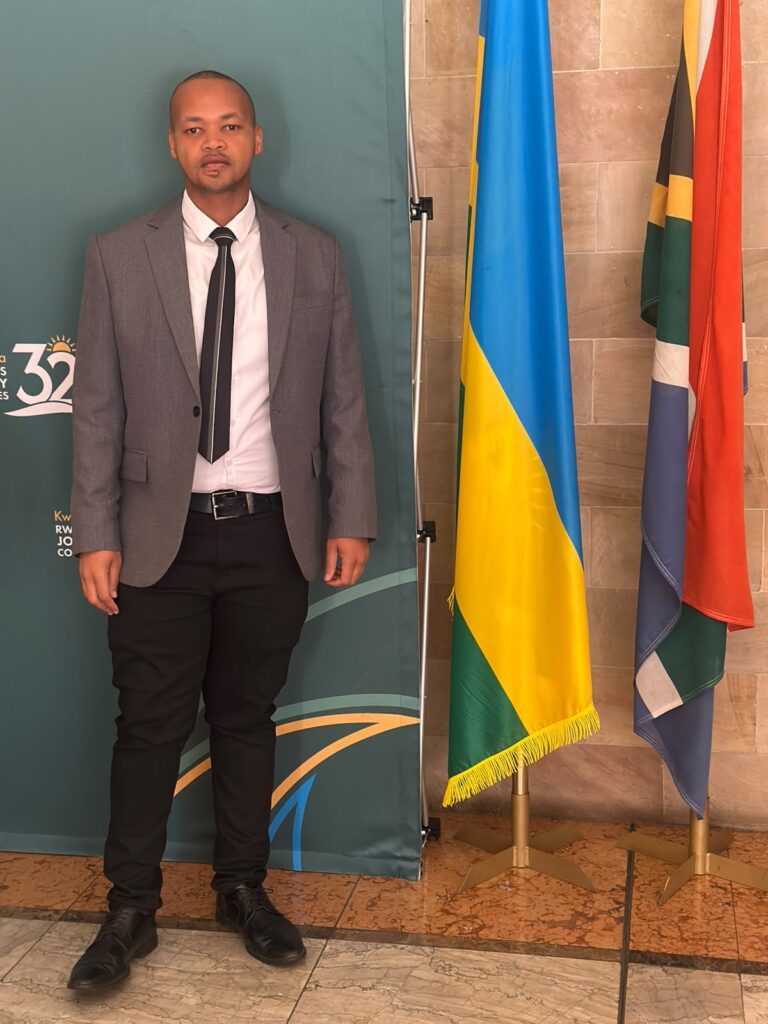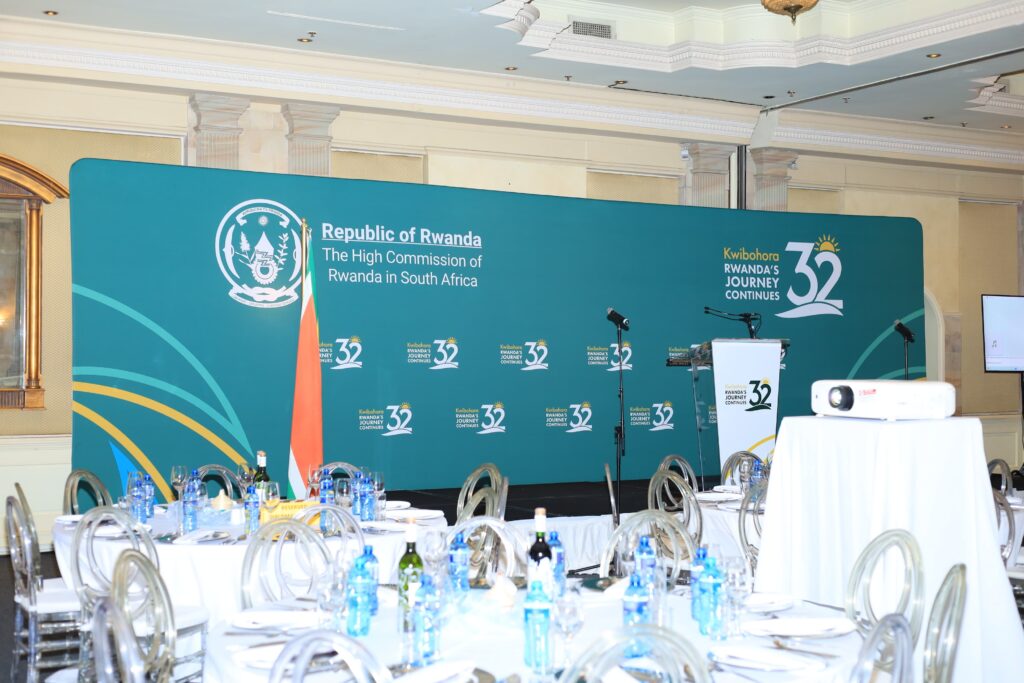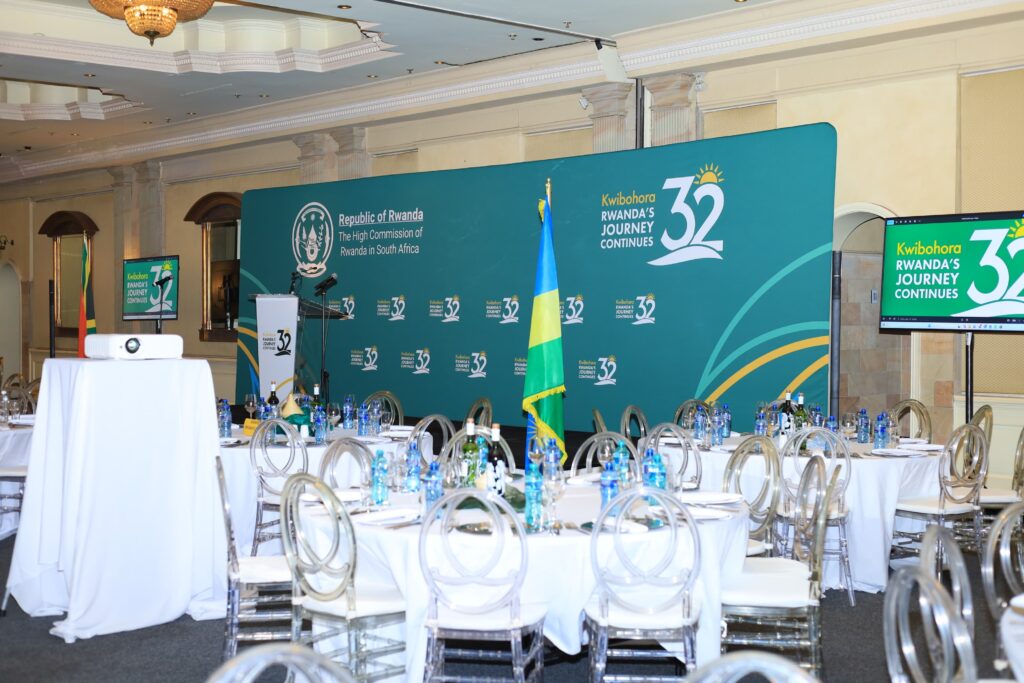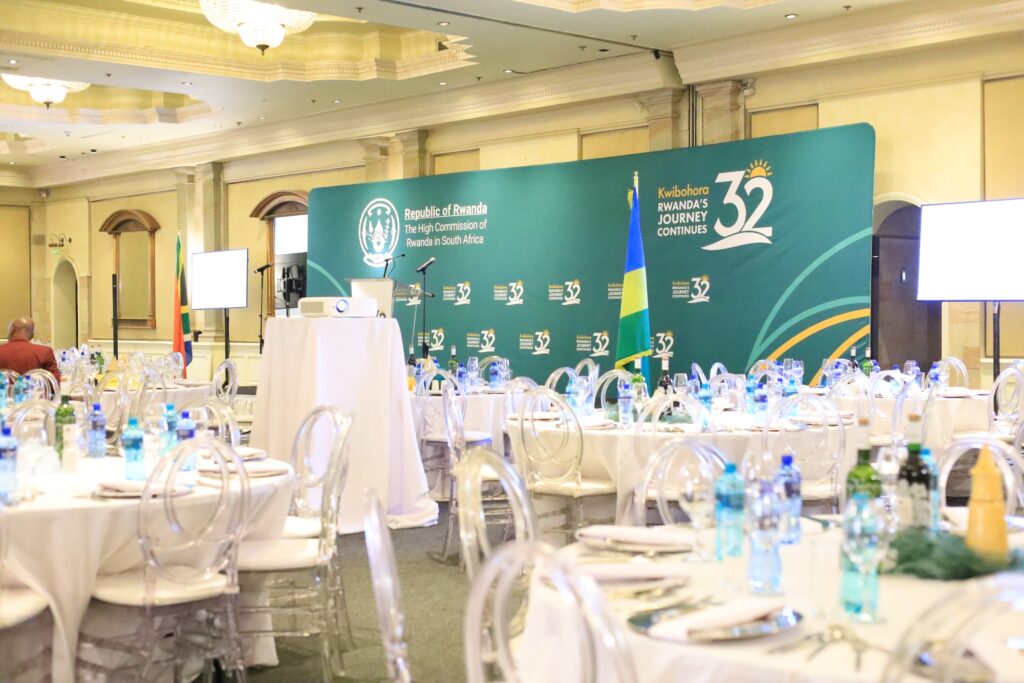
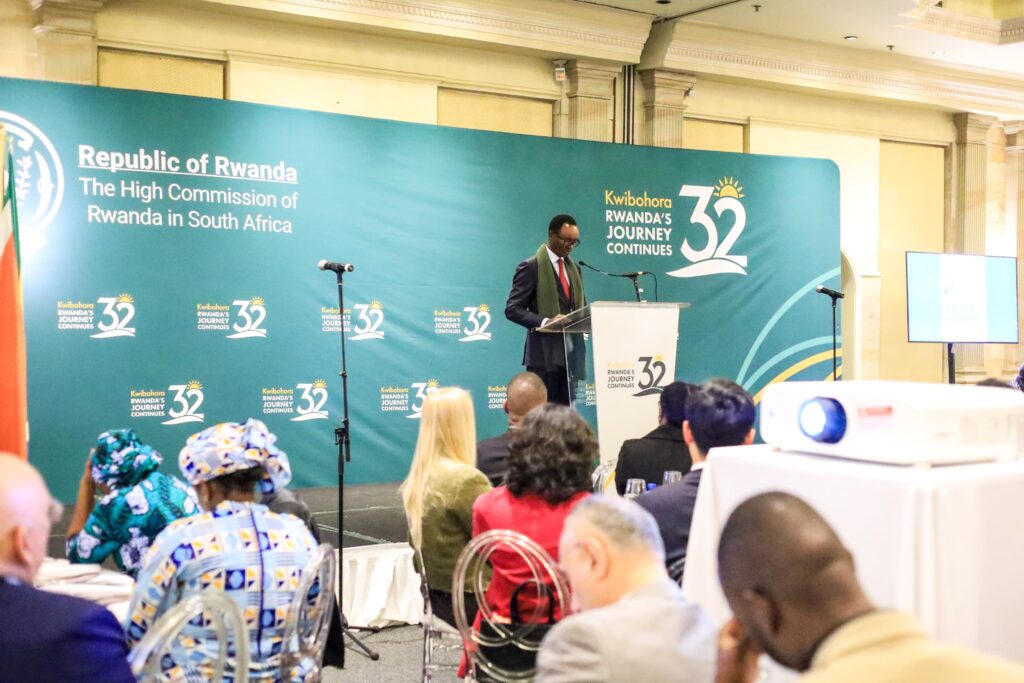
The High Commission of the Republic of Rwanda in South Africa hosted a celebration in Pretoria to commemorate Kwibohora 32, Rwanda’s 32nd Liberation Day anniversary, under the theme “Rwanda’s Journey Continues.”
The celebration brought together members of the diplomatic corps, South African government representatives, Rwandan nationals, business leaders, partners and friends of Rwanda to reflect on the country’s liberation journey, post-genocide reconstruction and continued national transformation.
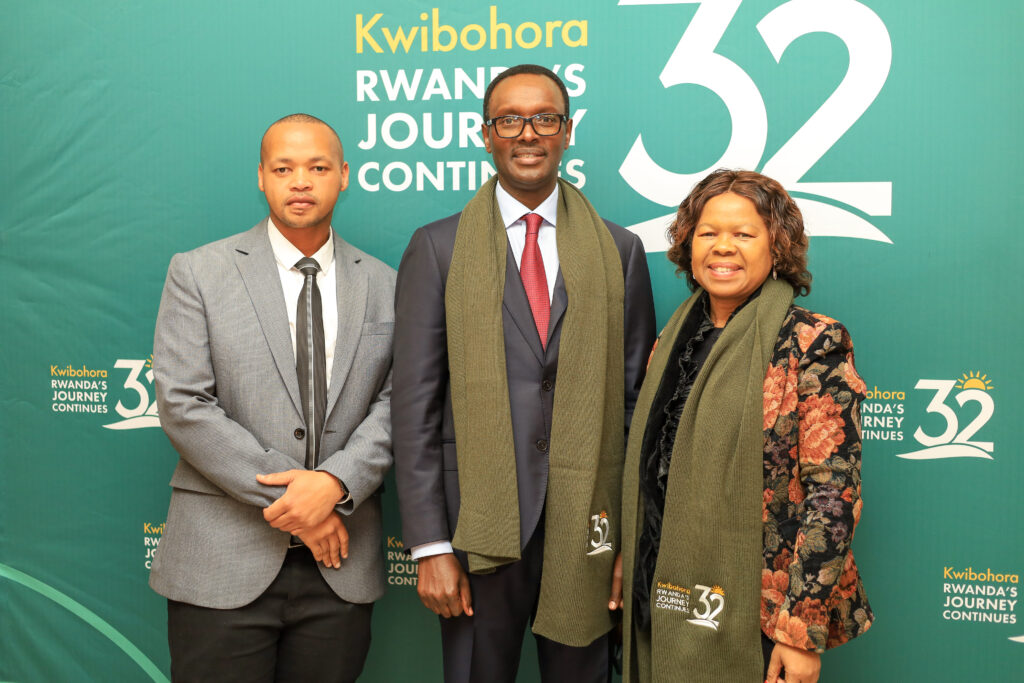
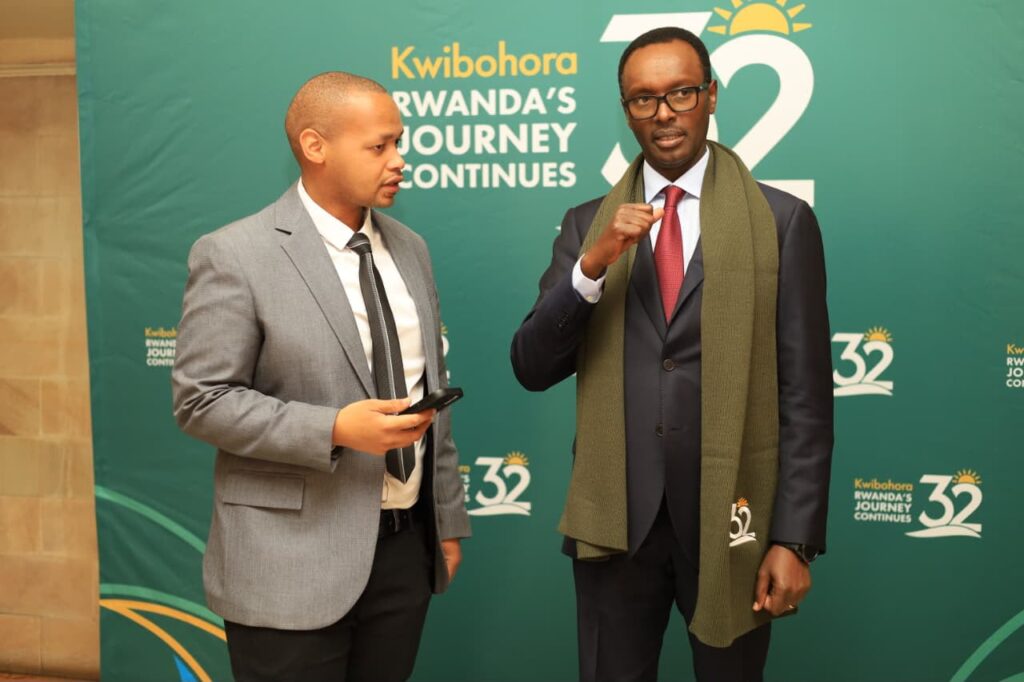
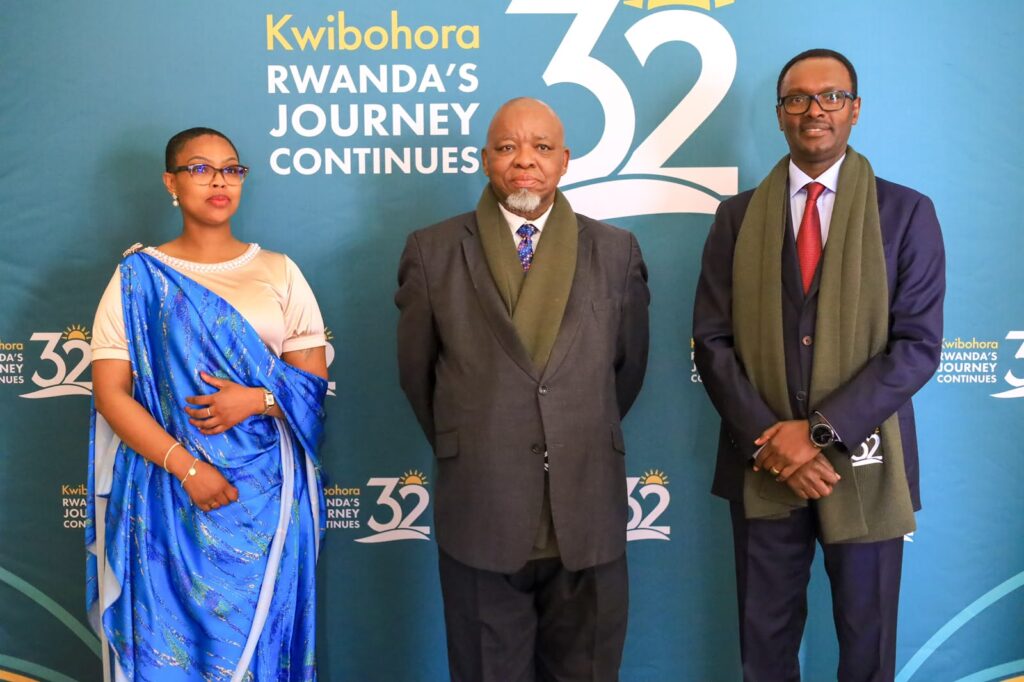
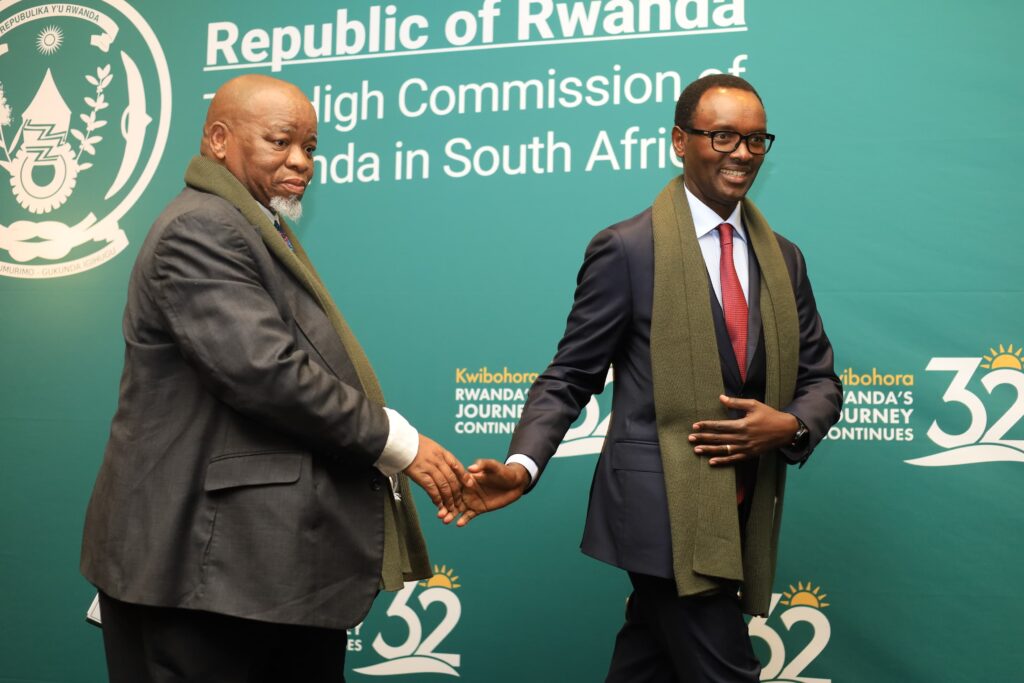
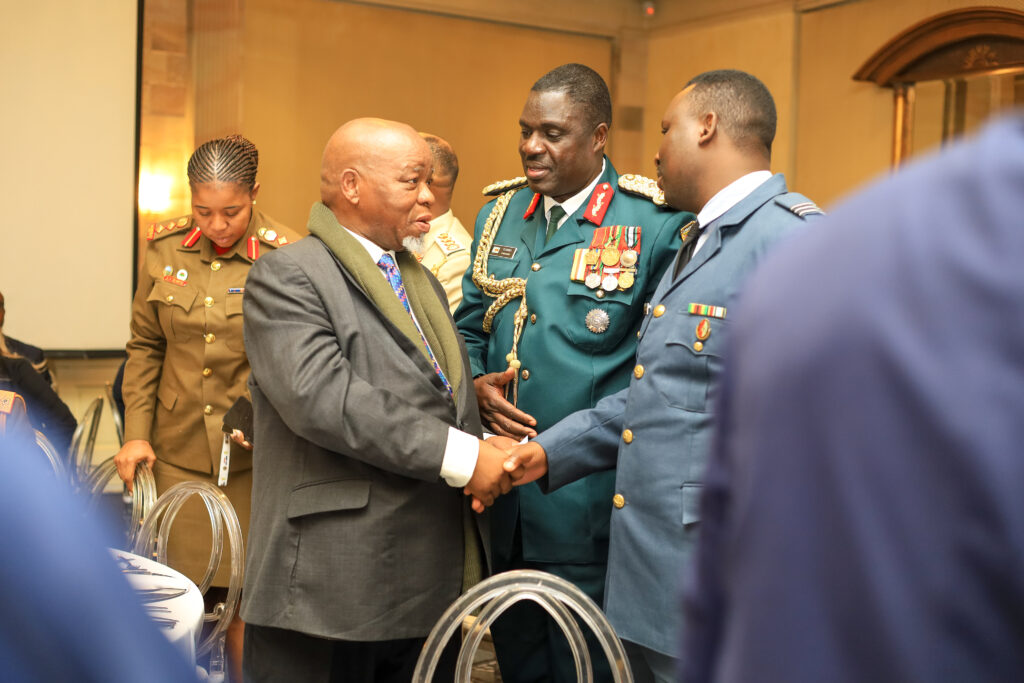
The event was hosted by the High Commissioner of Rwanda to South Africa, H.E. Emmanuel Hategeka, while the Government of the Republic of South Africa was represented by the Minister of Mineral and Petroleum Resources, Hon. Gwede Mantashe, who attended as Guest of Honour.
A Celebration of Rwanda’s Liberation Journey
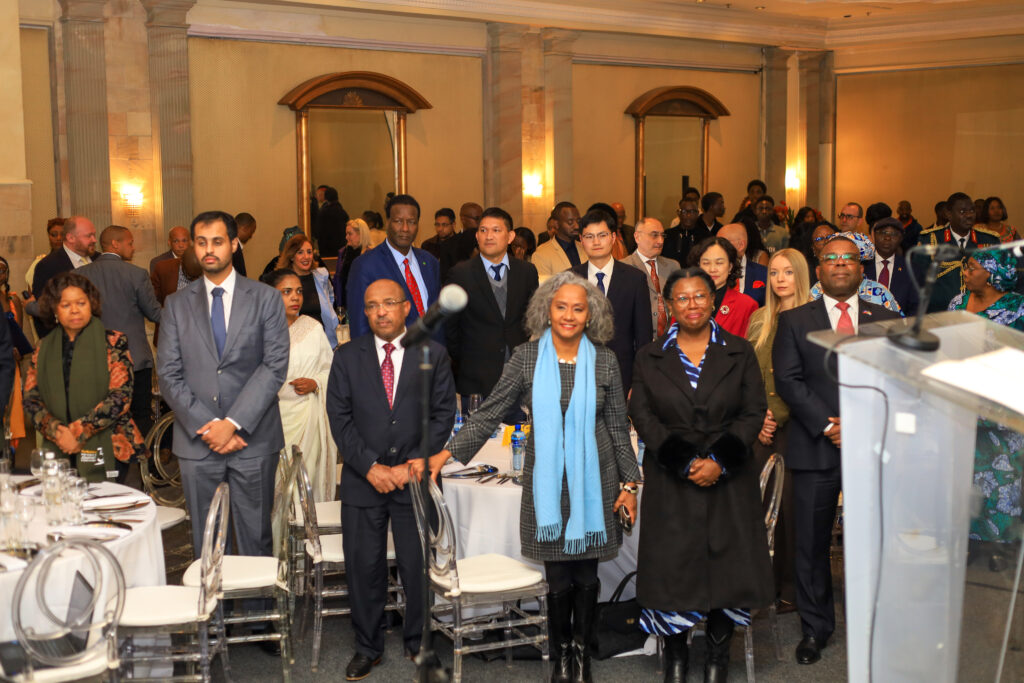
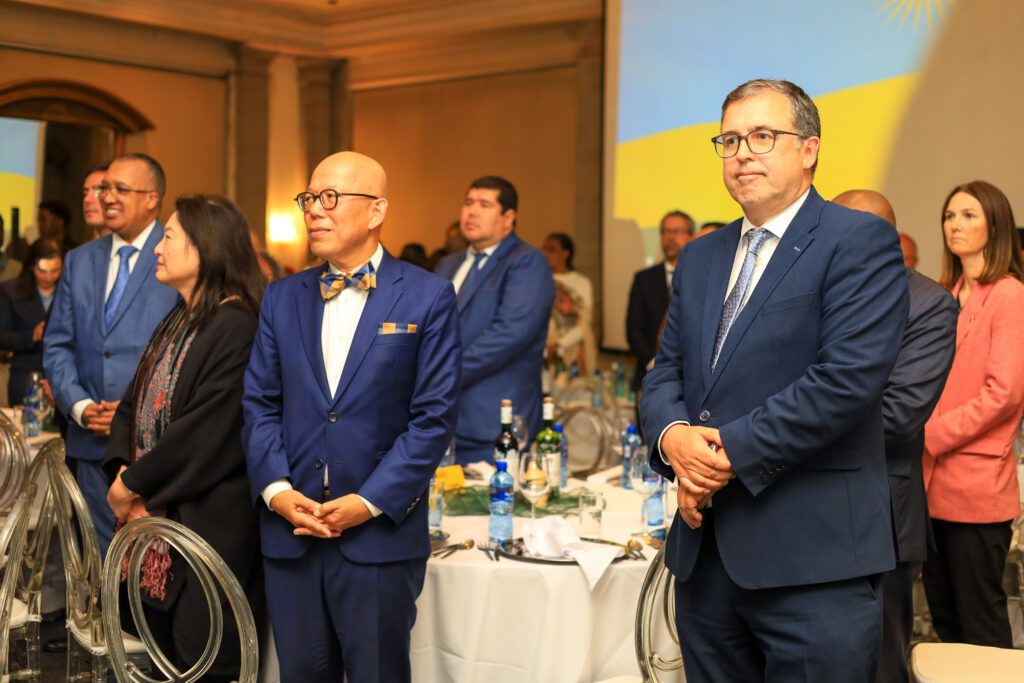
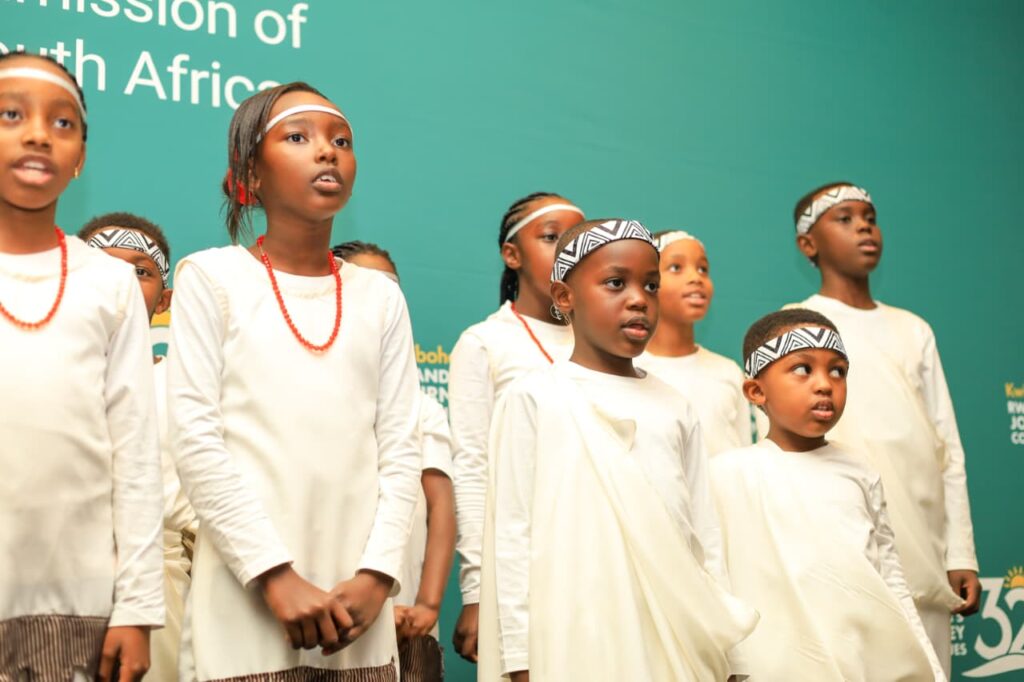
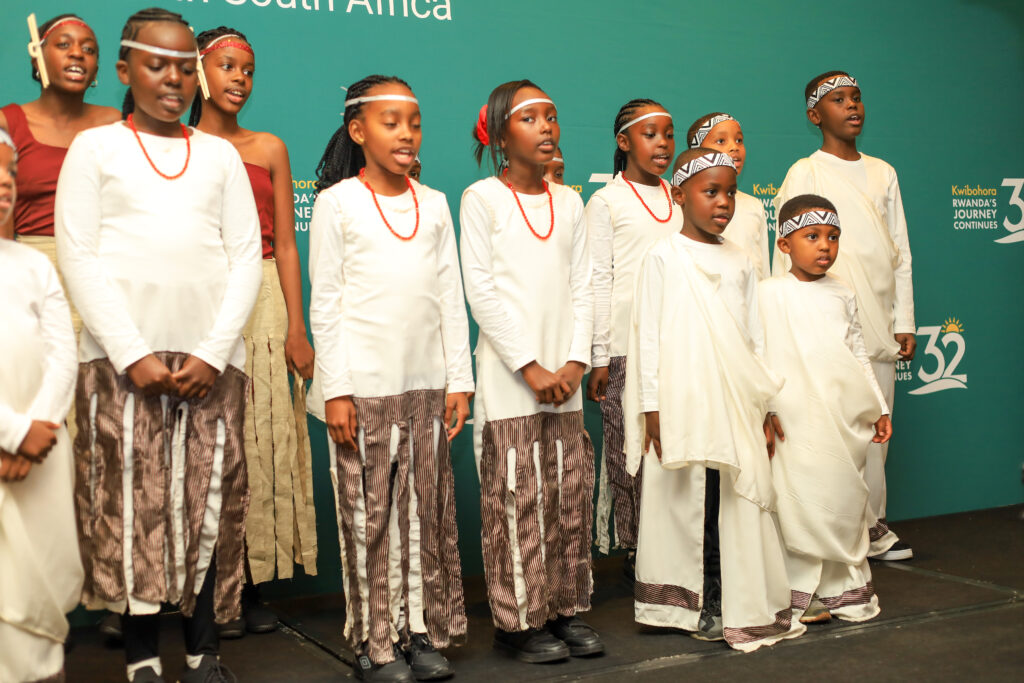
The official programme began with the singing of the national anthems of Rwanda and South Africa, performed by a youthful group of students. Their performance set the tone for an evening centred on remembrance, cultural identity, youth and the shared aspirations of the two African nations.
The national anthems were followed by the screening of a promotional video showcasing Rwanda’s development journey, national achievements and transformation.
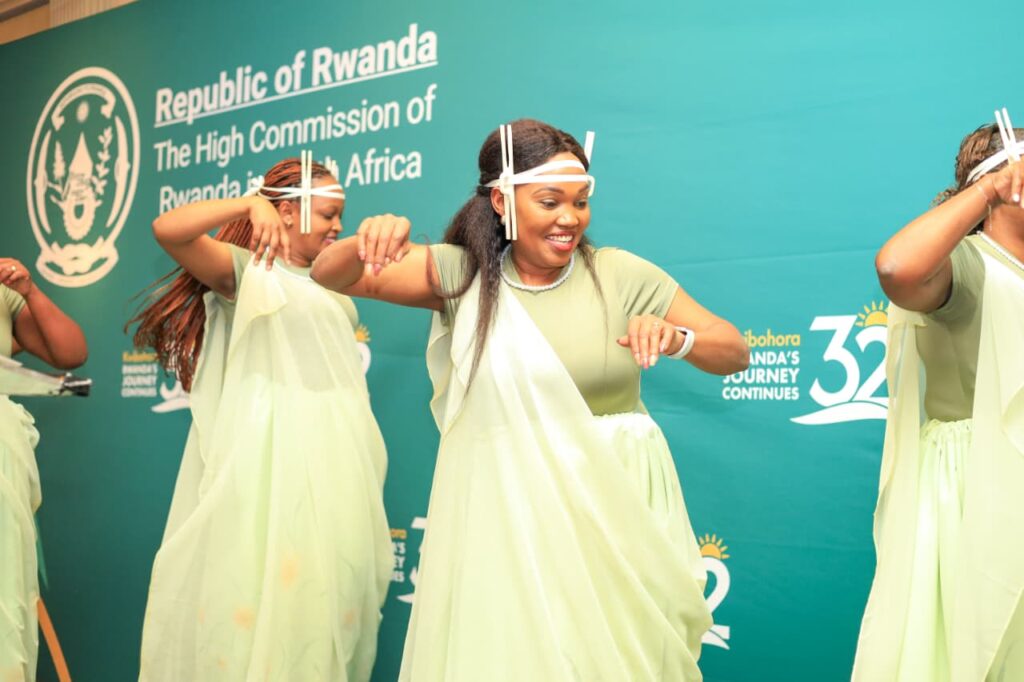
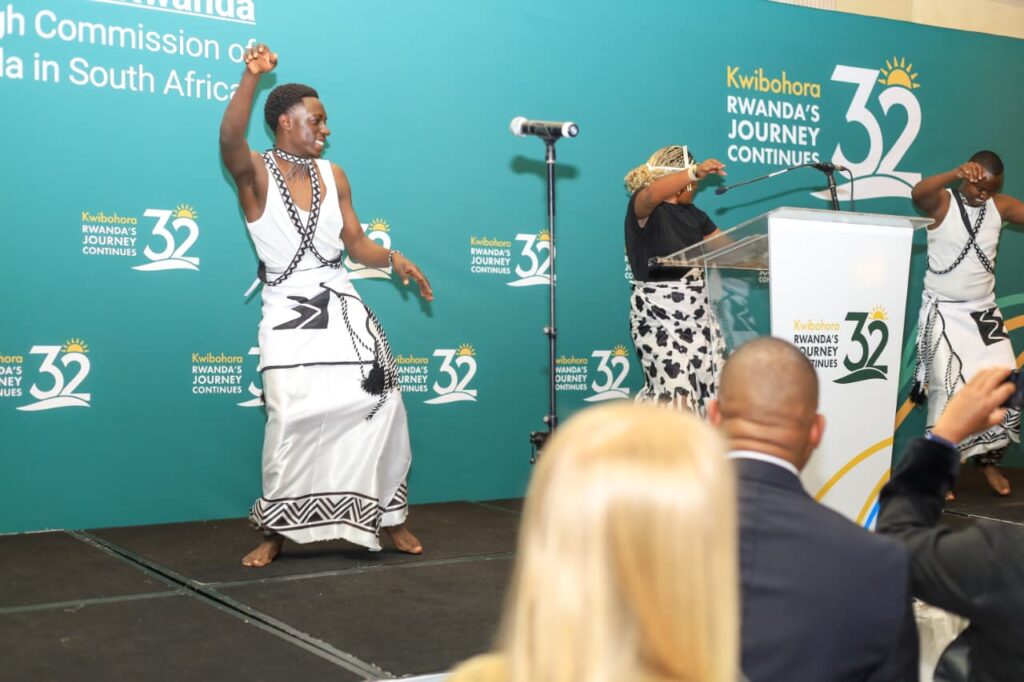
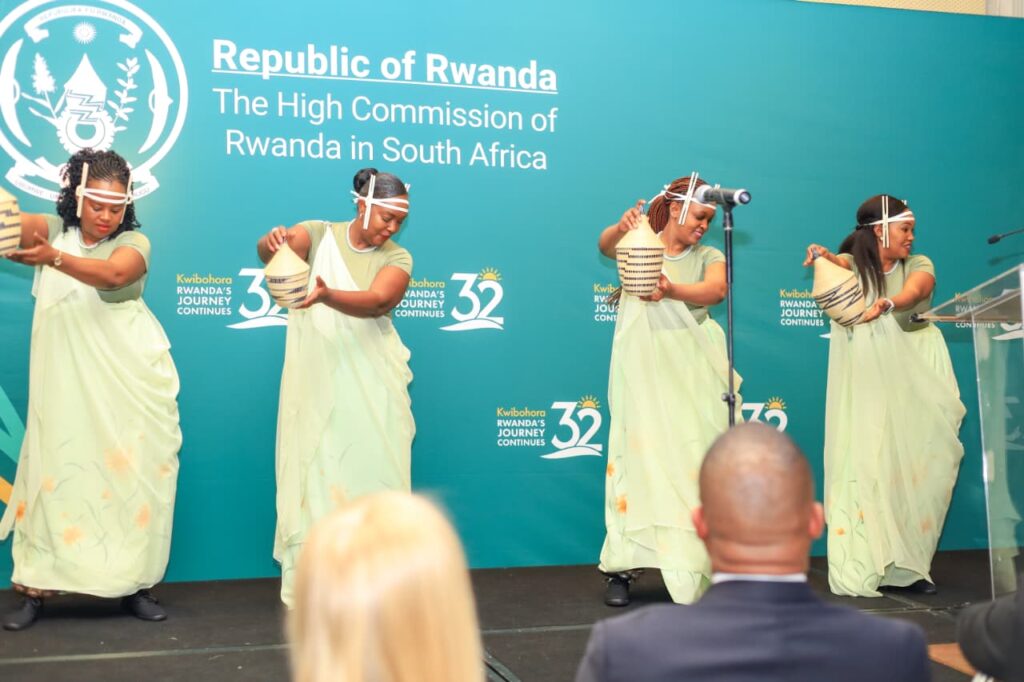
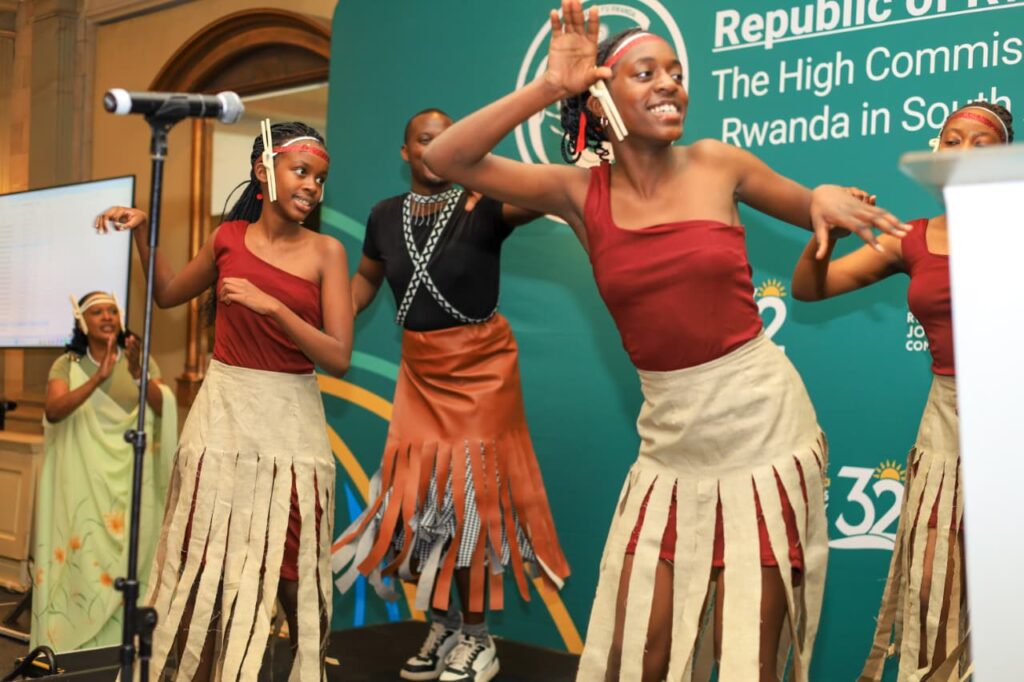
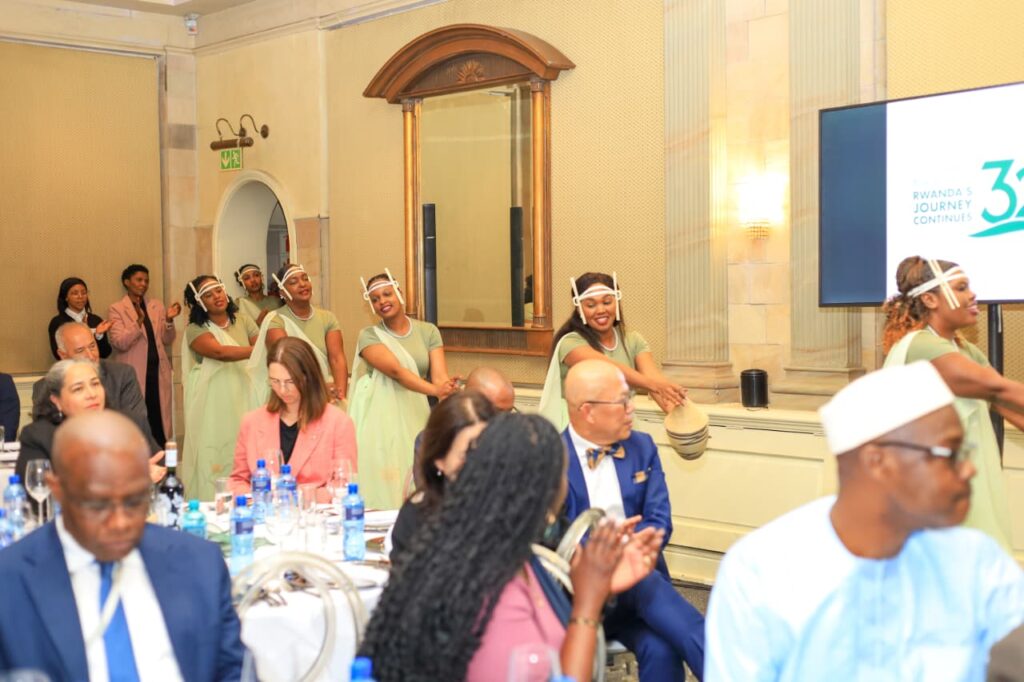
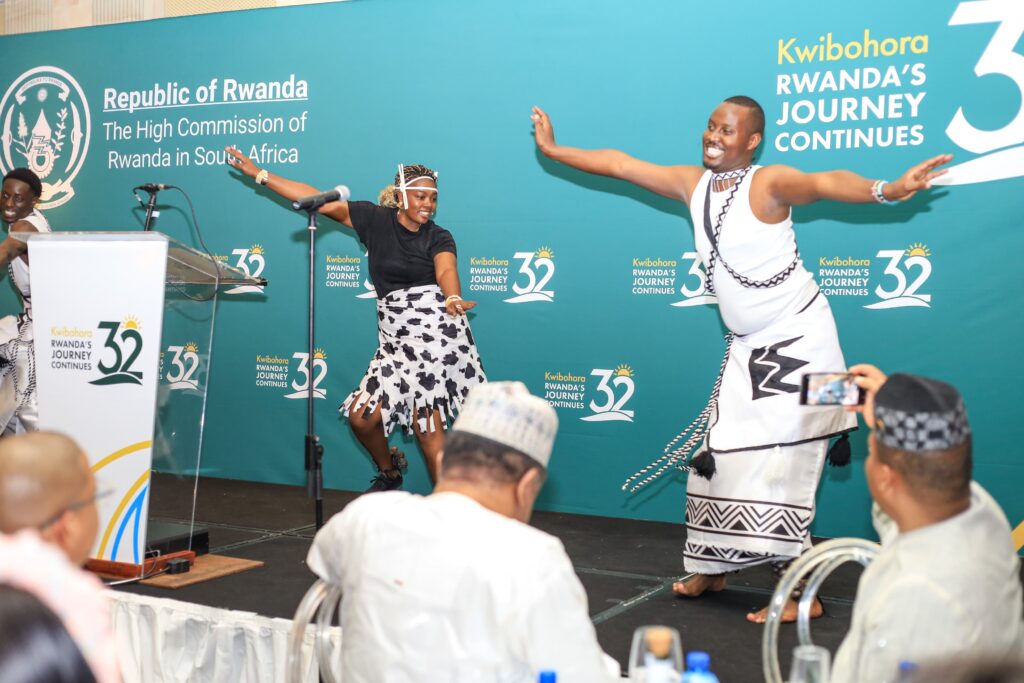
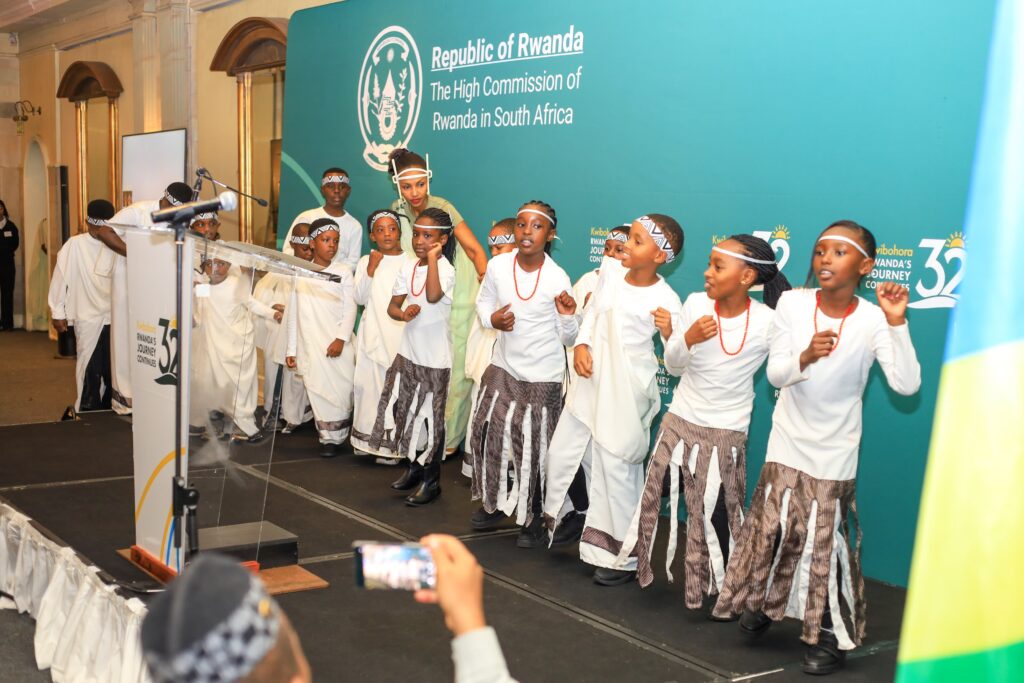
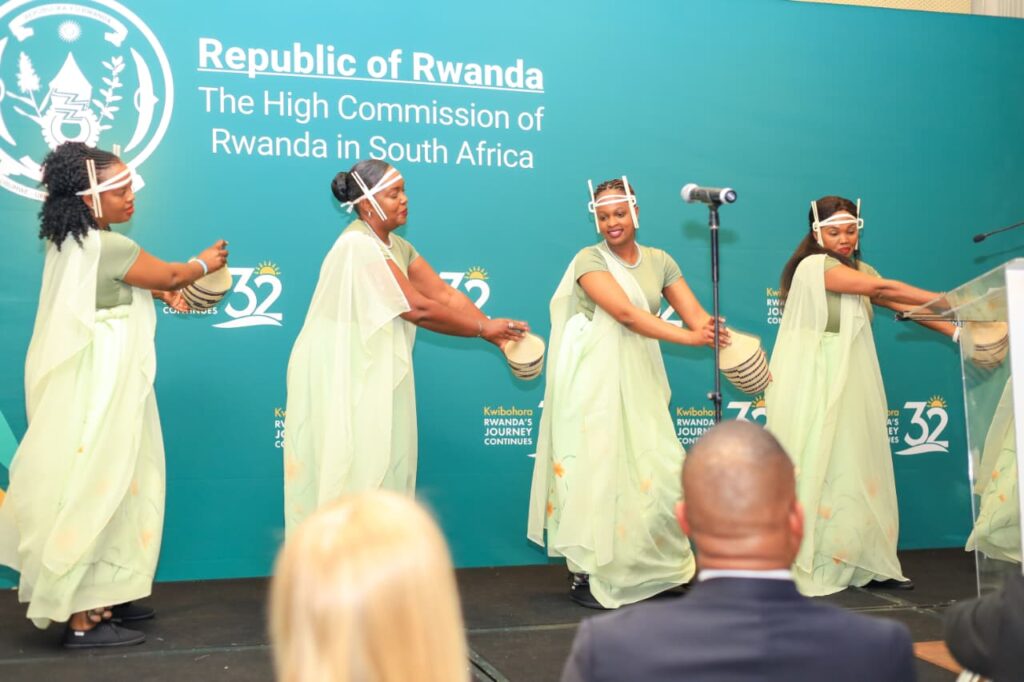
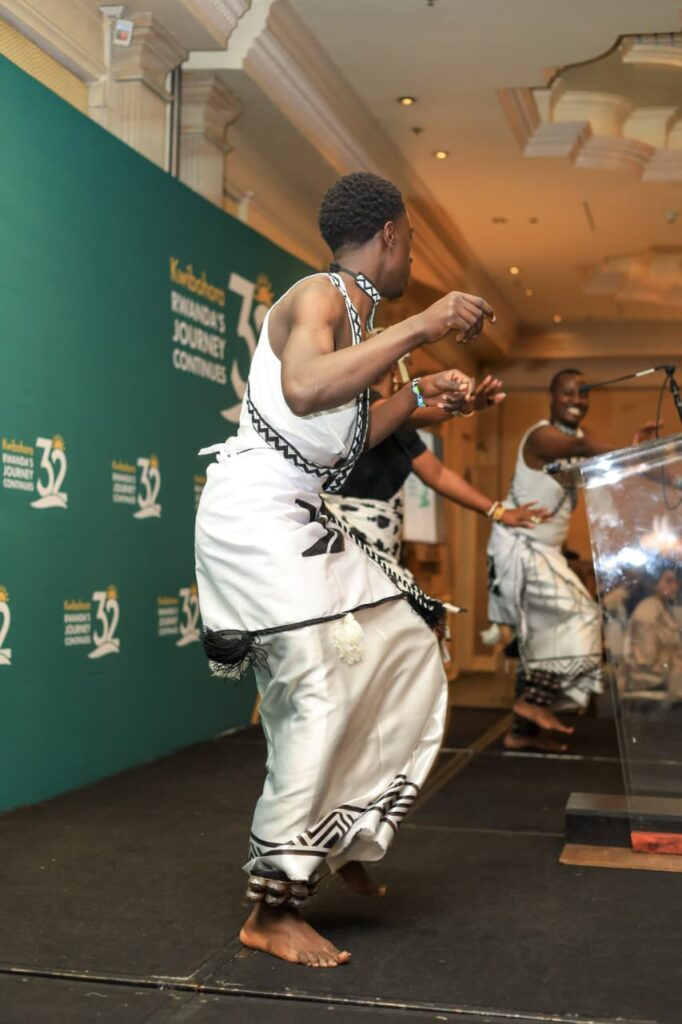
Guests were also treated to four cultural performances by the Inyamika Cultural Group, whose performances showcased Rwanda’s rich cultural heritage and the importance of passing national traditions from one generation to another.
High Commissioner Emmanuel Hategeka Reflects on Liberation and National Transformation
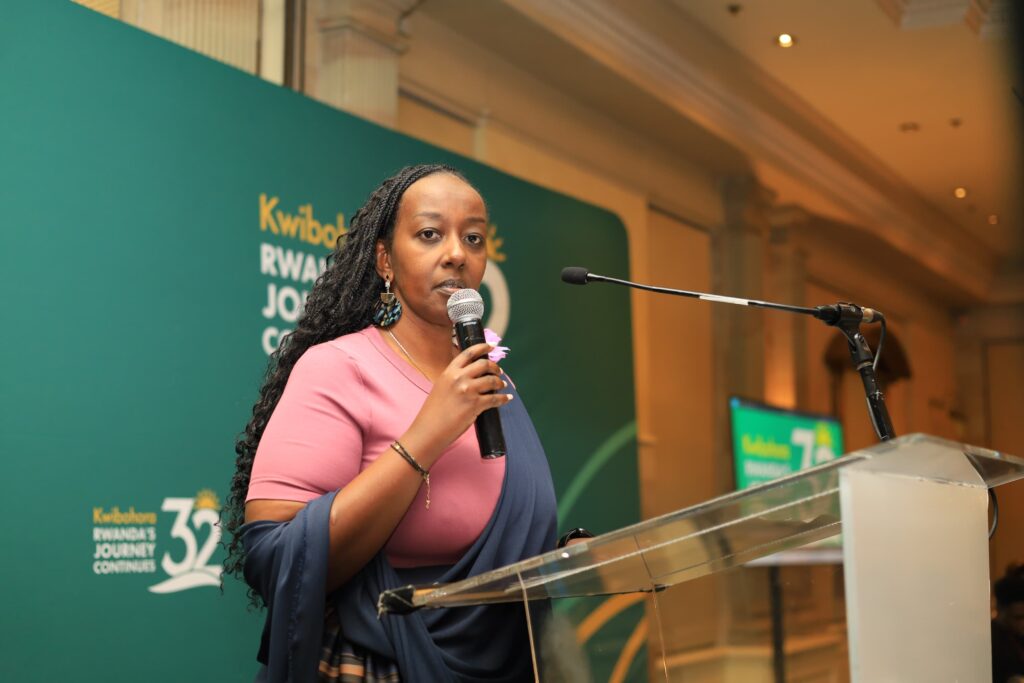
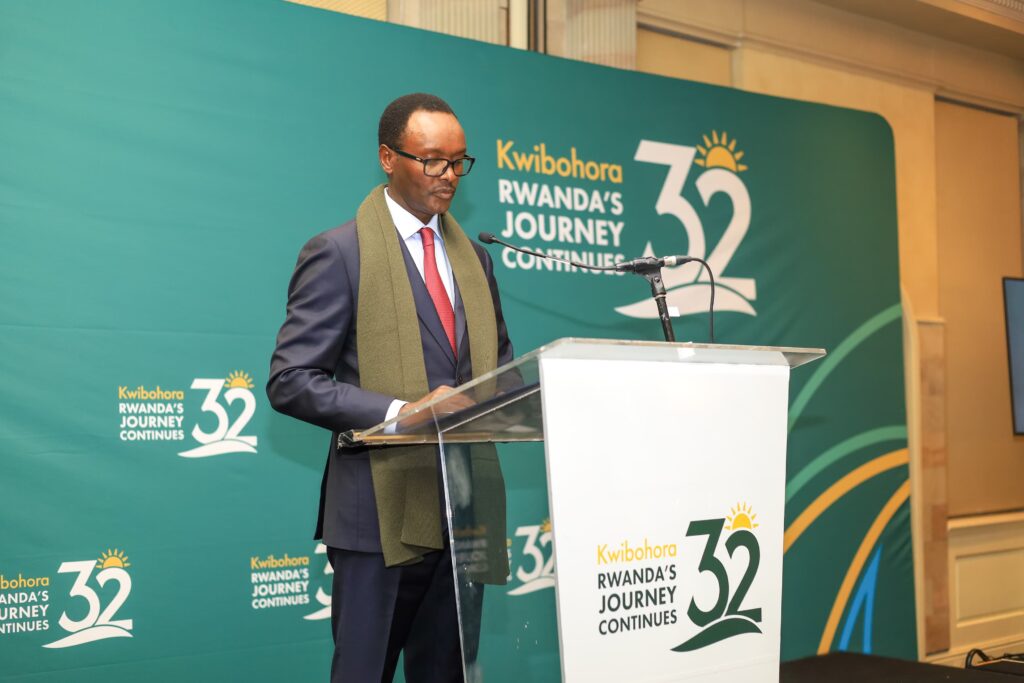
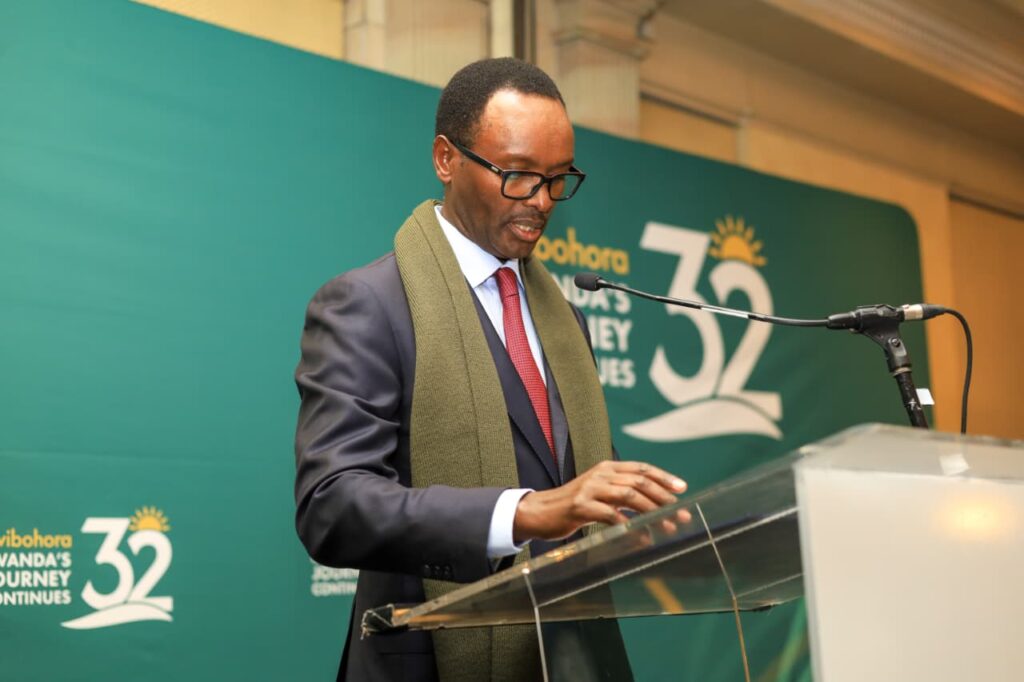
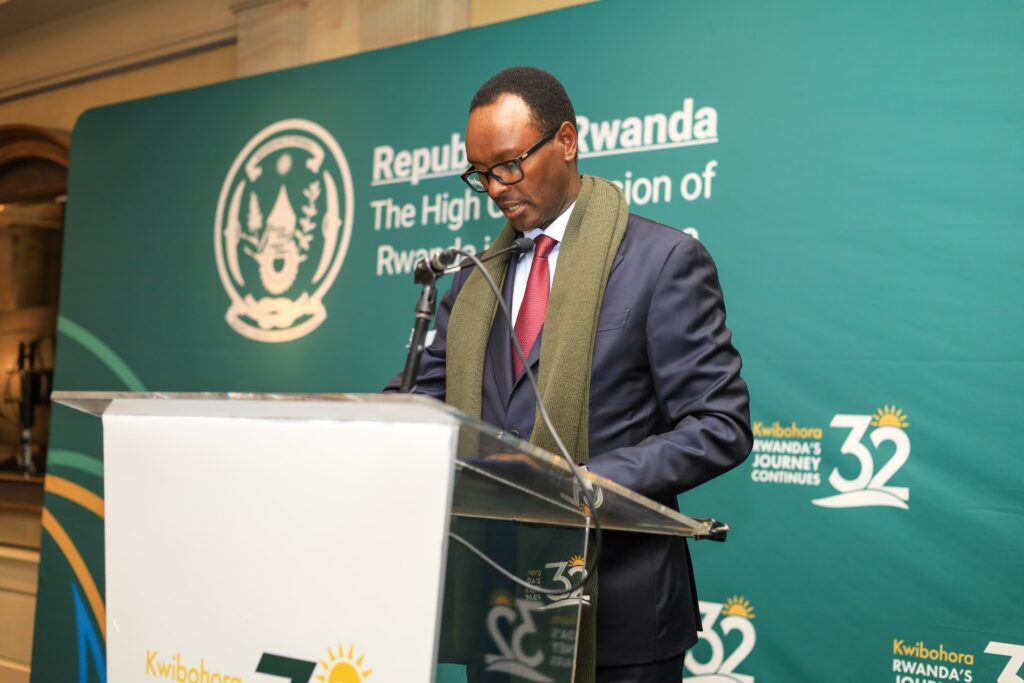
Addressing guests, H.E. Emmanuel Hategeka reflected on the extraordinary sacrifice, courage and determination that shaped Rwanda’s liberation journey.
He emphasised that genuine liberation is not given but achieved through struggle, resilience, vision and the collective determination of people seeking to shape their own destiny.
The High Commissioner reflected on Rwanda’s difficult history, noting that while the country attained political independence in 1962, many Rwandans continued to experience discrimination, exclusion and persecution in the decades that followed.
He said Rwanda’s liberation struggle, which began in October 1990 after peaceful avenues had been exhausted, was ultimately about restoring dignity, unity and citizenship to all Rwandans.
Its achievement, he noted, went beyond ending the 1994 Genocide against the Tutsi and gave Rwanda an opportunity to rebuild the nation on new foundations.
High Commissioner Hategeka highlighted the national choices that have guided Rwanda’s reconstruction and development, including choosing unity over division, accountability over blame, self-reliance over dependence and long-term vision over short-term expediency.
He further emphasised that liberation is an ongoing responsibility to build a society in which citizens enjoy dignity, equal opportunity, justice and security.
Reflecting on Rwanda’s development progress, the High Commissioner highlighted advances in poverty reduction, education, healthcare access, life expectancy, economic growth and effective governance. He said Rwanda’s development aspirations continue to be guided by Vision 2050 and the National Strategy for Transformation, with a focus on inclusive and sustainable development.


Rwanda Recognises South Africa’s Contribution to Reconstruction
The High Commissioner also acknowledged the role played by South Africa and other international partners in Rwanda’s post-genocide reconstruction.
He highlighted South African contributions across various sectors, including water and education, while noting that South African businesses were among the early investors in post-genocide Rwanda.
He said South African companies had since expanded their presence into sectors including telecommunications, finance, hospitality, conservation and logistics, contributing to economic growth and employment creation.
High Commissioner Hategeka said the celebration of Kwibohora in South Africa carried particular historical significance because 1994 represented a defining turning point for both countries.
For Rwanda, 1994 marked the end of the Genocide against the Tutsi and the beginning of national renewal. For South Africa, it marked the birth of democracy following the long struggle against apartheid.
Although the historical experiences of the two countries were different, he said they shared an important African lesson: freedom must be fought for, protected, defended and made meaningful in the daily lives of the people.
Rwanda and South Africa Look Towards Stronger Bilateral Relations
The High Commissioner welcomed renewed efforts to strengthen bilateral relations between Rwanda and South Africa.
He highlighted the political commitment of the leadership of both countries to strengthen relations and referred to recent high-level engagements between Rwanda’s Minister of Foreign Affairs and International Cooperation and South Africa’s Minister of International Relations and Cooperation.
He welcomed progress towards improving mobility, people-to-people exchanges, trade, investment, tourism, academic and cultural cooperation, as well as collaboration in health, mining, energy, innovation and security.
The High Commissioner also addressed the Rwandan community, particularly young people, emphasising the importance of unity, discipline, responsibility and preserving Rwanda’s culture across generations.
Minister Gwede Mantashe Calls for Greater African Unity and Collective Action
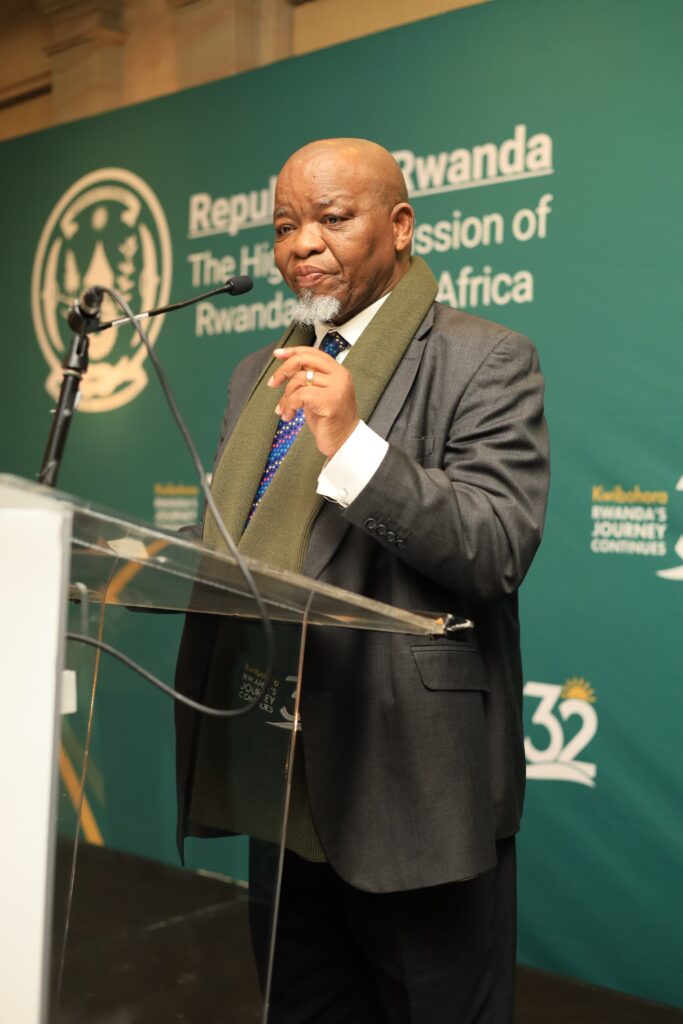
Delivering the keynote address on behalf of the South African Government, Minister Gwede Mantashe praised the resilience, courage and determination of the people of Rwanda in rebuilding their country following one of the darkest chapters in human history.
Minister Mantashe reflected on the historical experiences of both countries, noting that Rwanda and South Africa emerged from painful histories and long struggles for freedom.
He paid tribute to those who made the ultimate sacrifice for liberation and emphasised the importance of remembering both the difficult and positive chapters of history.
The Minister said South Africa and Rwanda, as members of the African Union, shared a responsibility to contribute towards building a prosperous and peaceful African continent.
A significant part of his address focused on the need for African countries to cooperate more closely in managing and benefiting from the continent’s vast natural resources.
Minister Mantashe argued that Africa’s challenge was not a lack of resources, but the continent’s inability to derive sufficient value from its mineral and natural wealth.
He called for greater collective action, stronger leadership, accountable governance, inclusive economic growth and increased cooperation between African states.

Call for Cooperation in Mining and Mineral Beneficiation
As Minister responsible for South Africa’s mineral and petroleum resources portfolio, Mantashe placed particular emphasis on Africa’s mining sector.
He questioned the absence of a dedicated continental structure bringing together African mining ministers to coordinate discussions on mineral processing, beneficiation and the development of Africa’s mineral value chains.
According to the Minister, Africa must move beyond exporting its resources without sufficient value addition and instead strengthen cooperation around processing and beneficiation within the continent.
He said South Africa and Rwanda were well positioned to strengthen cooperation and contribute towards African solutions to African challenges.
Minister Mantashe further called for expanded bilateral cooperation in areas of mutual benefit, stressing that African countries had important business and development opportunities that could be pursued collectively.
He expressed confidence in Africa’s future and said that despite the challenges and contradictions confronting the continent, stronger cooperation could contribute to building a more prosperous Africa.


Cultural Celebration Concludes Kwibohora 32 Programme
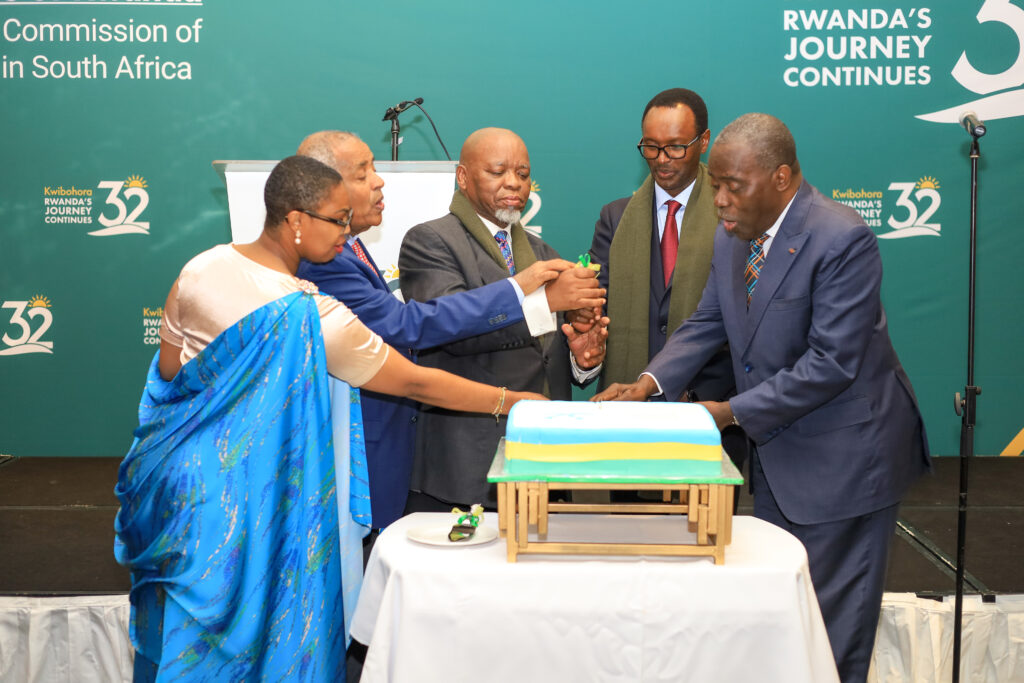
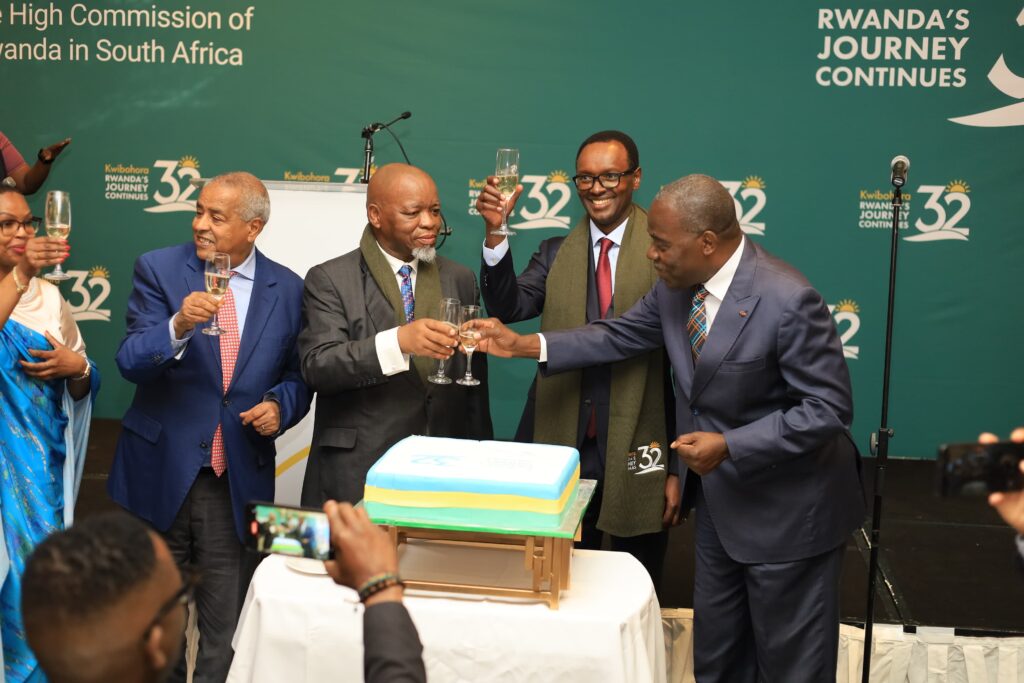
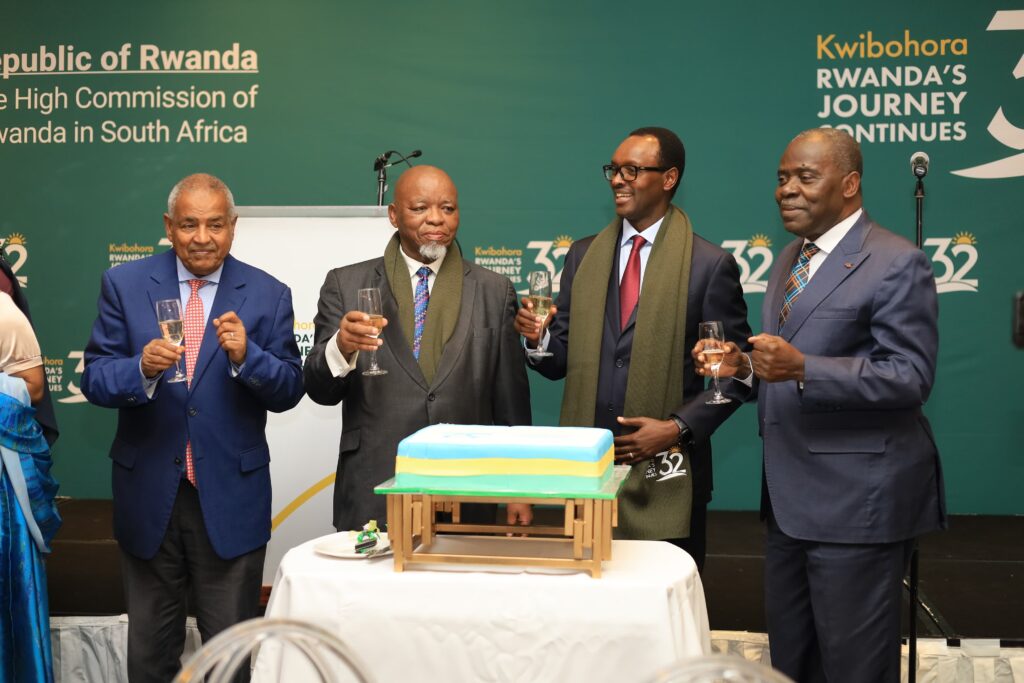
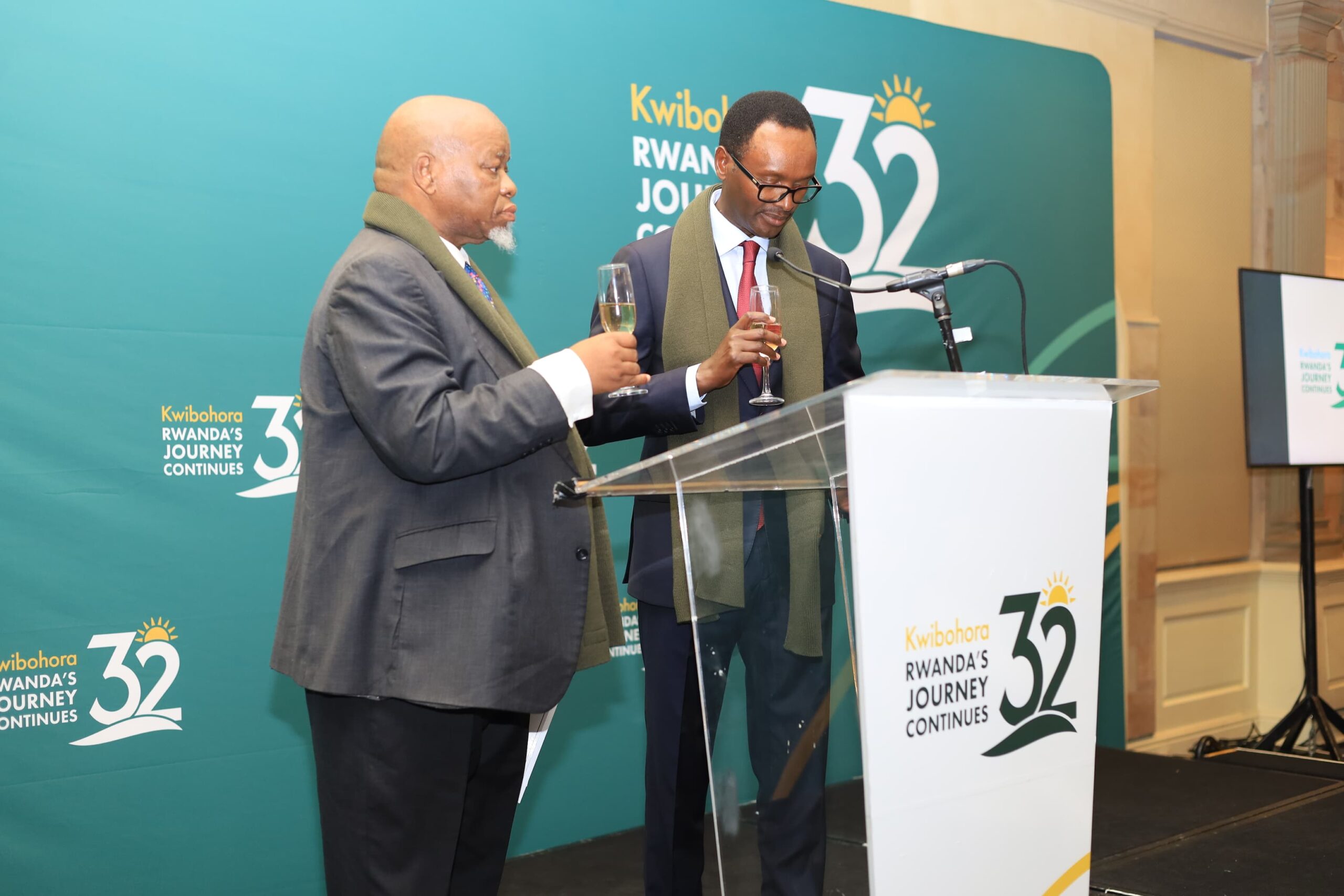
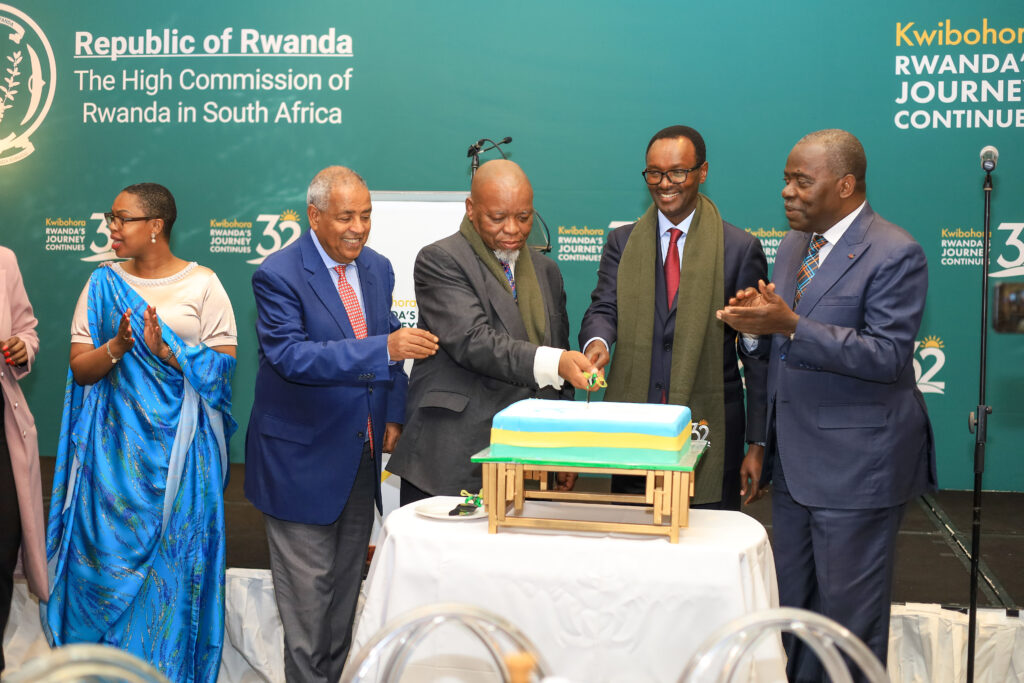
Following the official addresses, the celebration moved to the ceremonial cutting of the Kwibohora 32 cake and a champagne toast marking Rwanda’s 32nd Liberation Day anniversary.
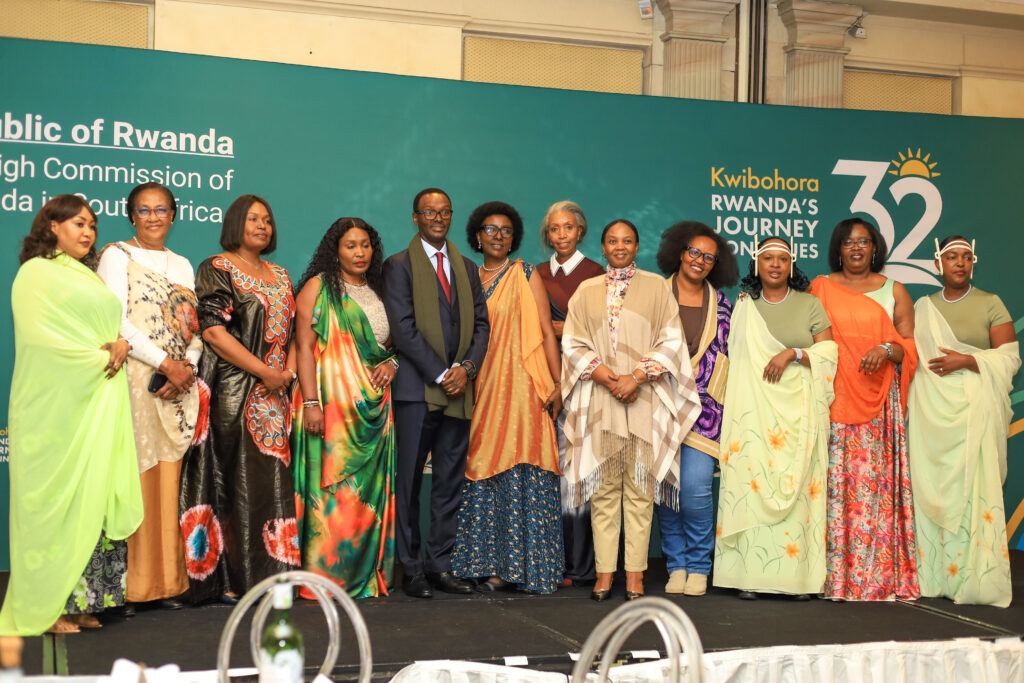
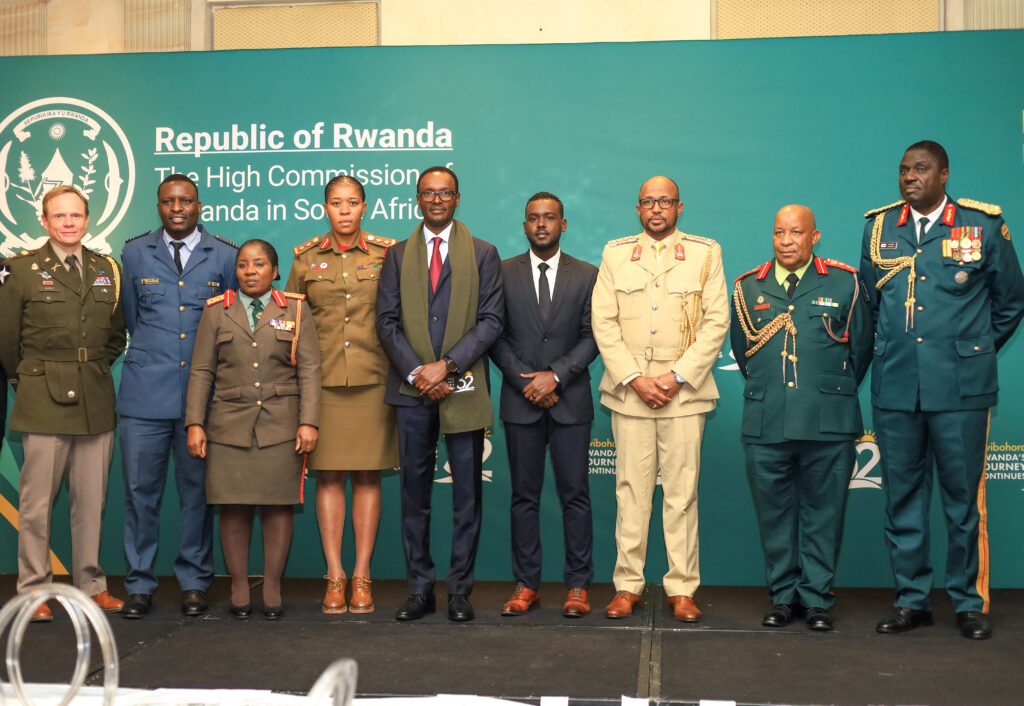
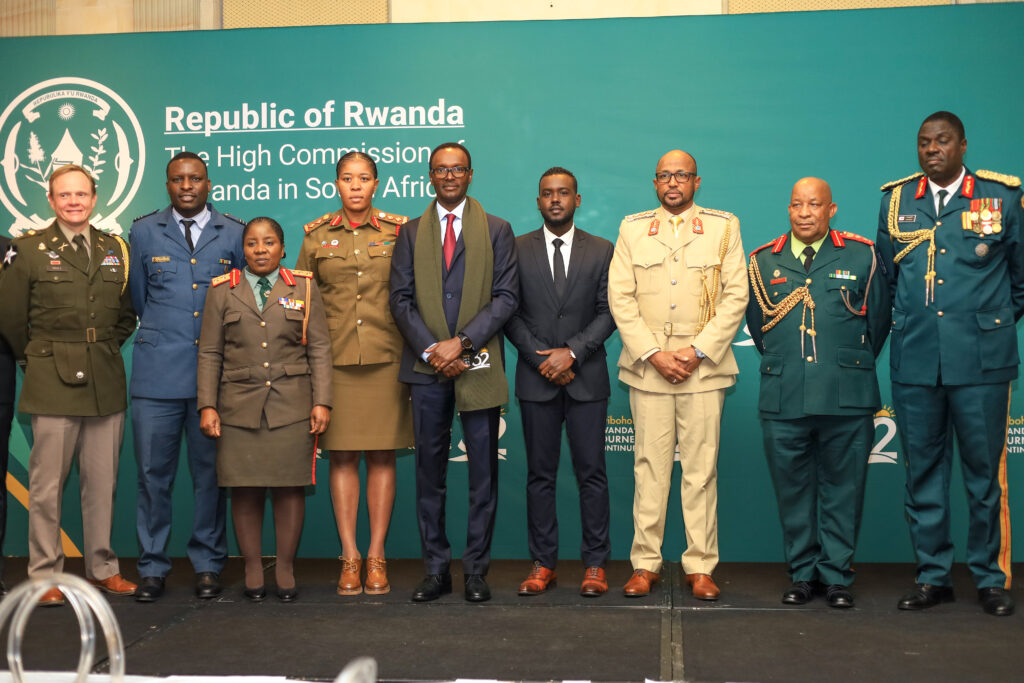
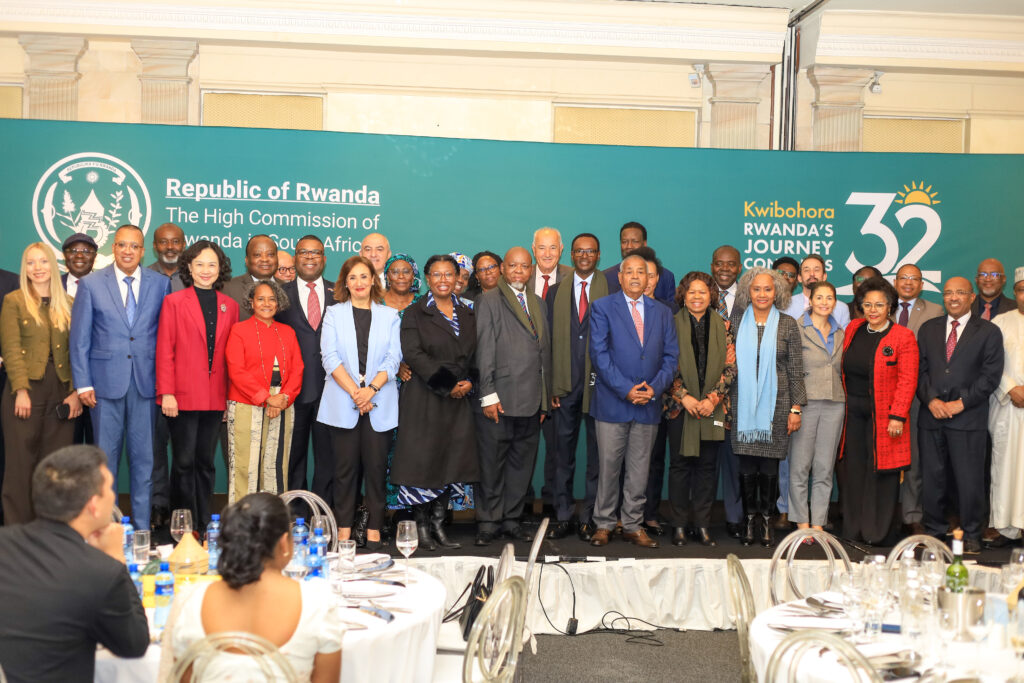
The programme concluded with a family photograph bringing together the High Commissioner, the Guest of Honour, Ambassadors, High Commissioners and other distinguished guests in attendance.
The Kwibohora 32 celebration in Pretoria reflected both Rwanda’s journey of national renewal and the growing importance of cooperation between Rwanda and South Africa.
Under the theme “Rwanda’s Journey Continues,” the celebration carried a message that liberation is not only about remembering the struggles of the past, but also about taking responsibility for building stronger institutions, creating economic opportunities, preserving national unity and strengthening African cooperation for future generations.